Master's student in Urban Planning and Policy Design at Politecnico di Milano with a bachelor degree in Architectural Design, passionate about sustainable urban planning and territorial regeneration. Skilled in spatial analysis, Adobe Suite and urban design, focused on environmental resilience. Interested in urban policies, sustainable mobility and participatory planning. Determined to contribute to the development of more efficient, inclusive and sustainable cities.
Skills
Soft skills
- - Adaptability
- - Critical thinking
- - Flexibility
- - Teamwork
- - Responsibility
- - Problem solving
- - Self-management
- - Leadership
Languages
Hobbies/ interests
- - Hiking
- - Reading
- - Ecology
- - Red Cross volunteer (2016 - 2020)
Education
ASA - Advanced School of Architecture Honours Program, Politecnico di Milano (Milan, Italy).
2025 - present- - Advanced photography masterclass led by Helene Binet in collaboration with IED institute in Milan.
- - Masterclass led by Agostino Nickl focused on integrating artificial intelligence into contemporary architectural practices.
Program Erasmus+ KTH (Stockholm, Sweden).
january 2025 - june 2025- - Strategic Environmental Assessment (SEA) course: Application of the SEA method to write a report on the transport system of a Swedish island.
Master's degree in Urban Planning and Policy Design, Politecnico di Milano (Milan, Italy).
2024 - present- - Spatial planning and infrastructure design studio: territorial implementation project along a railway.
- - Housing and neighbourhood studio: addressing issues regarding contemporary housing policies and neighbourhood regeneration projects.
Bachelor's degree in Architectural Design. Politecnico di Milano (Milan, Italy).
2021 - 2024Professional experience
Intern urban planner at One Works Spa (Milan, IT).
april 2026 - present- - Research study and thesis on the project "The Borders of Milan".
- - Mapping with QGIS and data processing.
Intern architect at Municipality of Correggio (Correggio, IT).
july 2024 - august 2024- - Removal of the cultural heritage restriction on a school building and the municipal cemetery through the Italian Superintendence portal.
- - Use of AutoCAD software.
Publications
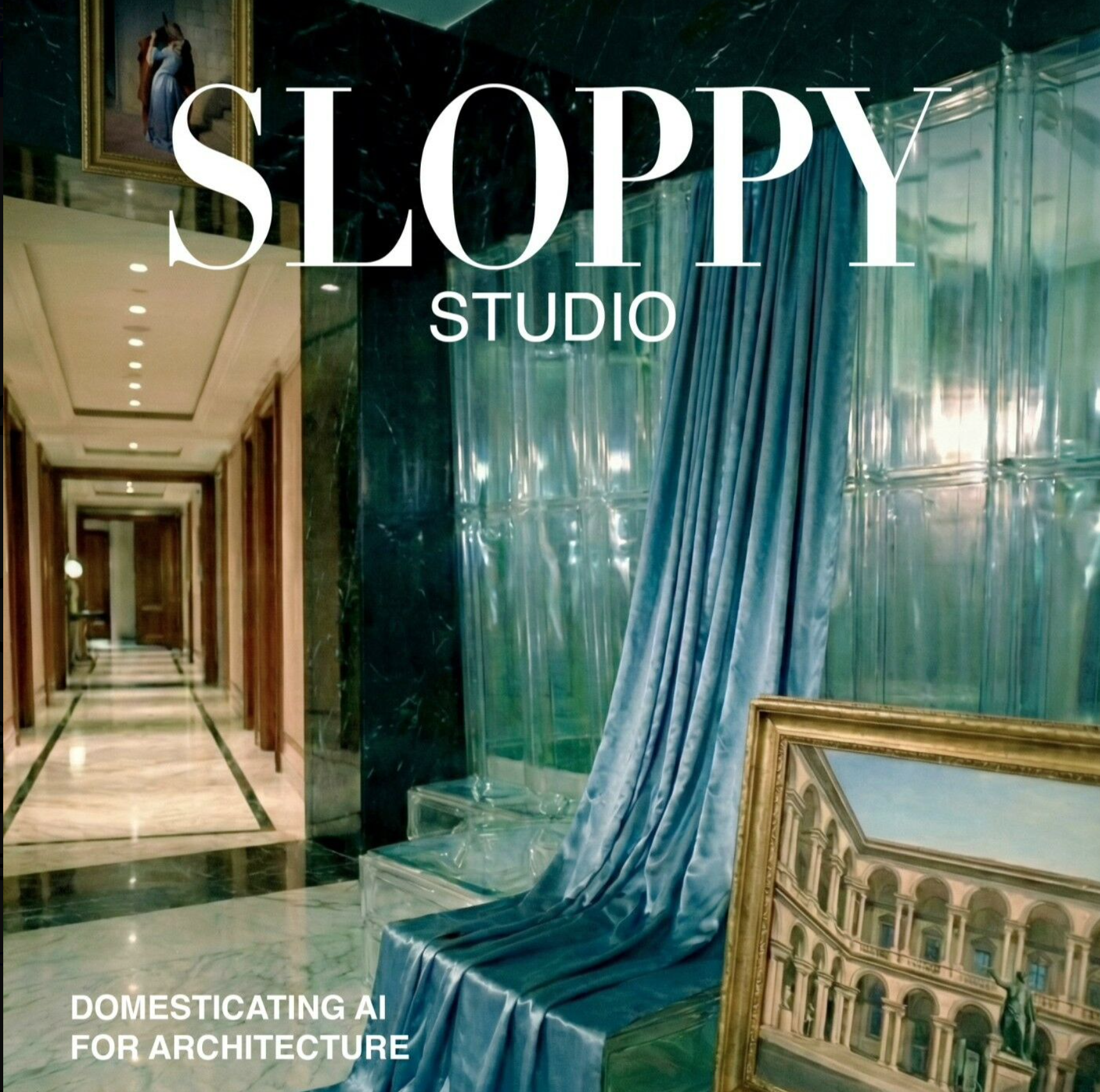
Entwerfen im Rauschen der KI: Das „Sloppy Studio"
March 18, 2026
Wie Studierende der Politecnico di Milano mit Filmcharaktere, Museumsfragmenten und präzisen Prompts das Generische überwinden – und was das über die Zukunft des Entwerfens verrät.
Read full article ↗Sloppy Studio
ASA Program masterclass, Politecnico di Milano, 2026
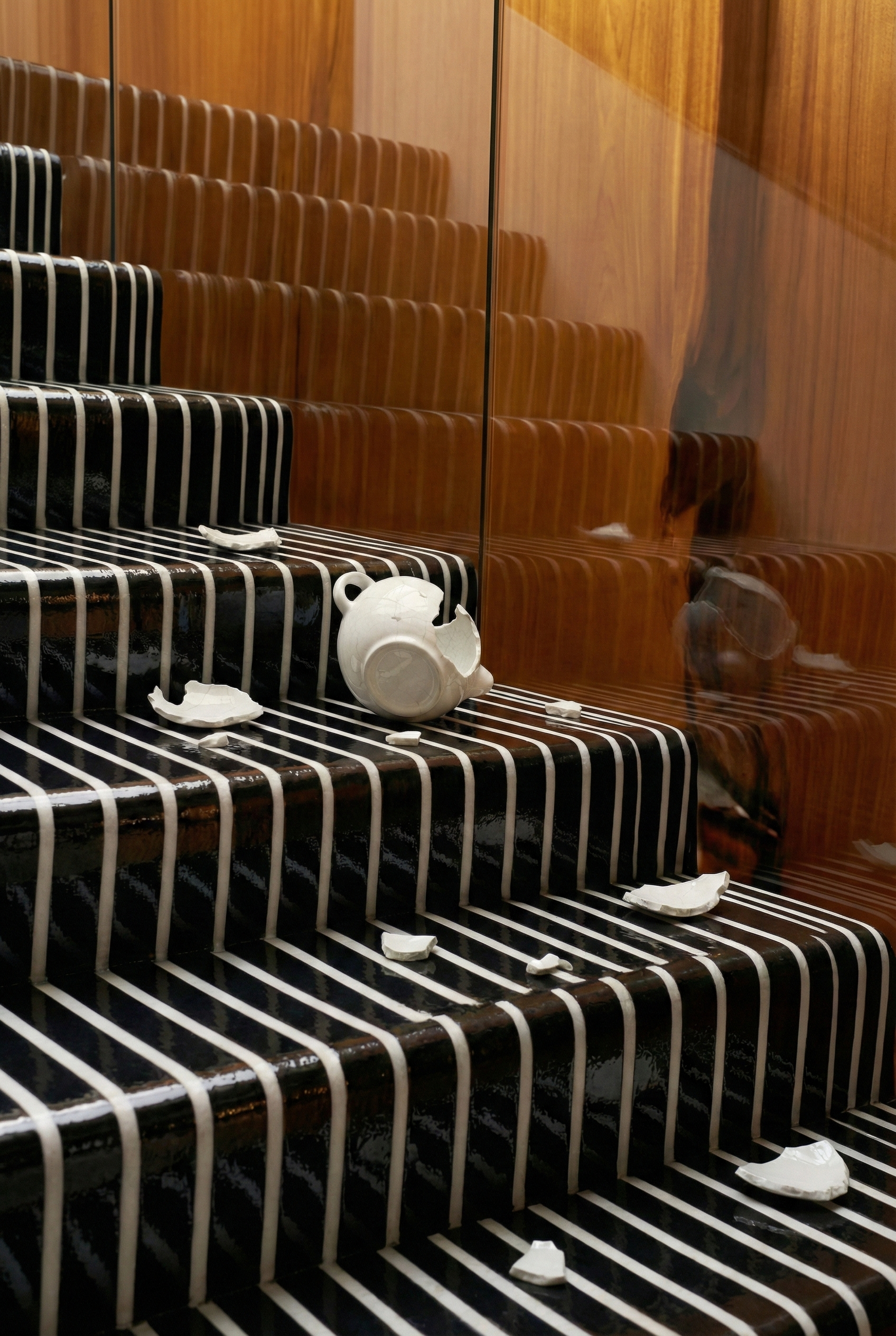
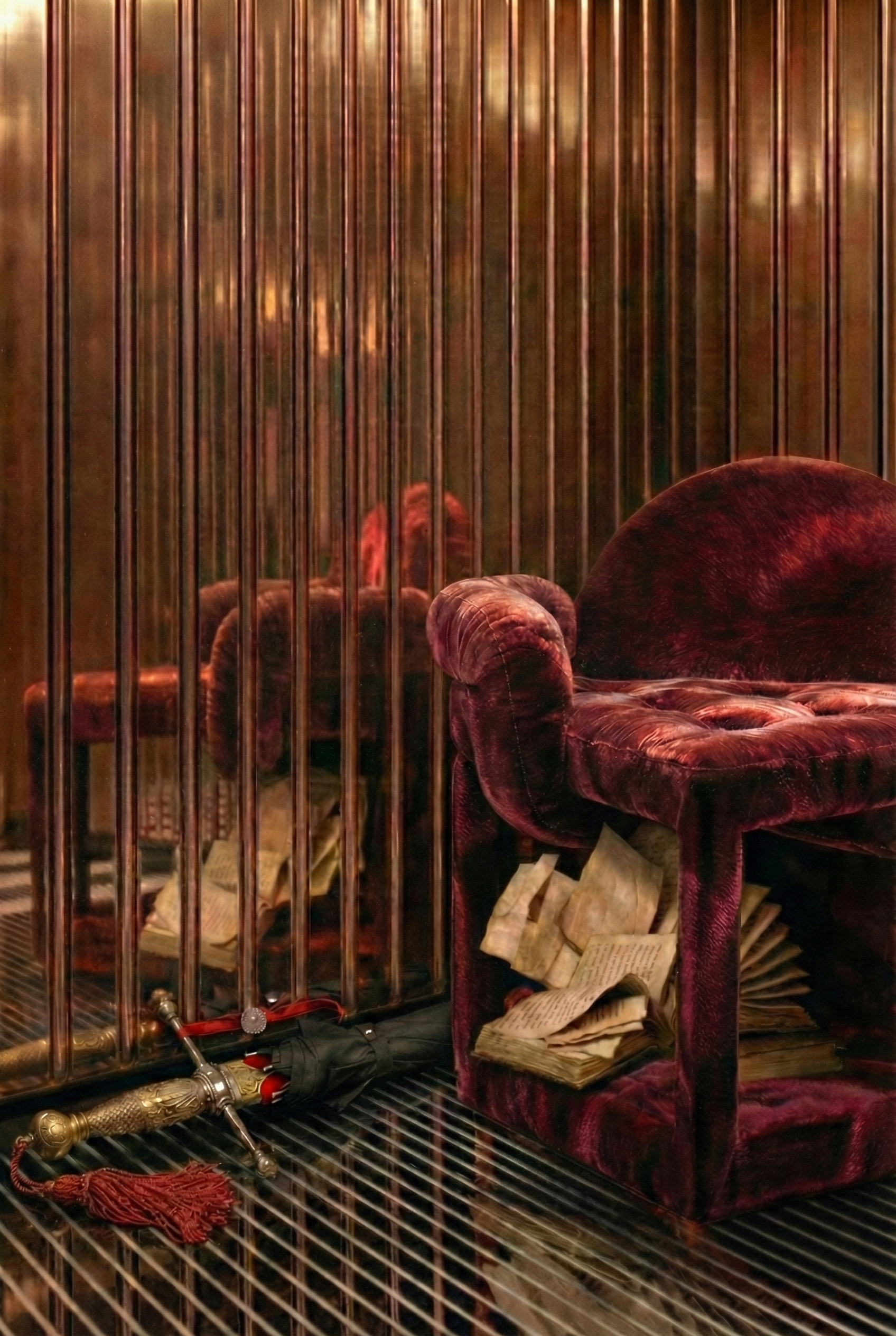
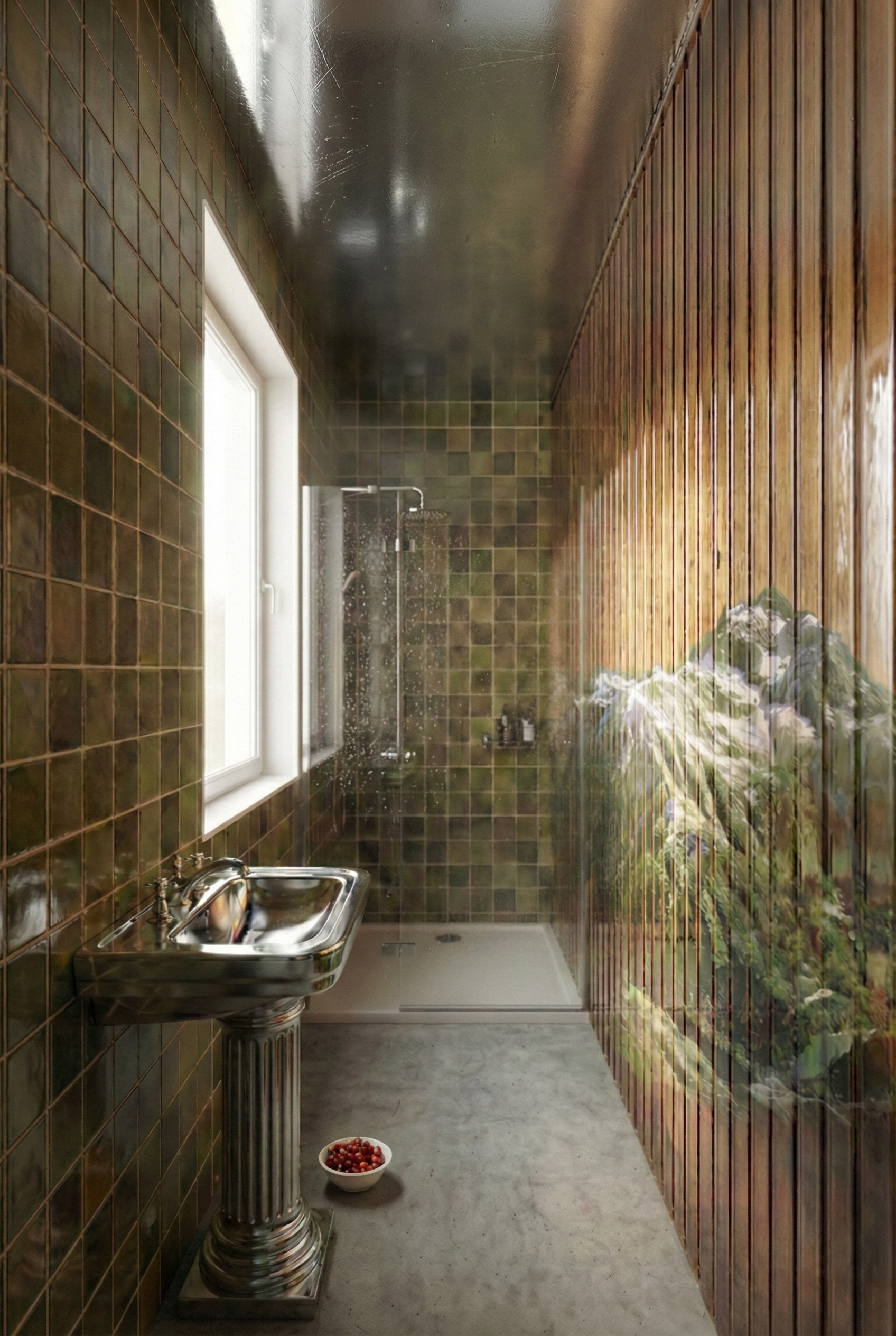
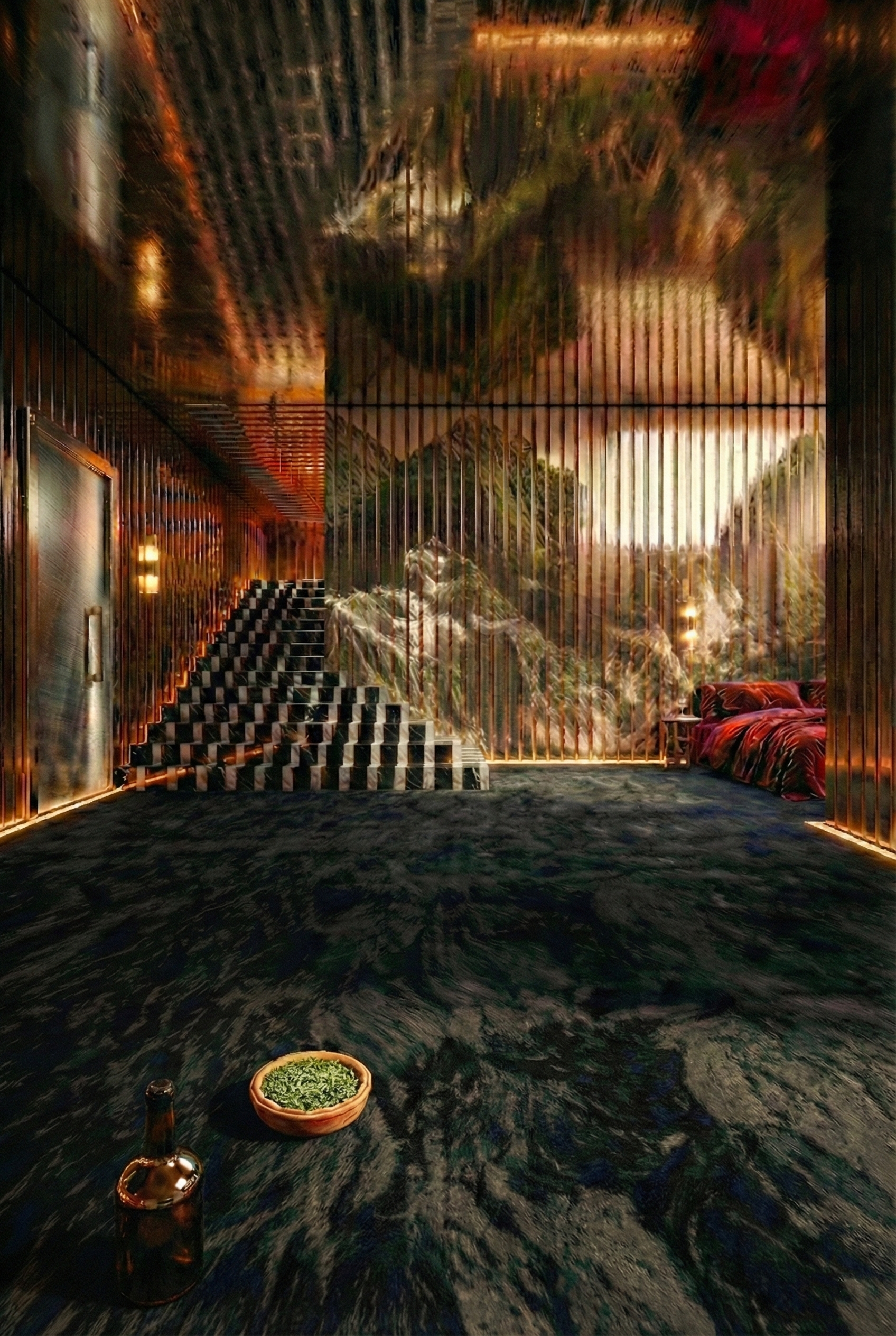
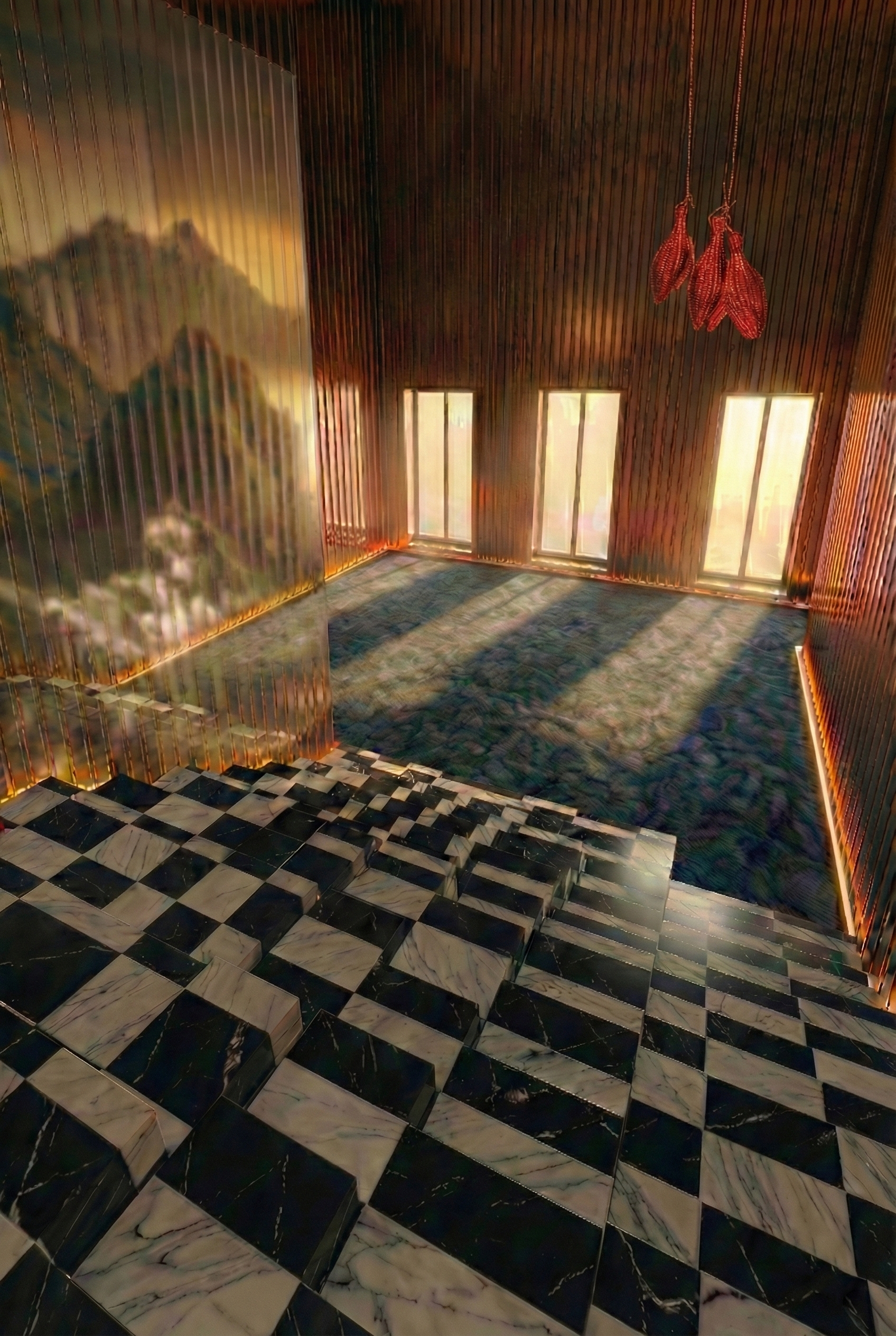
The "Sloppy Studio" focuses on architectural design methods in the age of artificial intelligence. The project relies on a conceptual scaffold: designing for a specific character, drawing from a specific collection and intervening in a specific place.
The project is located in a 1950s building opposite the Pinacoteca di Brera, on the former site of the Palazzo di Pio IV de' Medici, which is projected to reopen as a luxury hotel. We were challenged to reimagine typologies like rooms, suites and spas by drawing inspiration directly from the Pinacoteca. Its collection acted as a literal dataset of styles, textures, and atmospheres, allowing us to develop a "conscious bias" and prompt the model away from the generic.
Driven by the image generation model of Gemini, Nano Banana, we designed a room embodying Special Agent Dale Cooper from Twin Peaks. The challenge lay in abstracting his rigorous yet surreal psychology into pure architectural vocabulary, including lighting, proportions and materials. By merging these spatial parameters with the classical textures of the Pinacoteca, we guided the AI to generate a space that implicitly captures his essence.
Photography
ASA Program masterclass, Politecnico di Milano, 2025
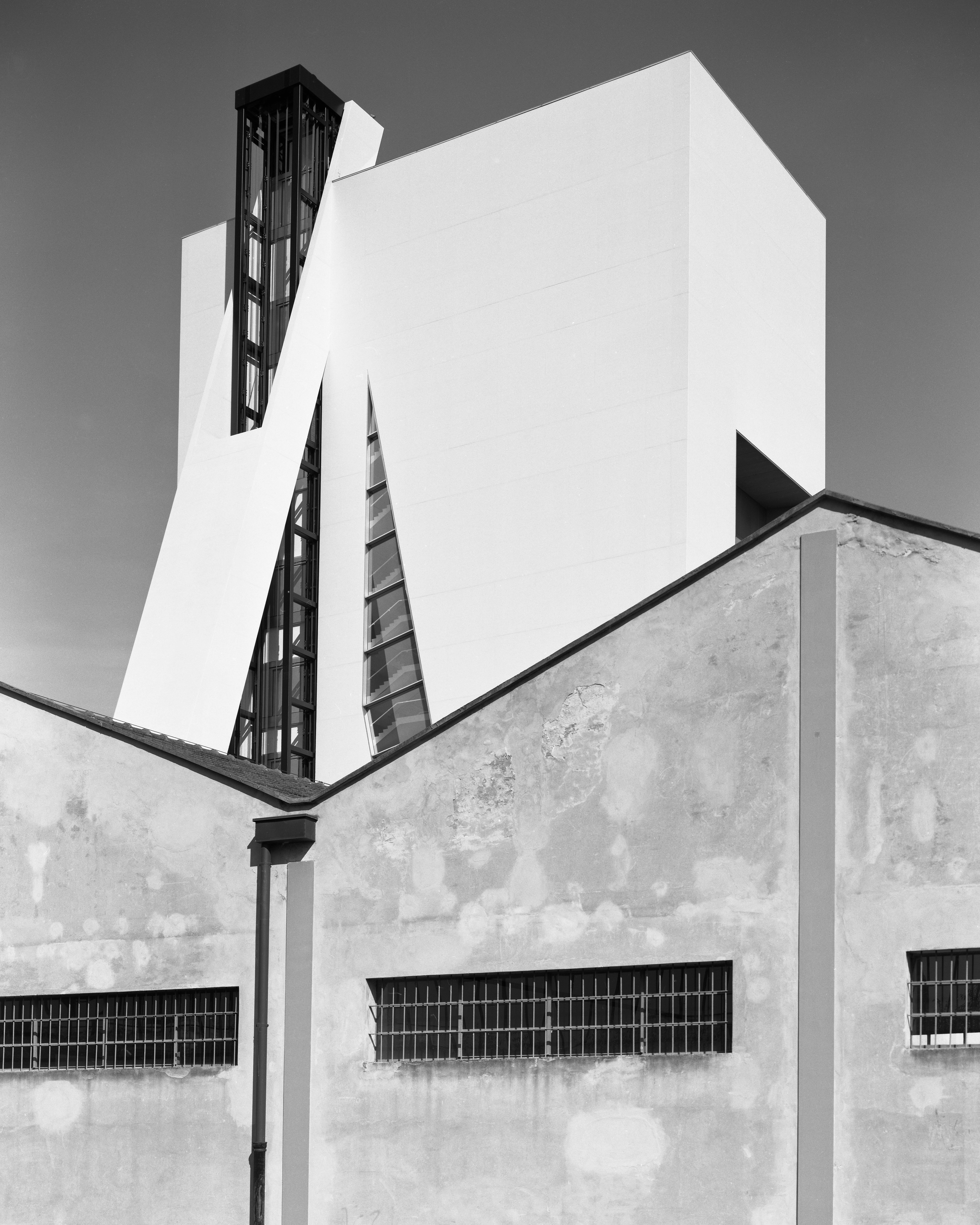
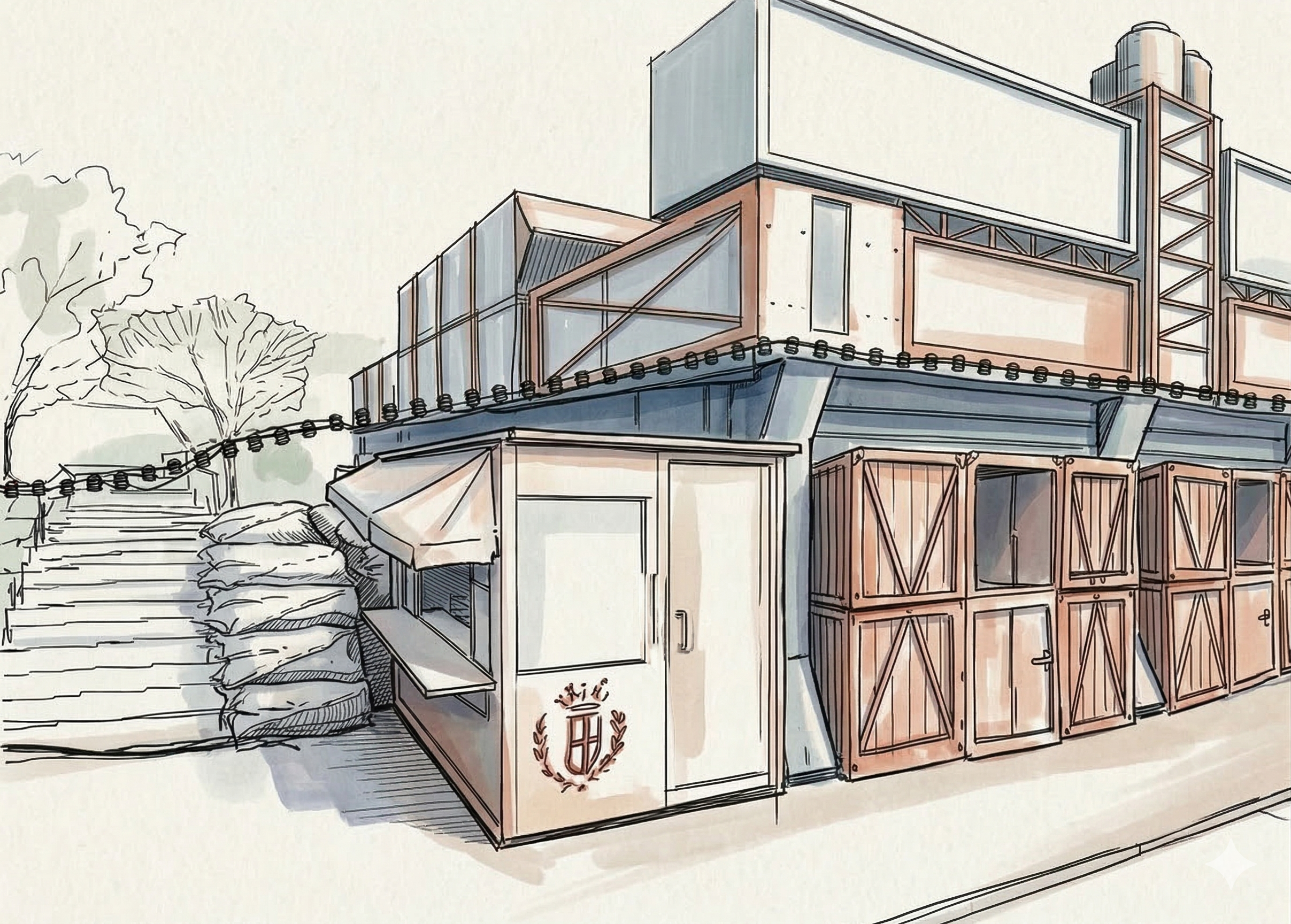
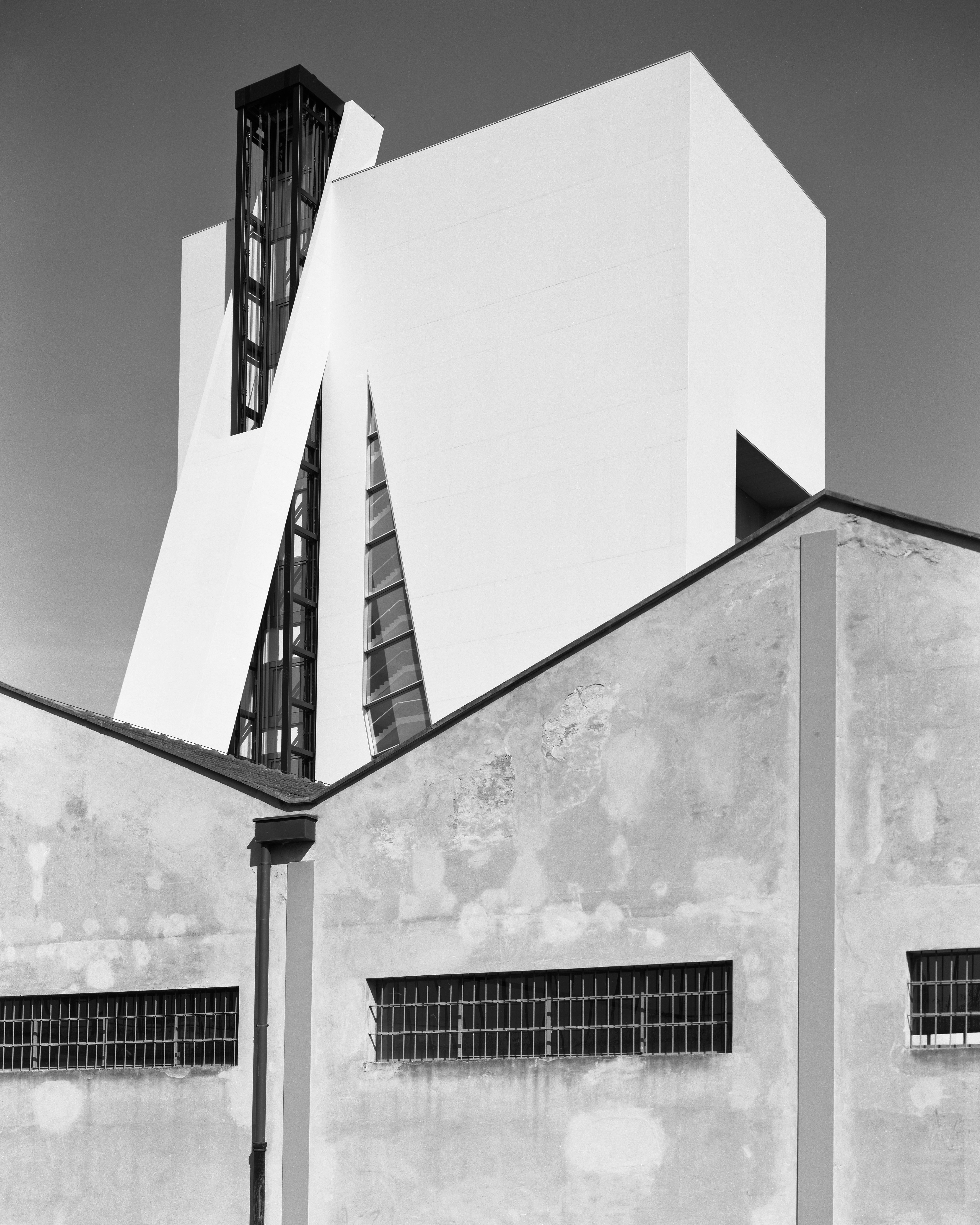
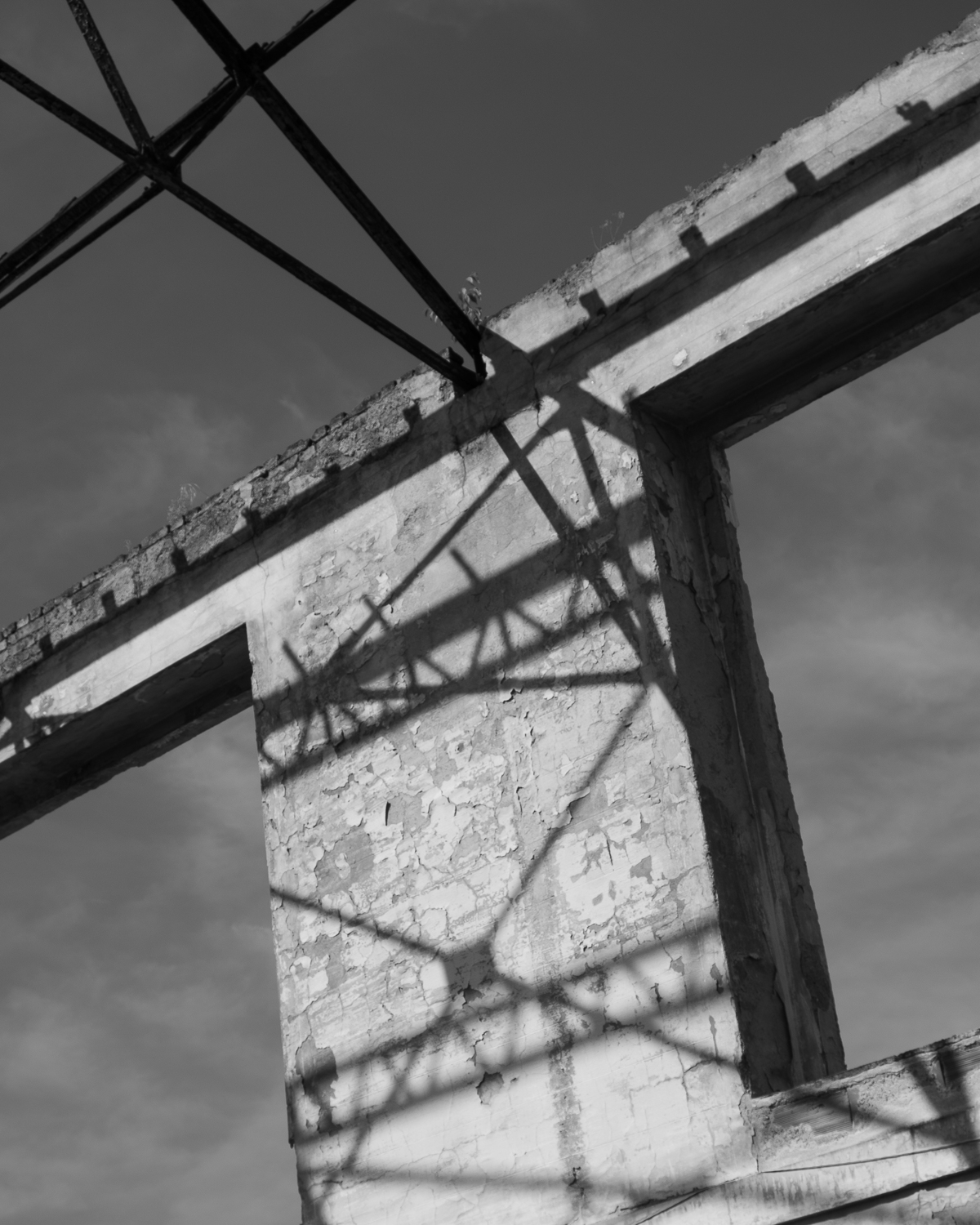
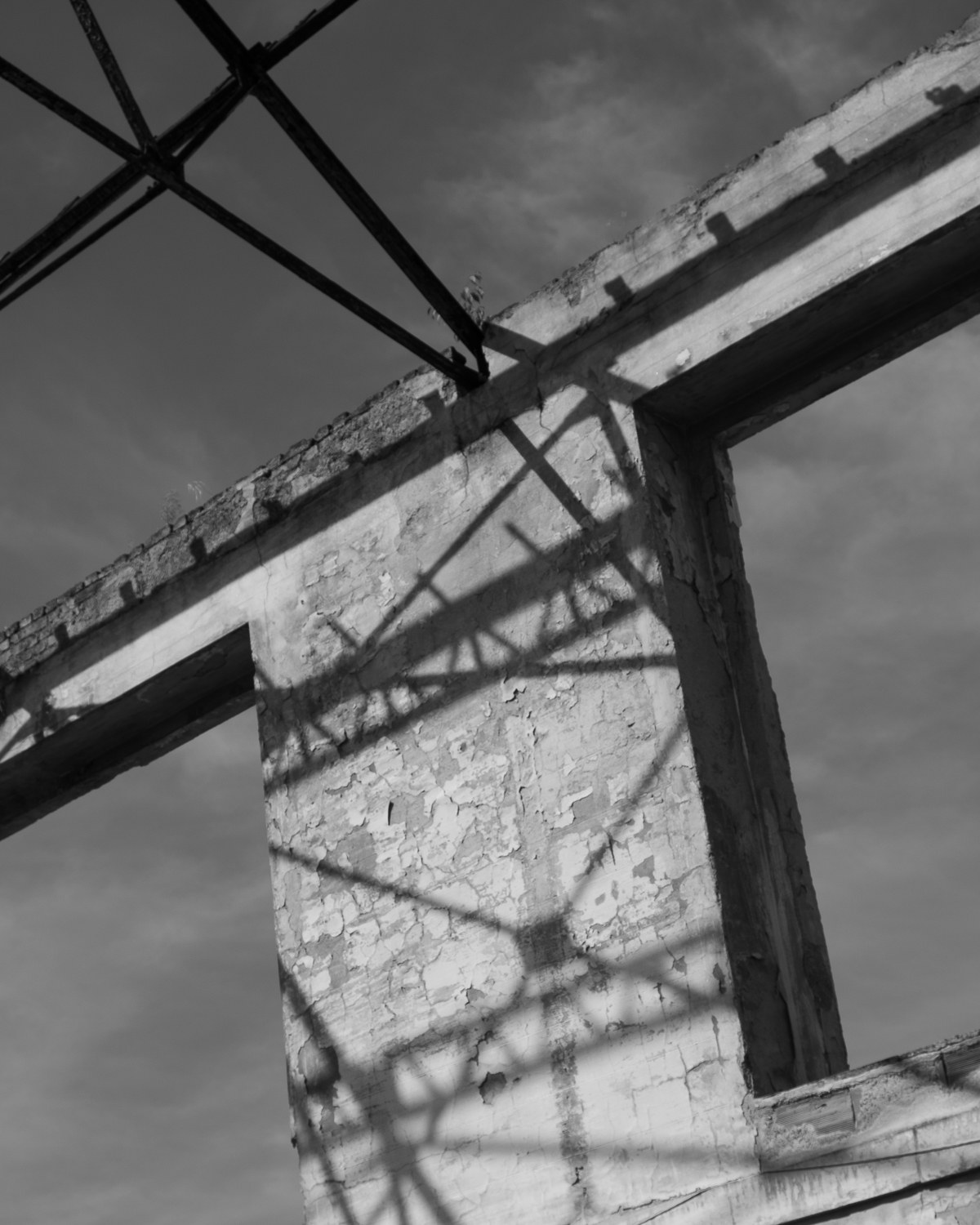
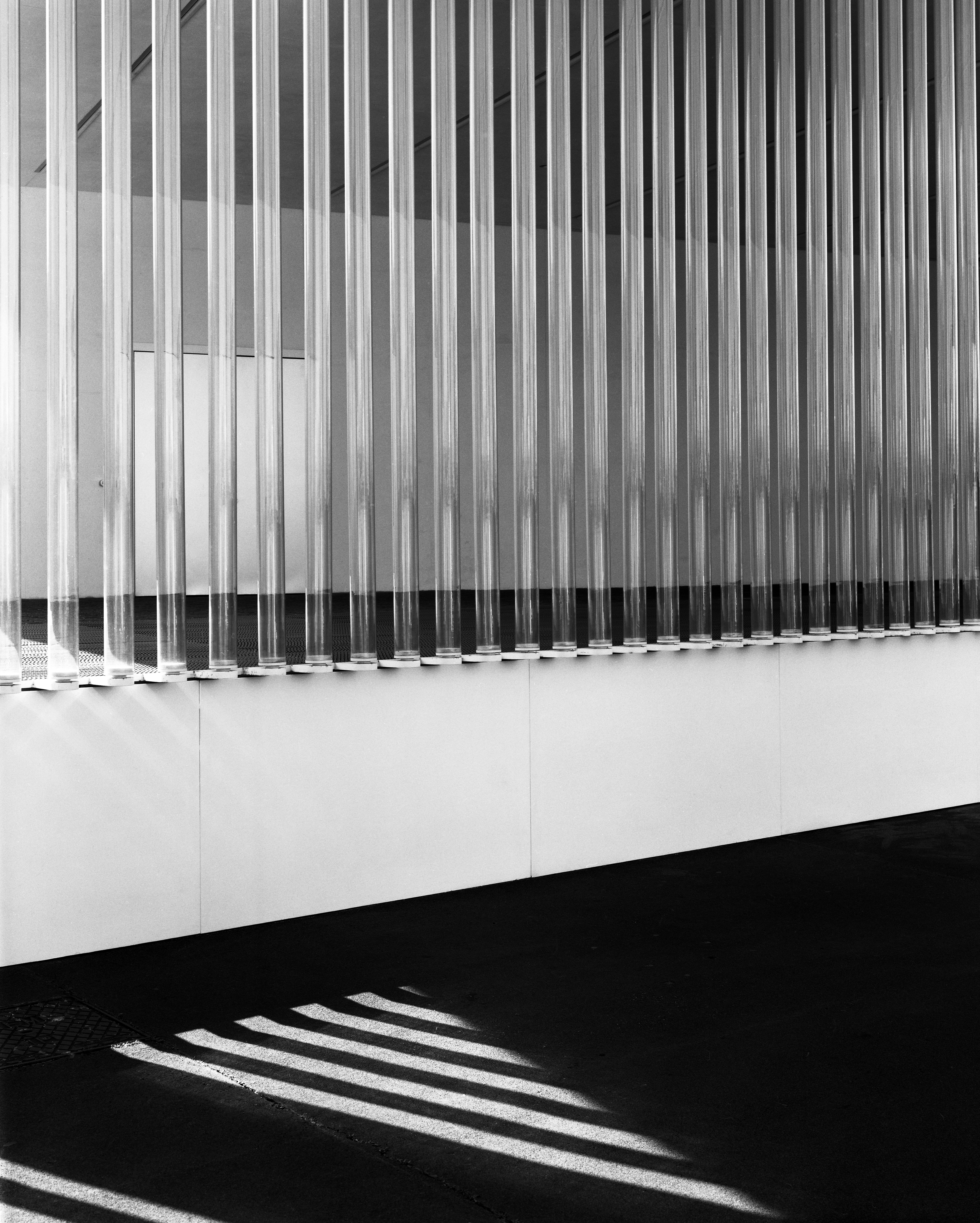
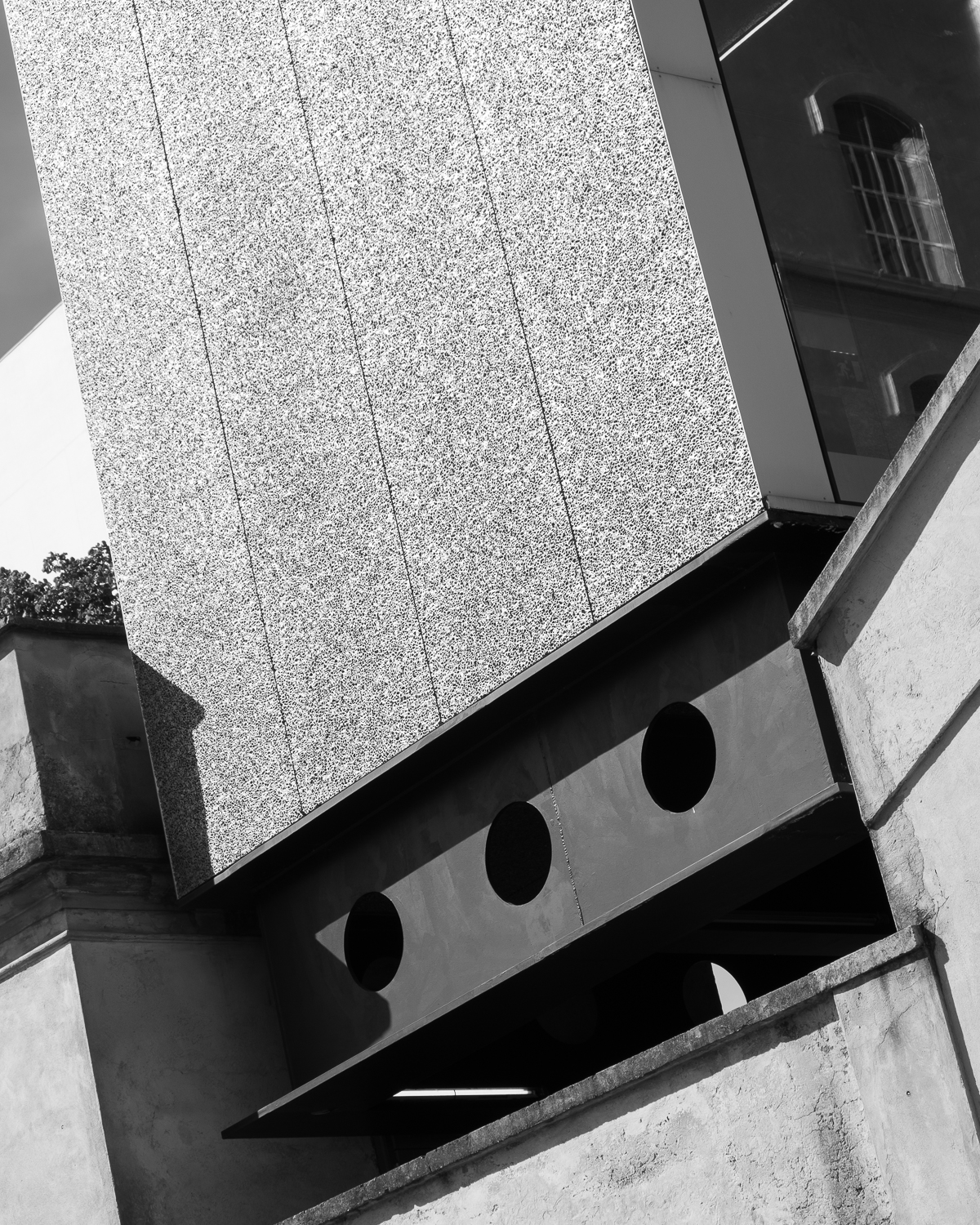
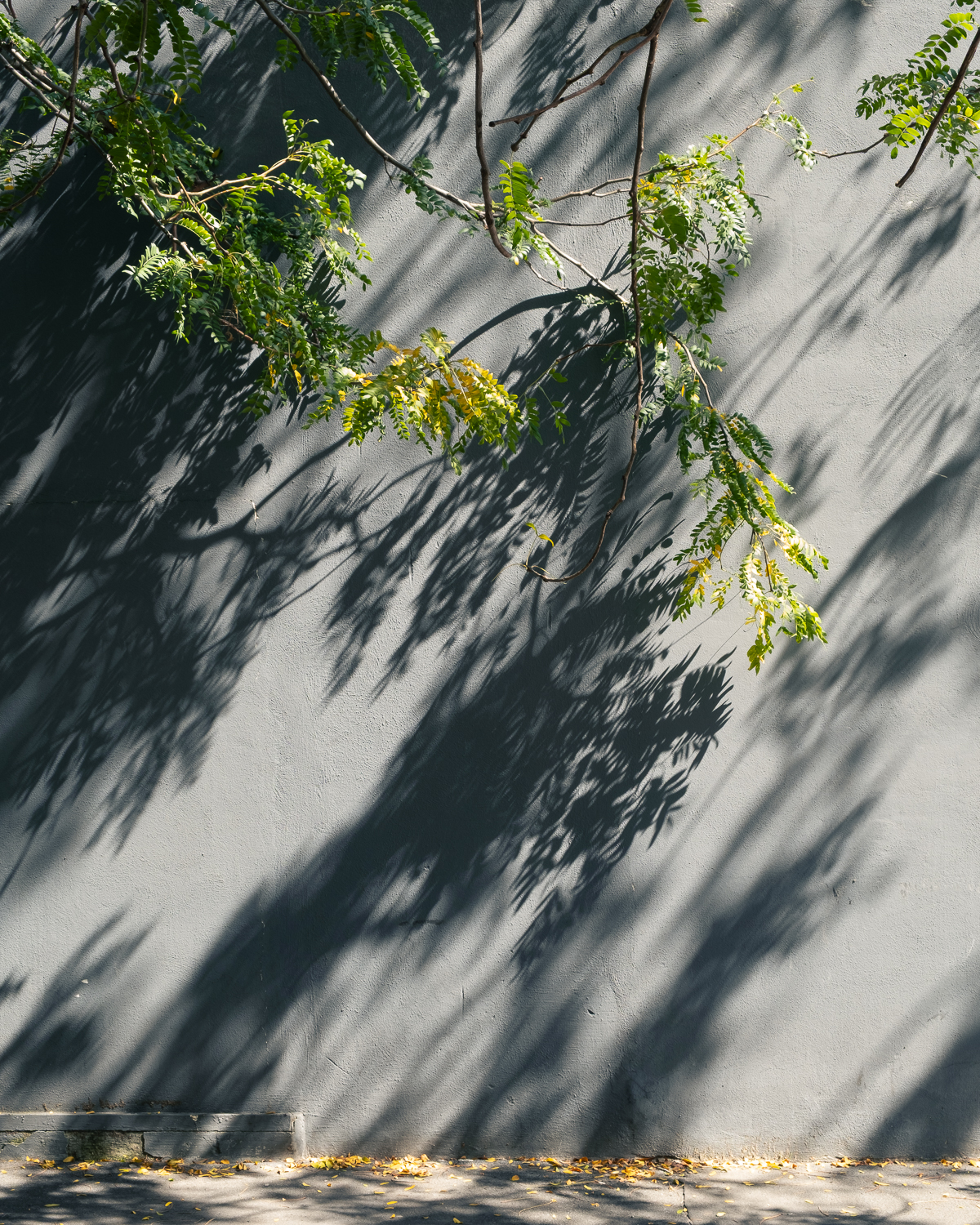
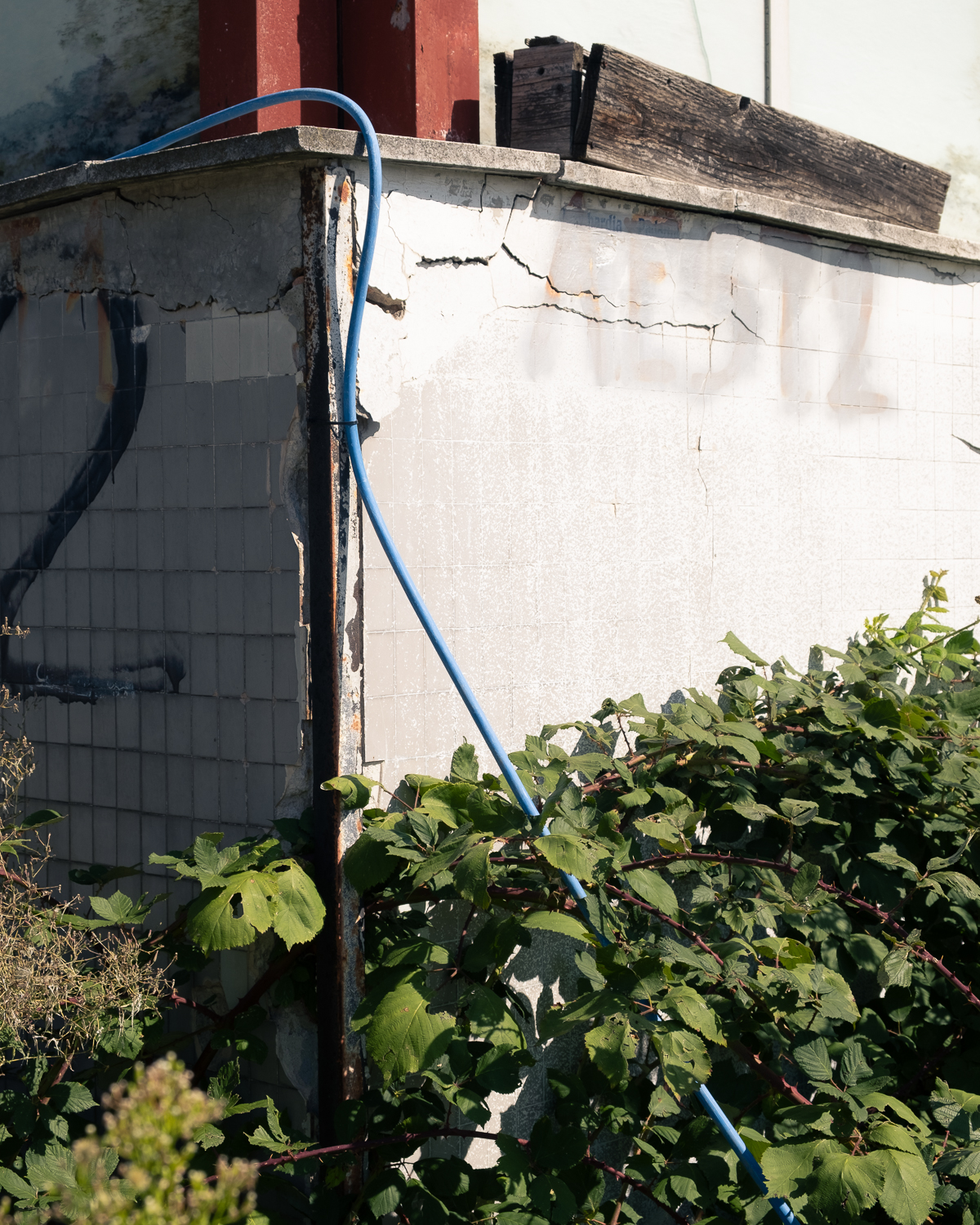
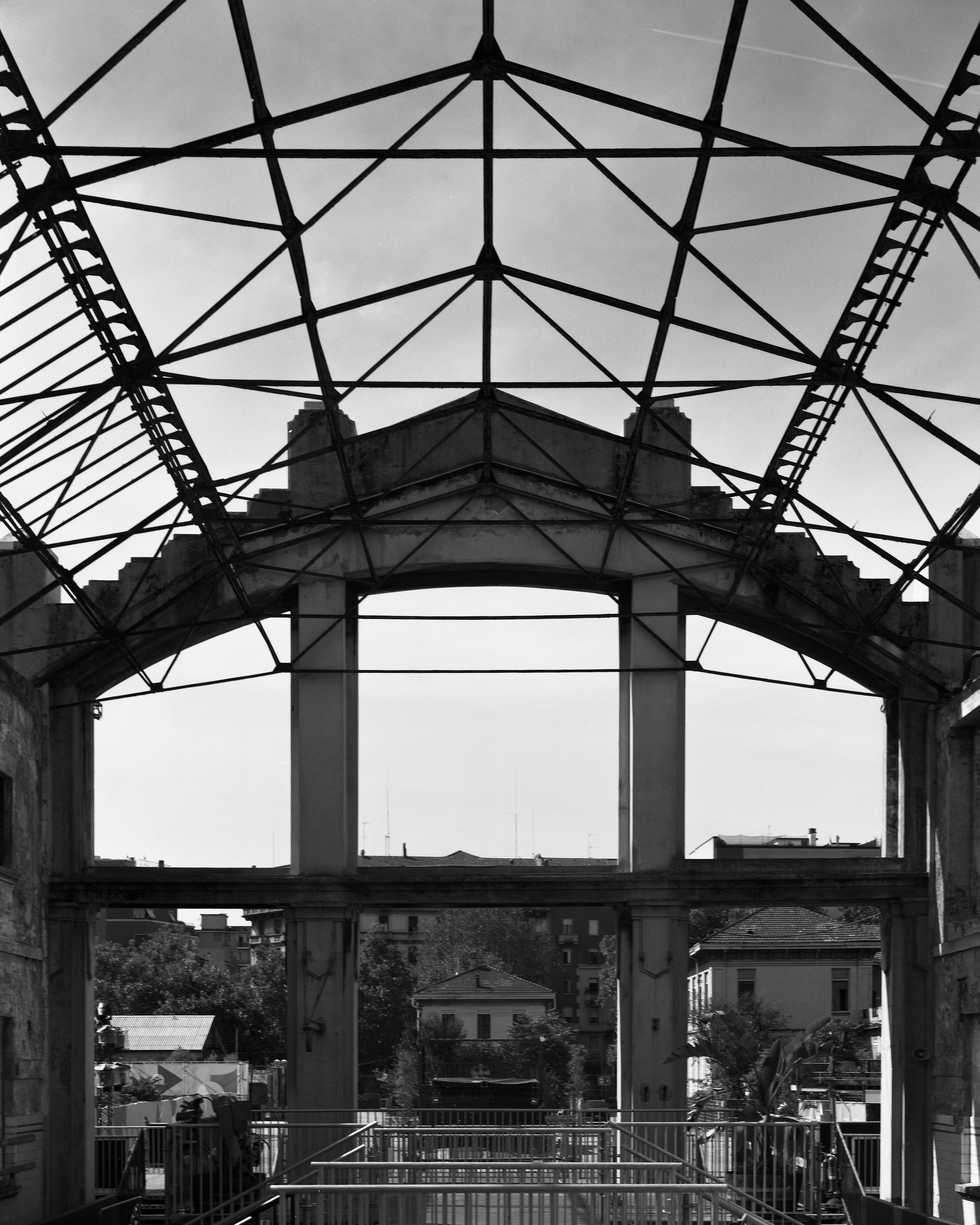
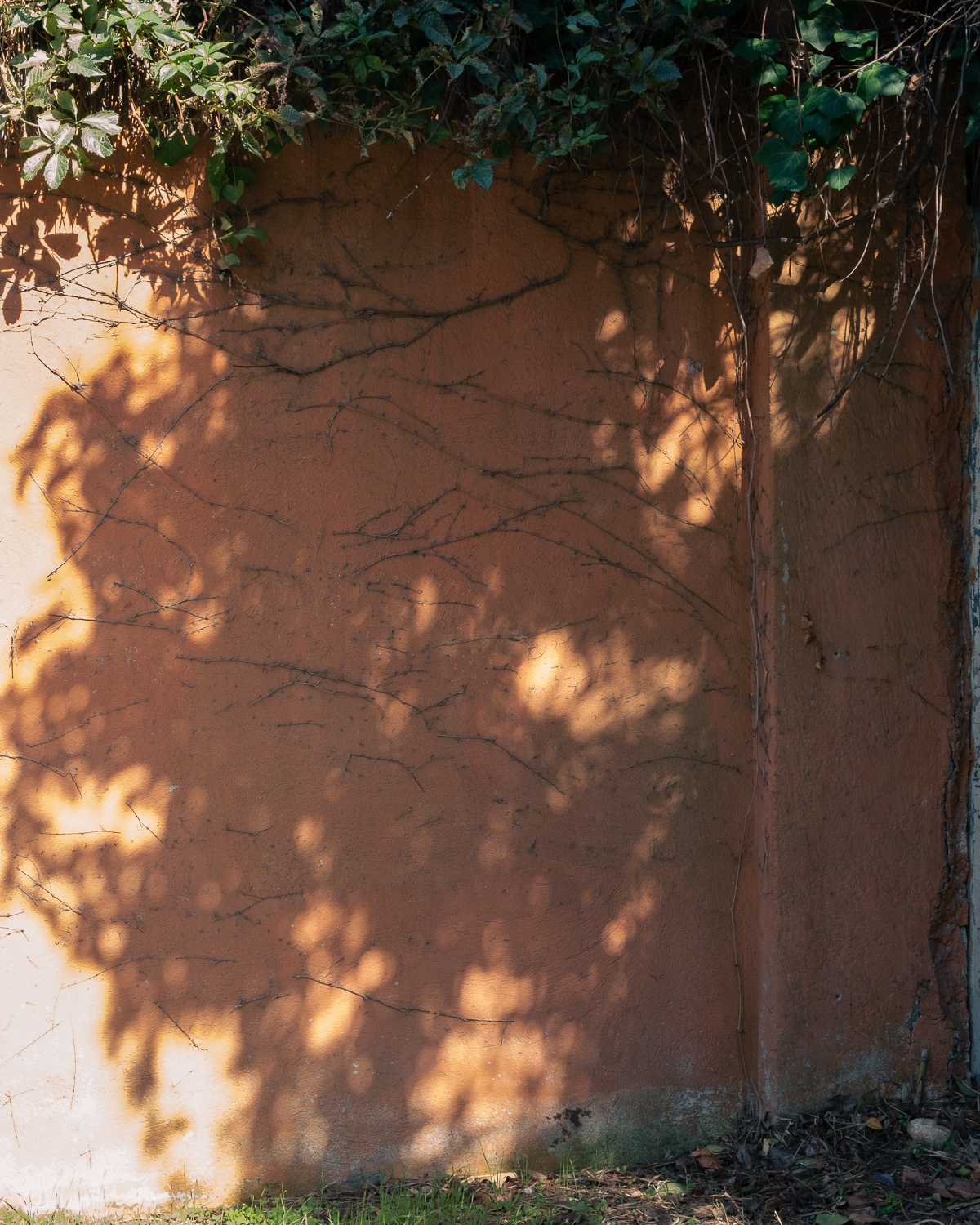
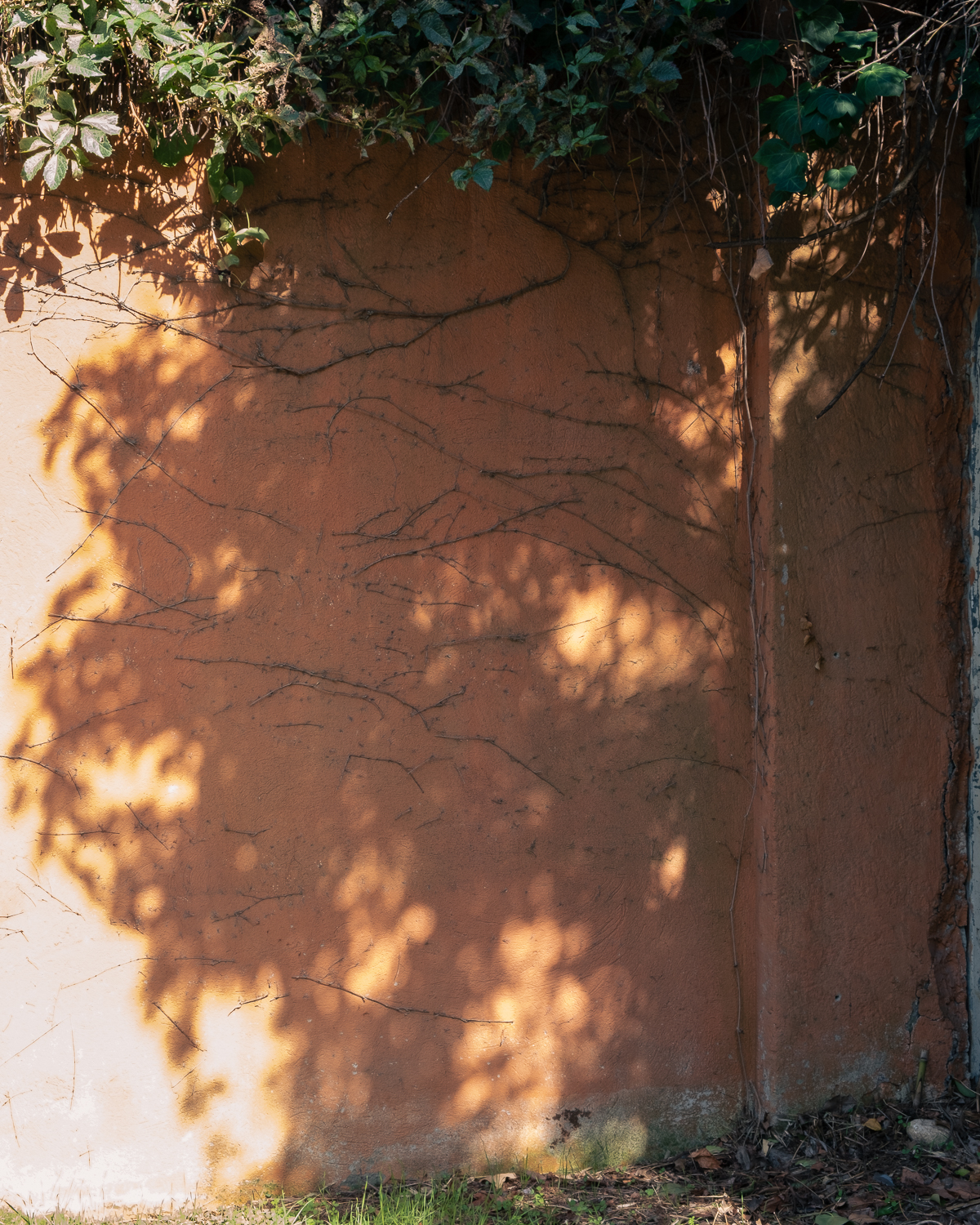
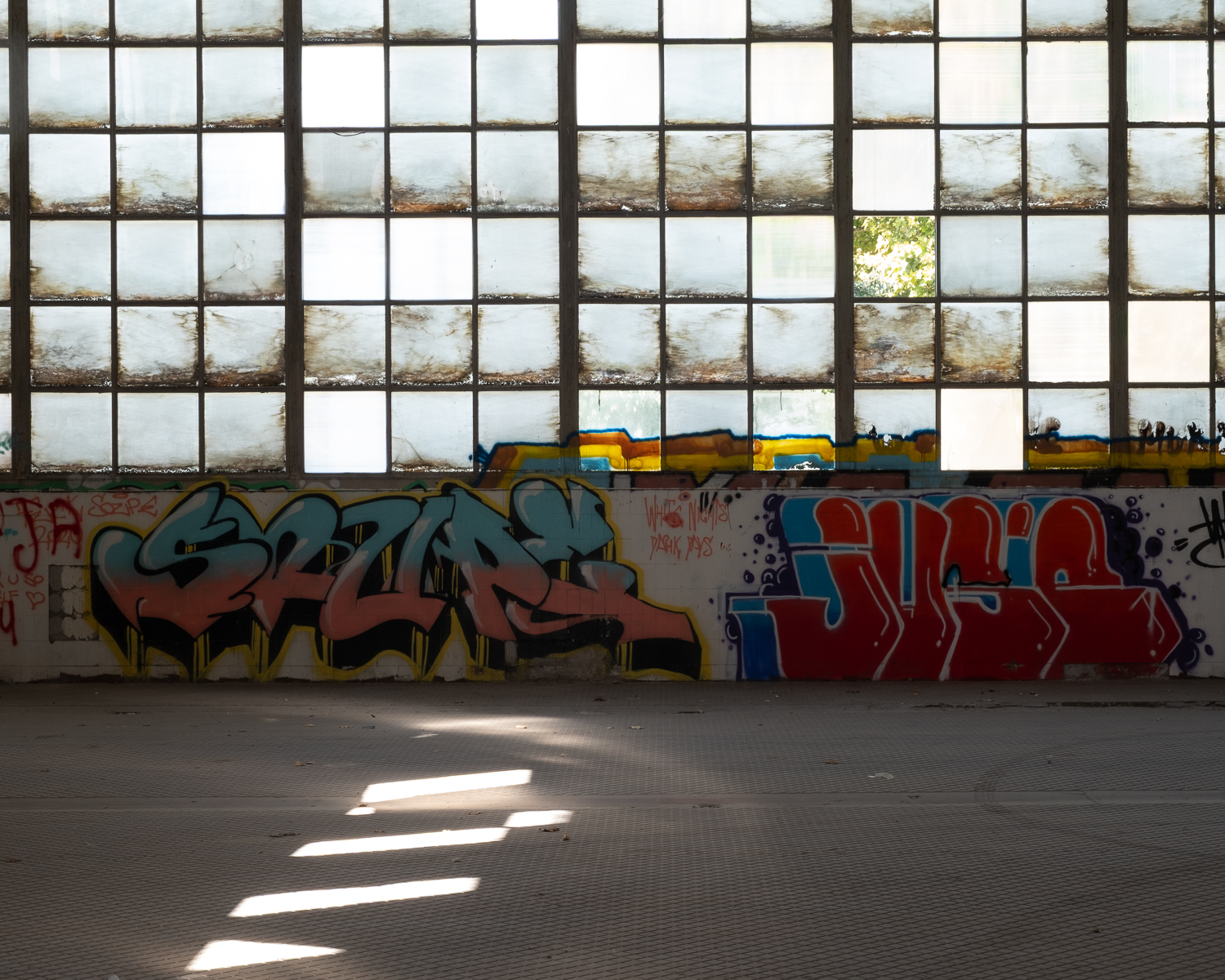
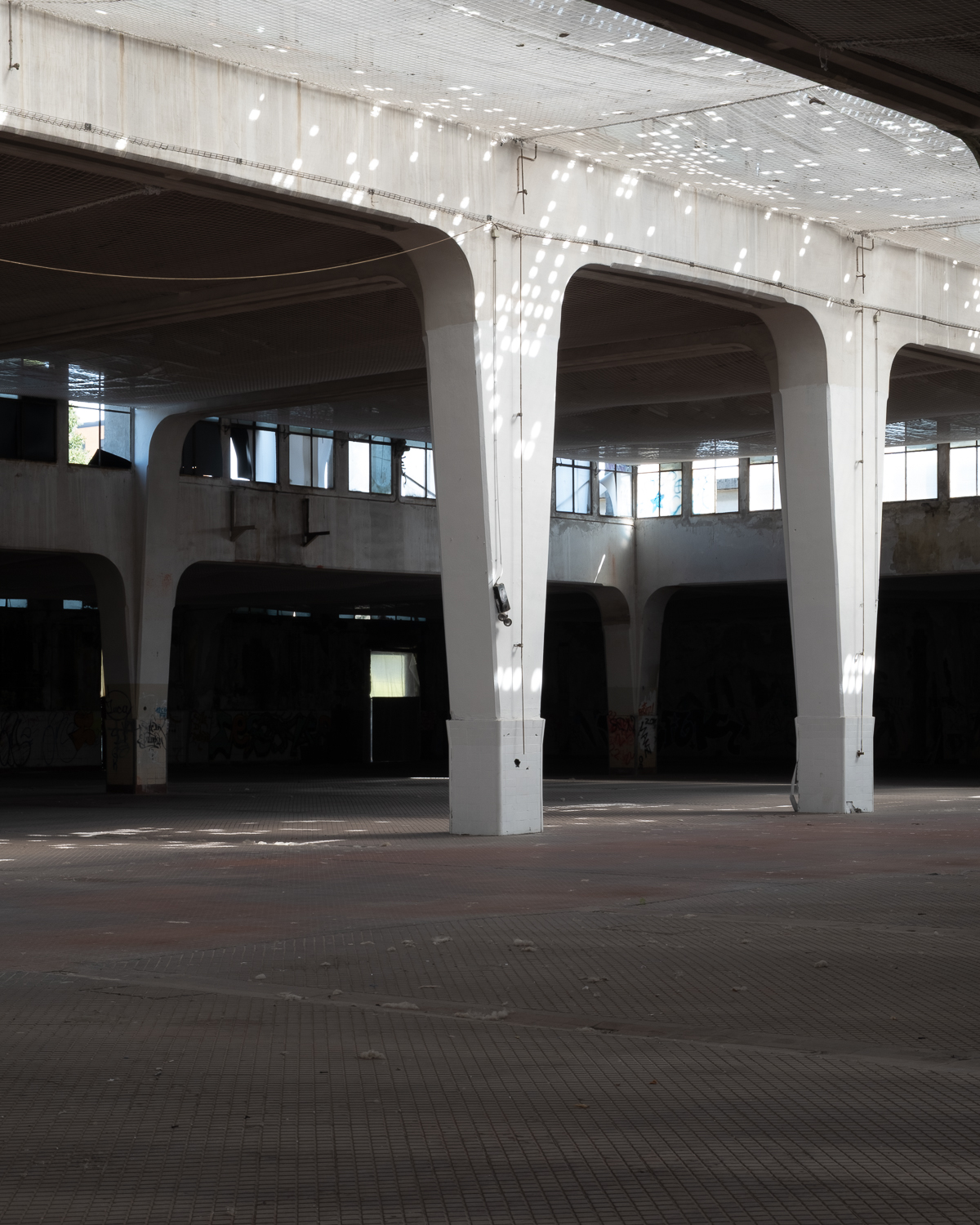
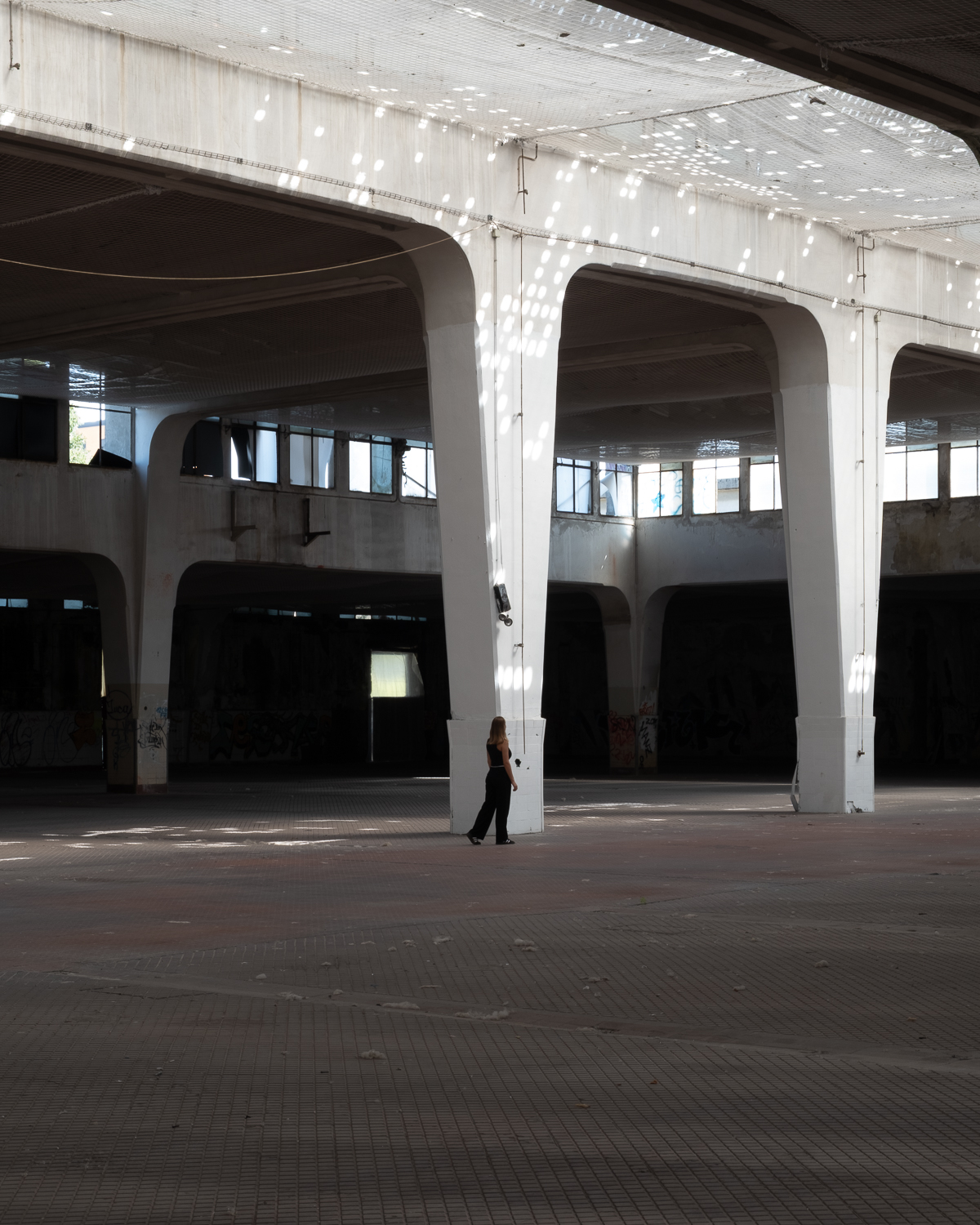
The project, titled "The shape of time", explores the theme of traces. This concept actively guided our photographic eye, pushing us to capture the physical marks of passing time, ephemeral urban transitions and the silent residues of human presence. During the masterclass, we experimented with a hybrid approach to photography: some images were captured using a traditional large format camera and later developed in a darkroom, while others were taken with a digital camera. This visual research unfolded across various significant locations in Milan, with a particular focus on the spaces of Fondazione Prada and Ex Macello.
Ephemeral
/ɪˈfemərəl/
lasting or used for only a short period of time
Time
/taɪm/
a period of time, either long or short, during which something happens
Transition
/trænˈzɪʃn/
the process or a period of changing from one state or condition to another

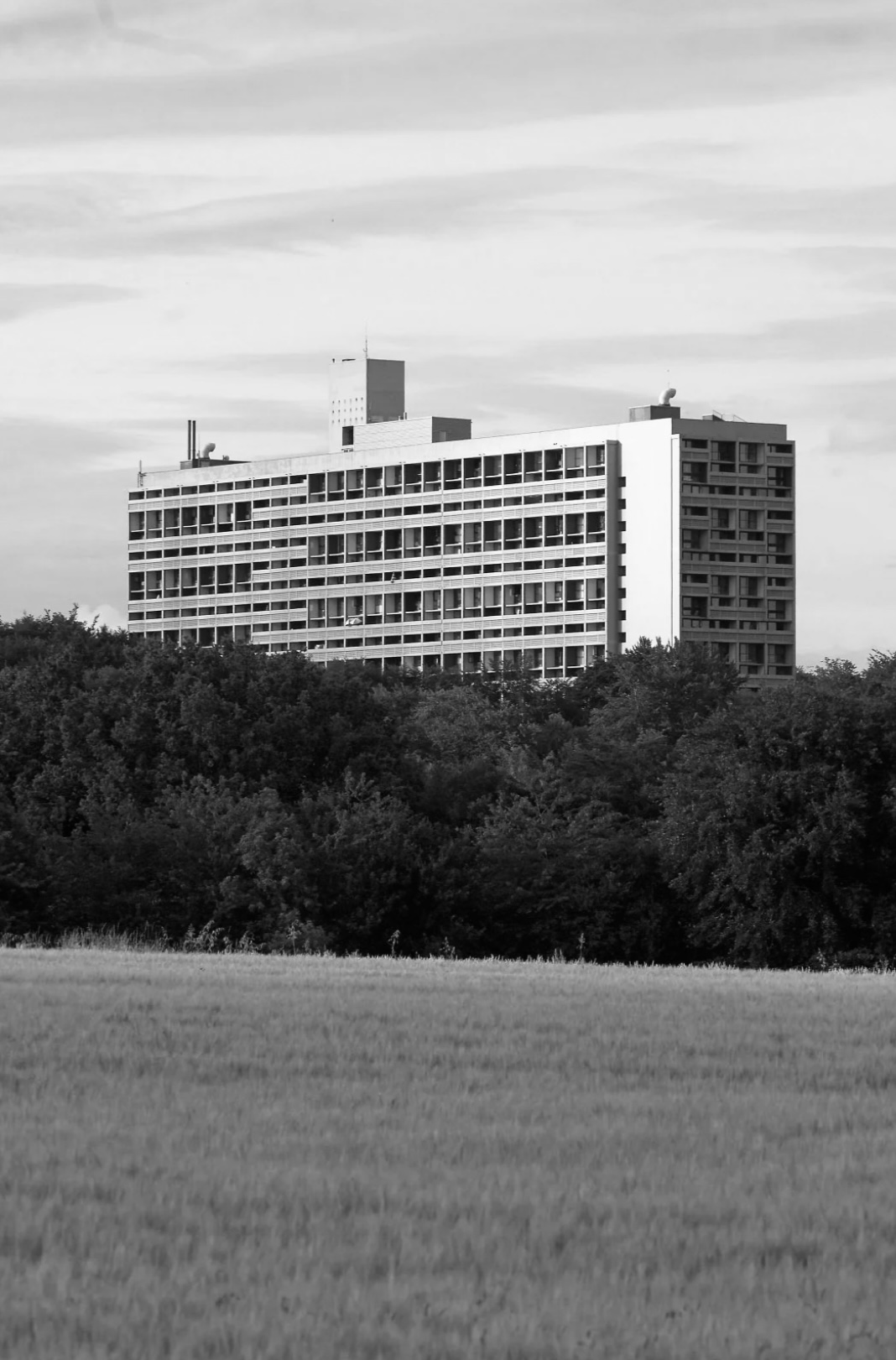
The Unité d'Habitation and the collective dimension
Bachelor's thesis, Politecnico di Milano, 2024
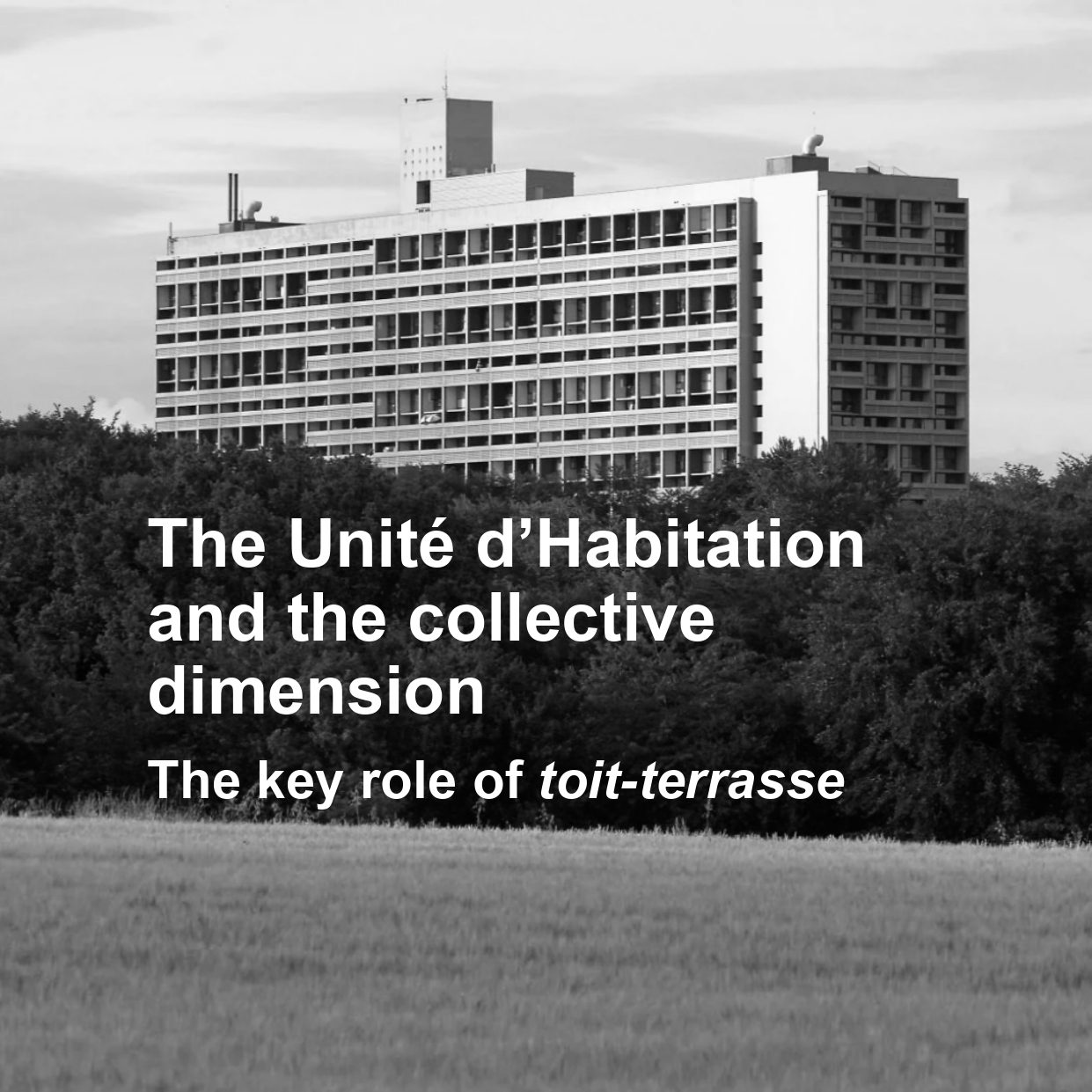
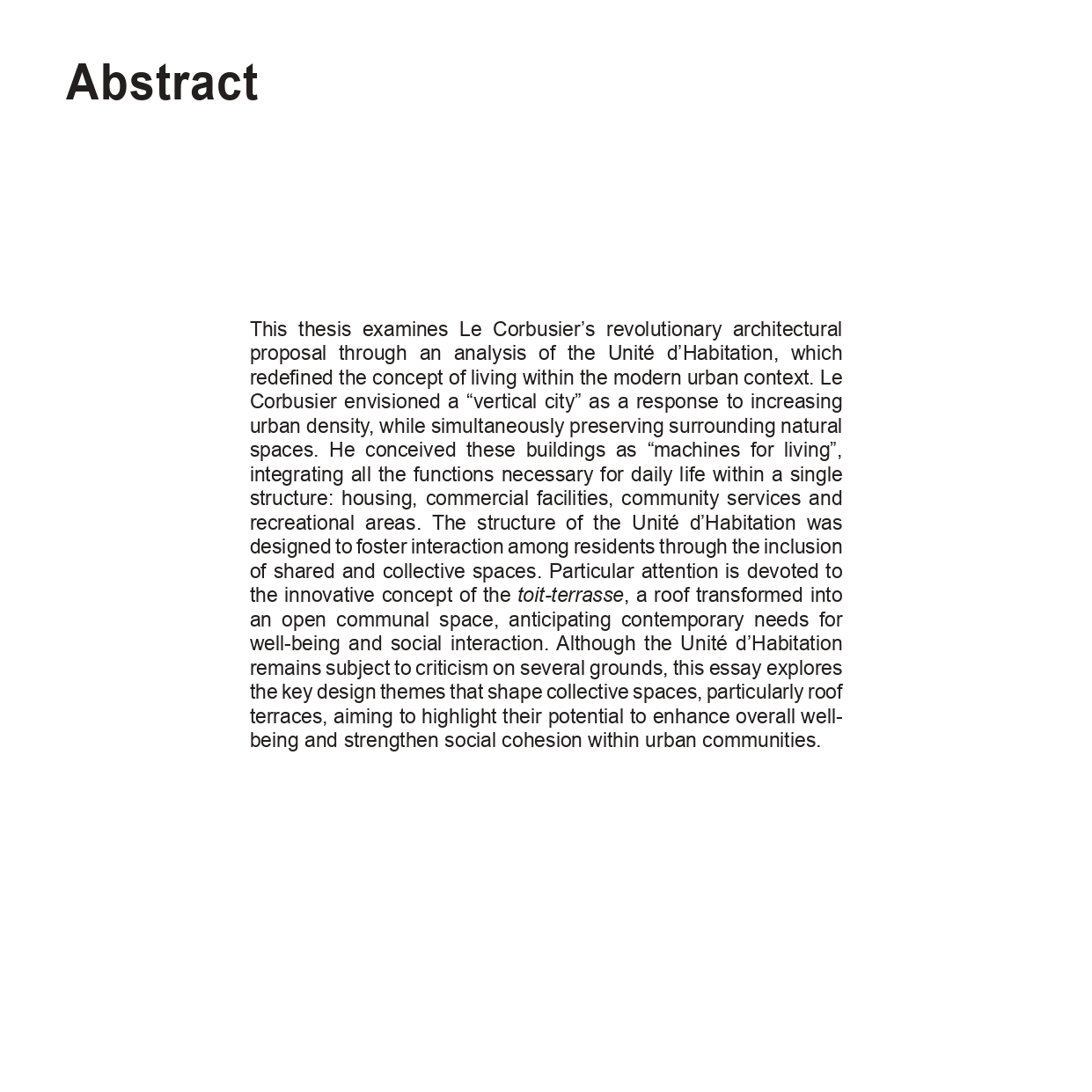
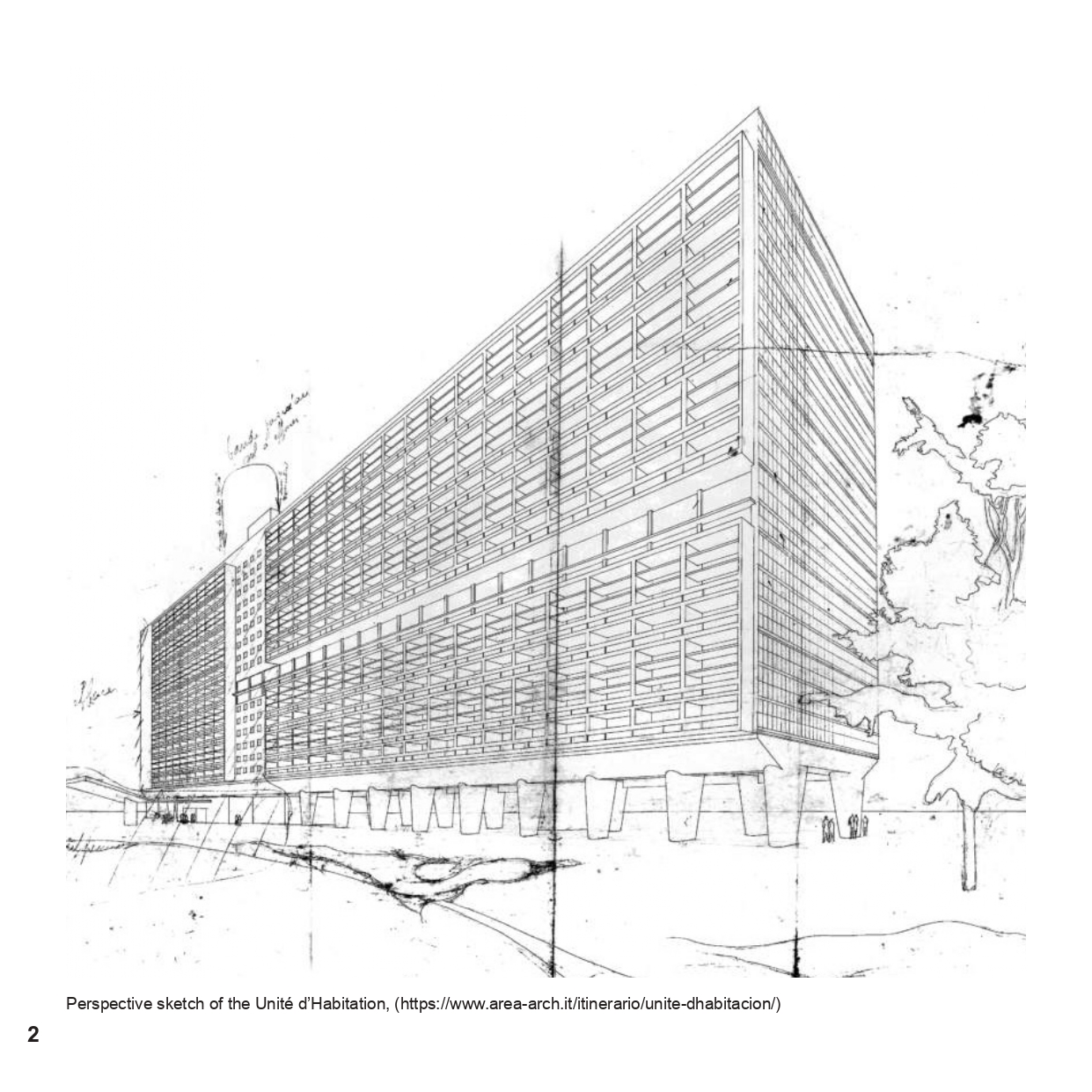
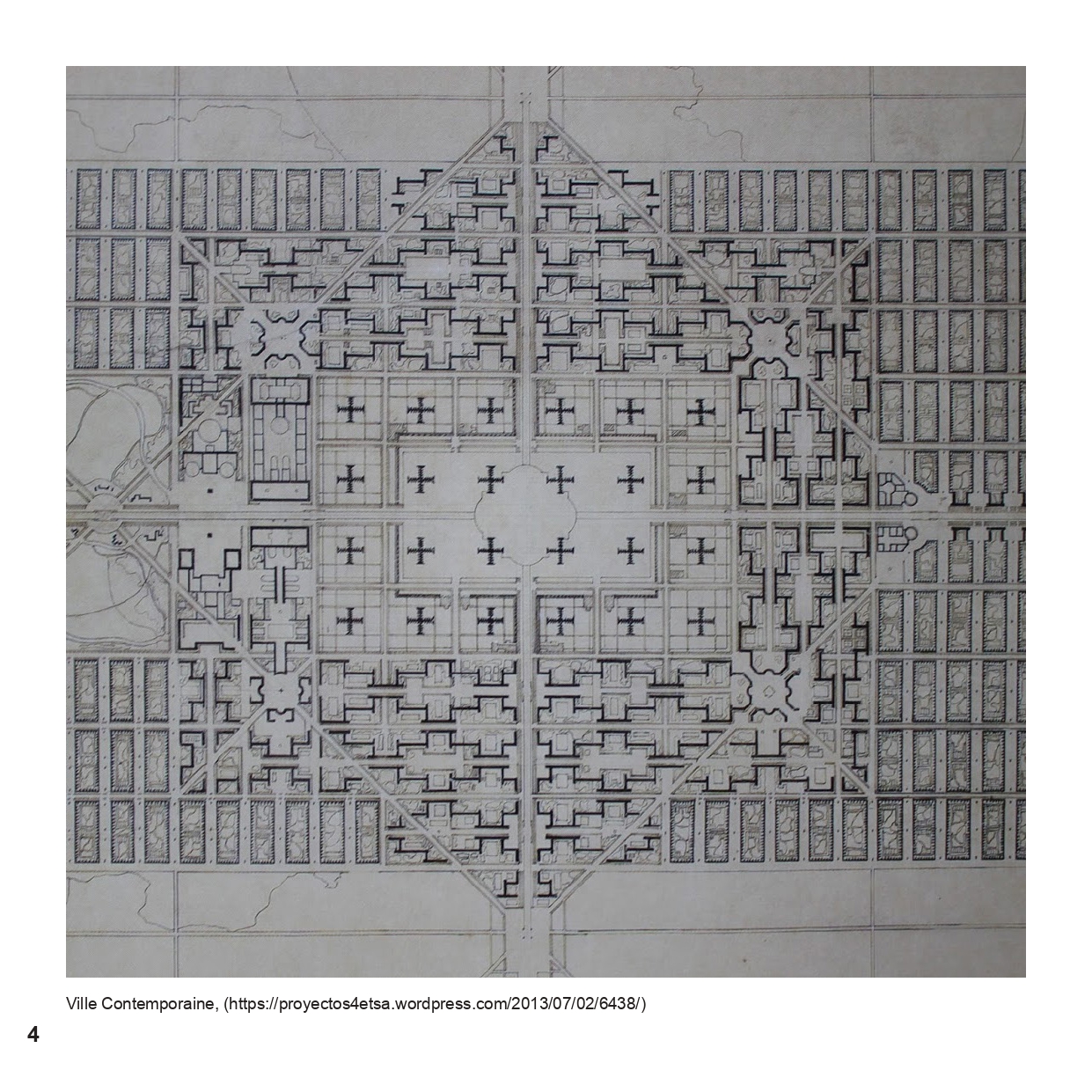
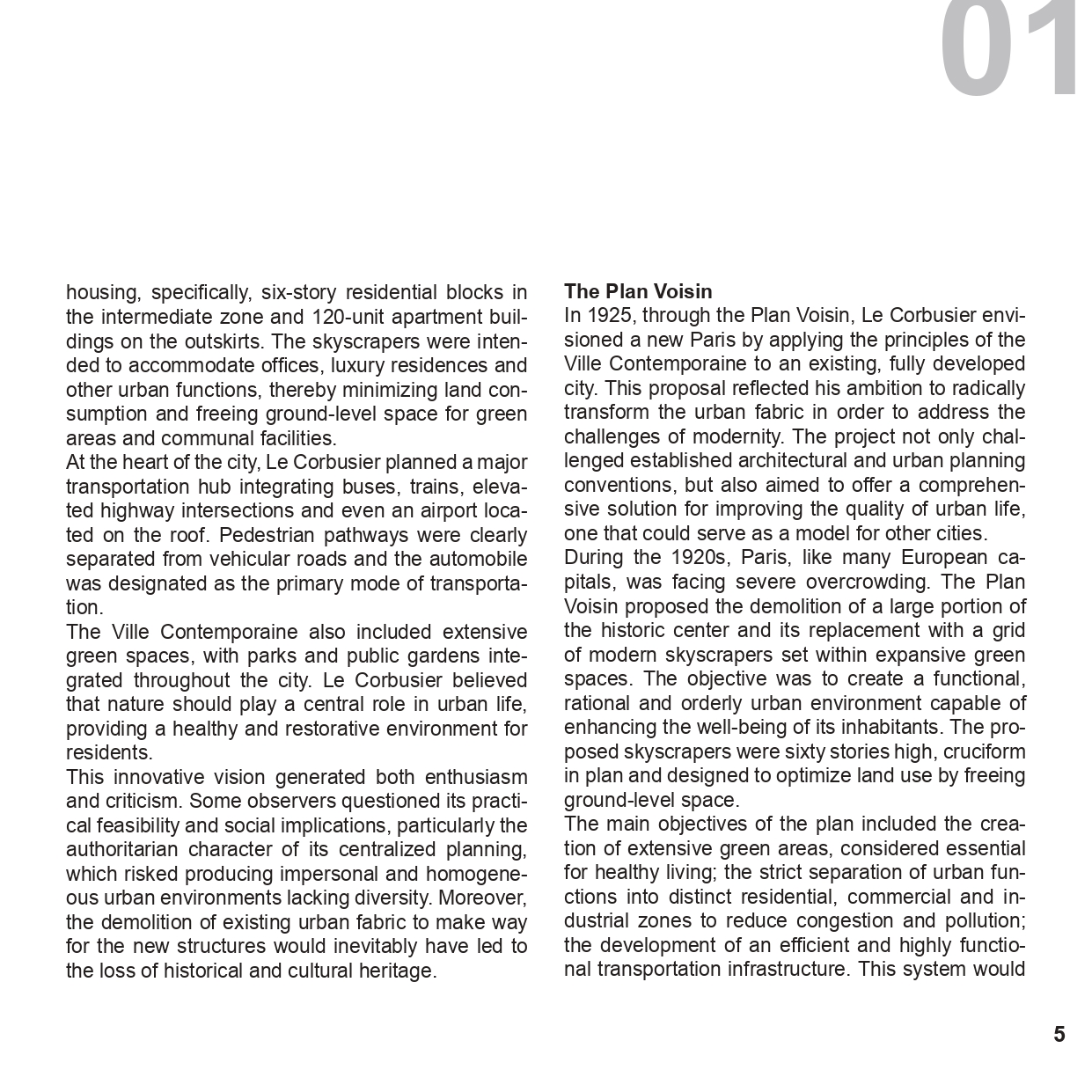
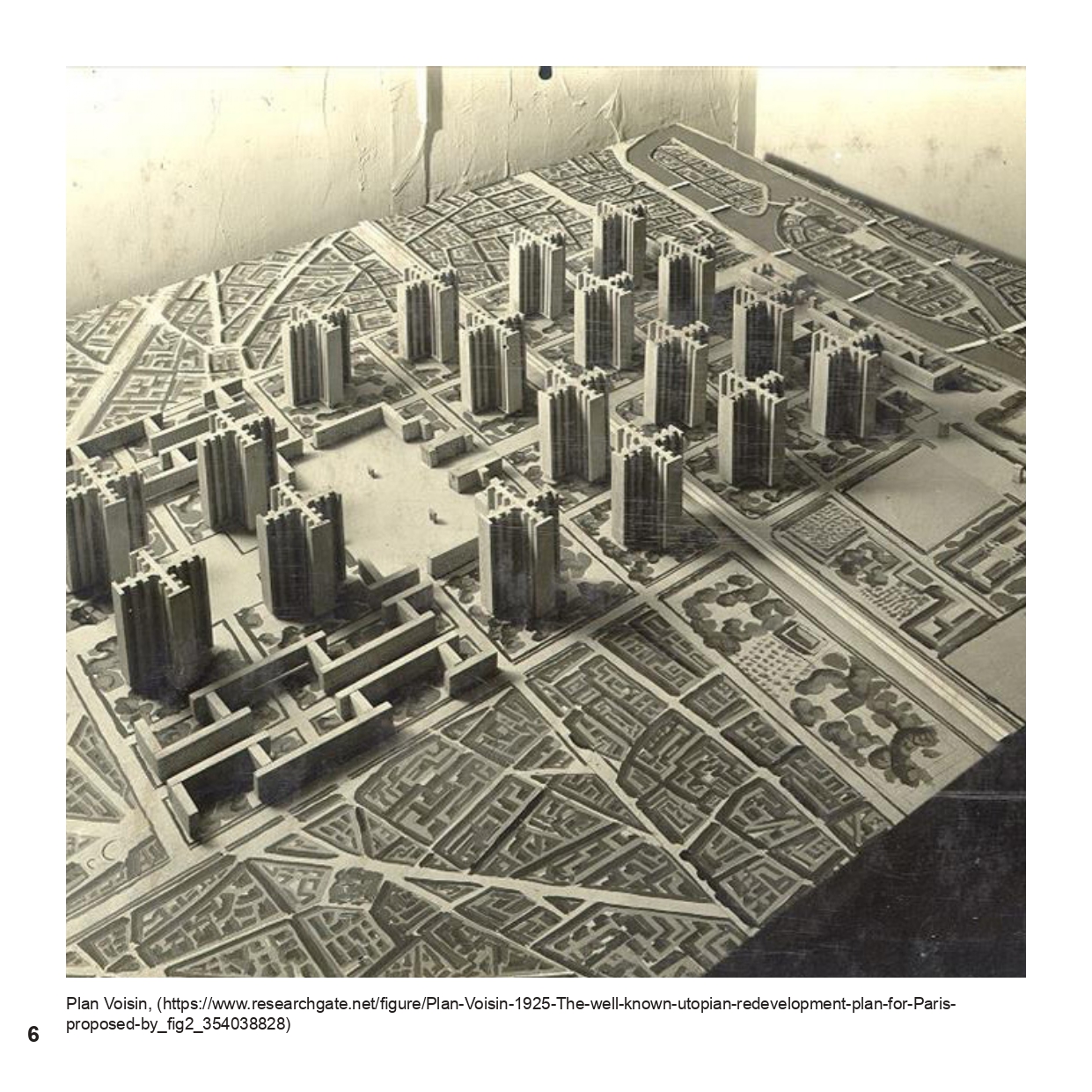
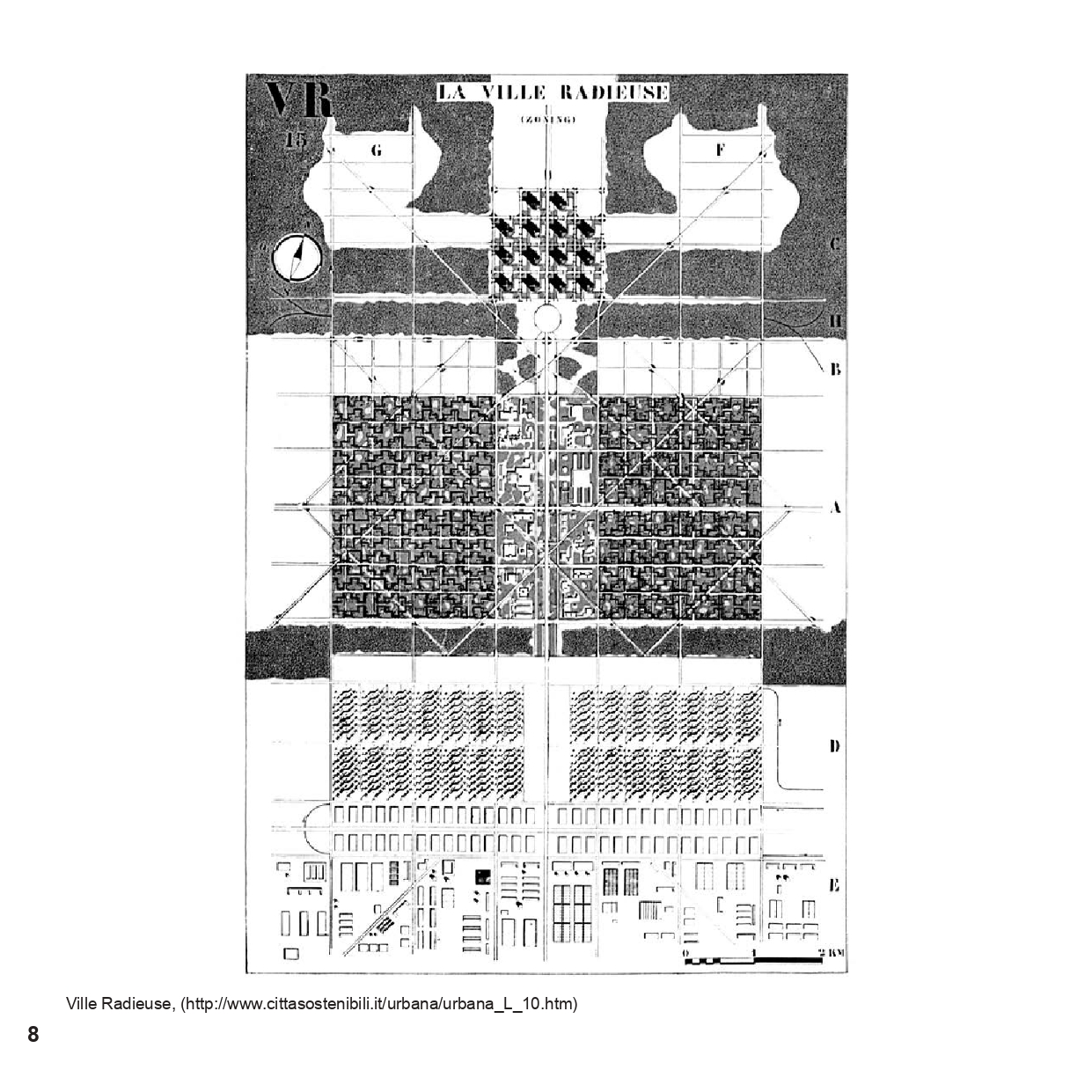
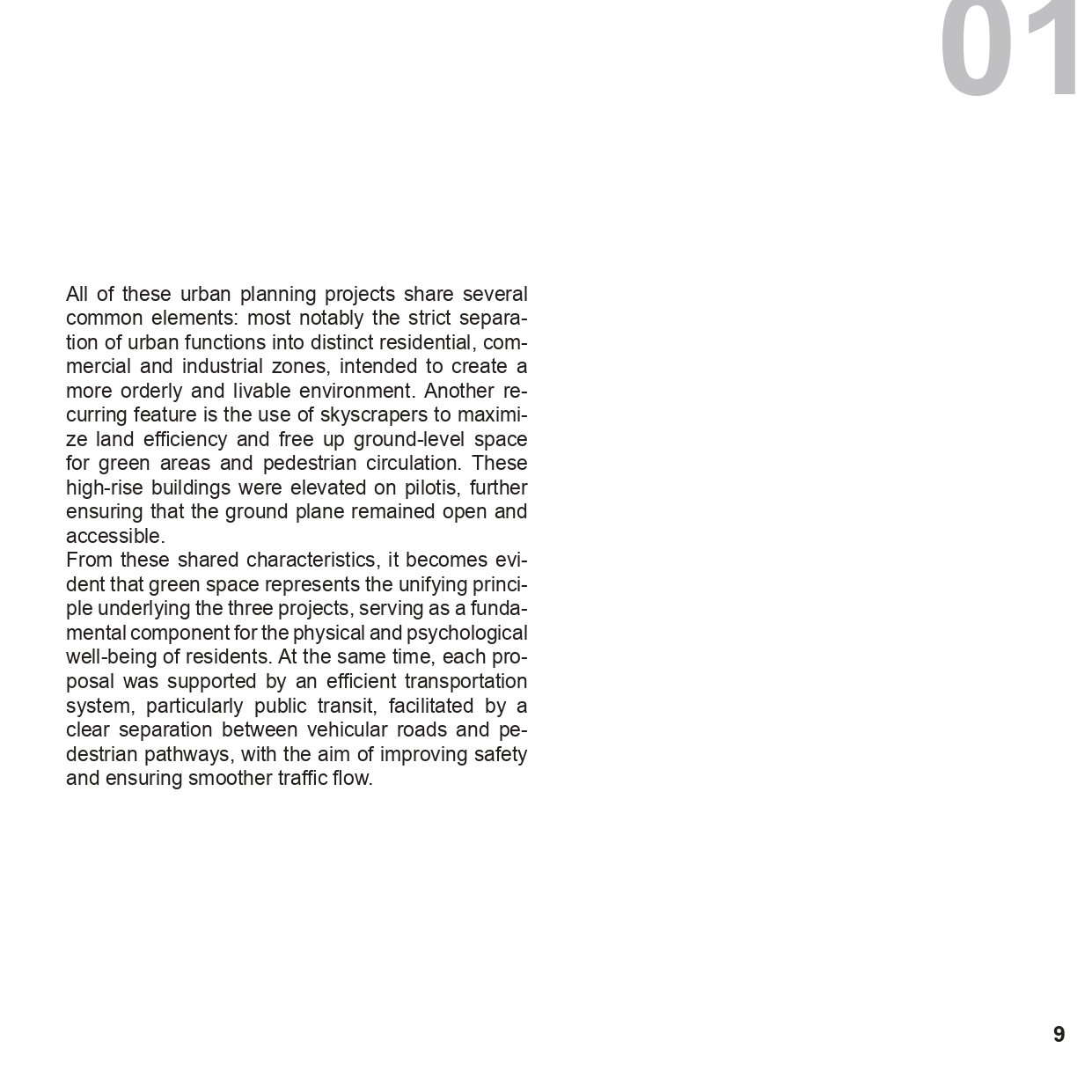
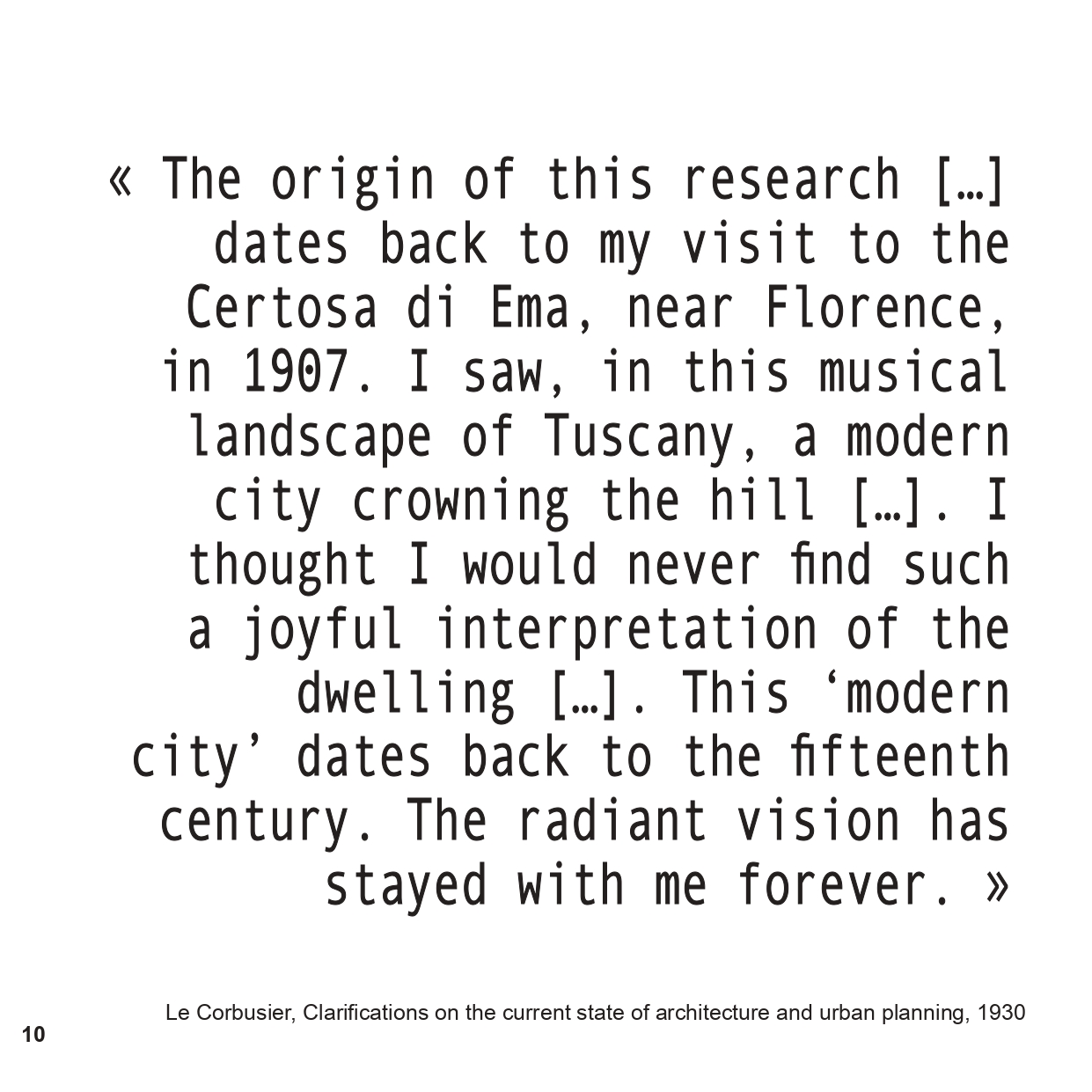
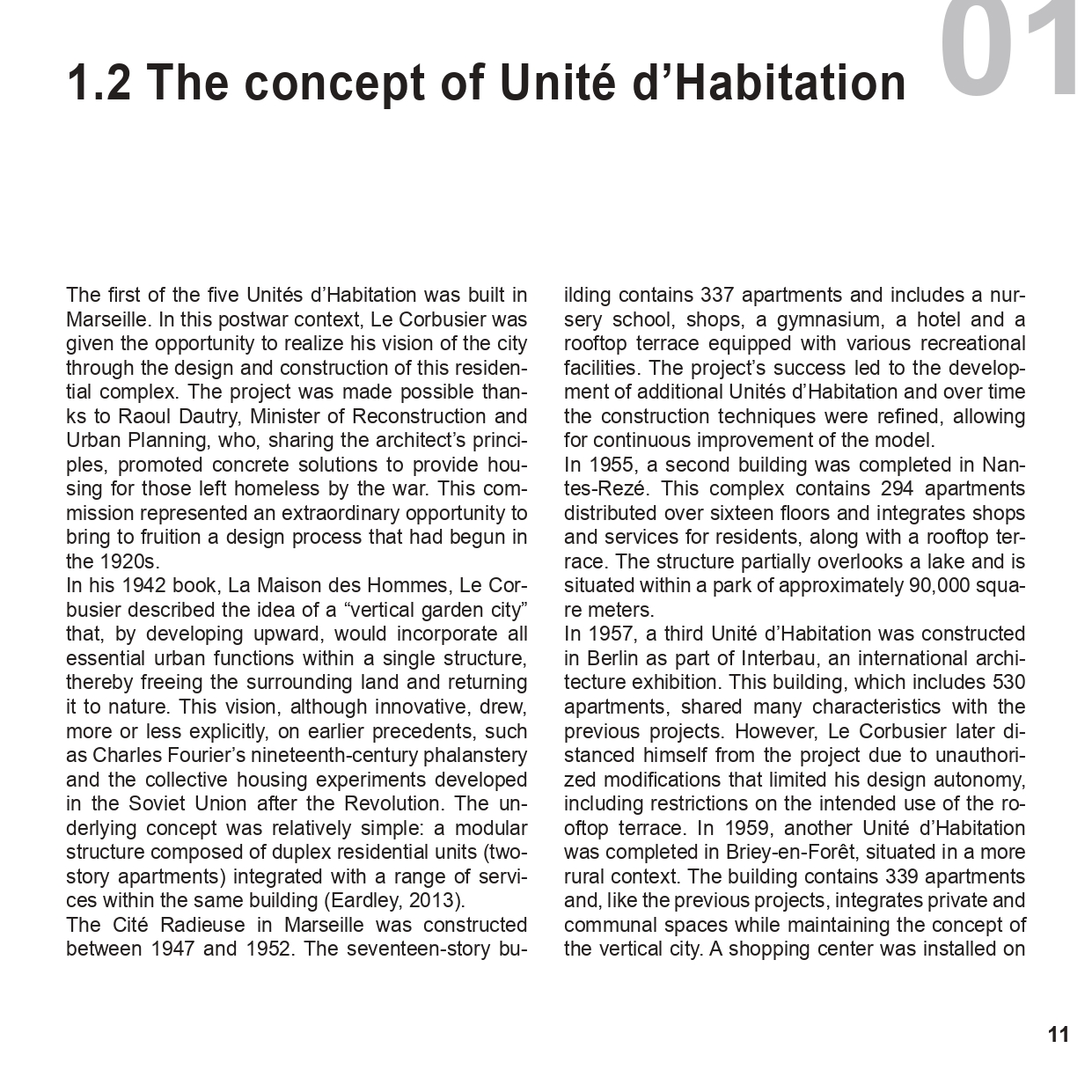
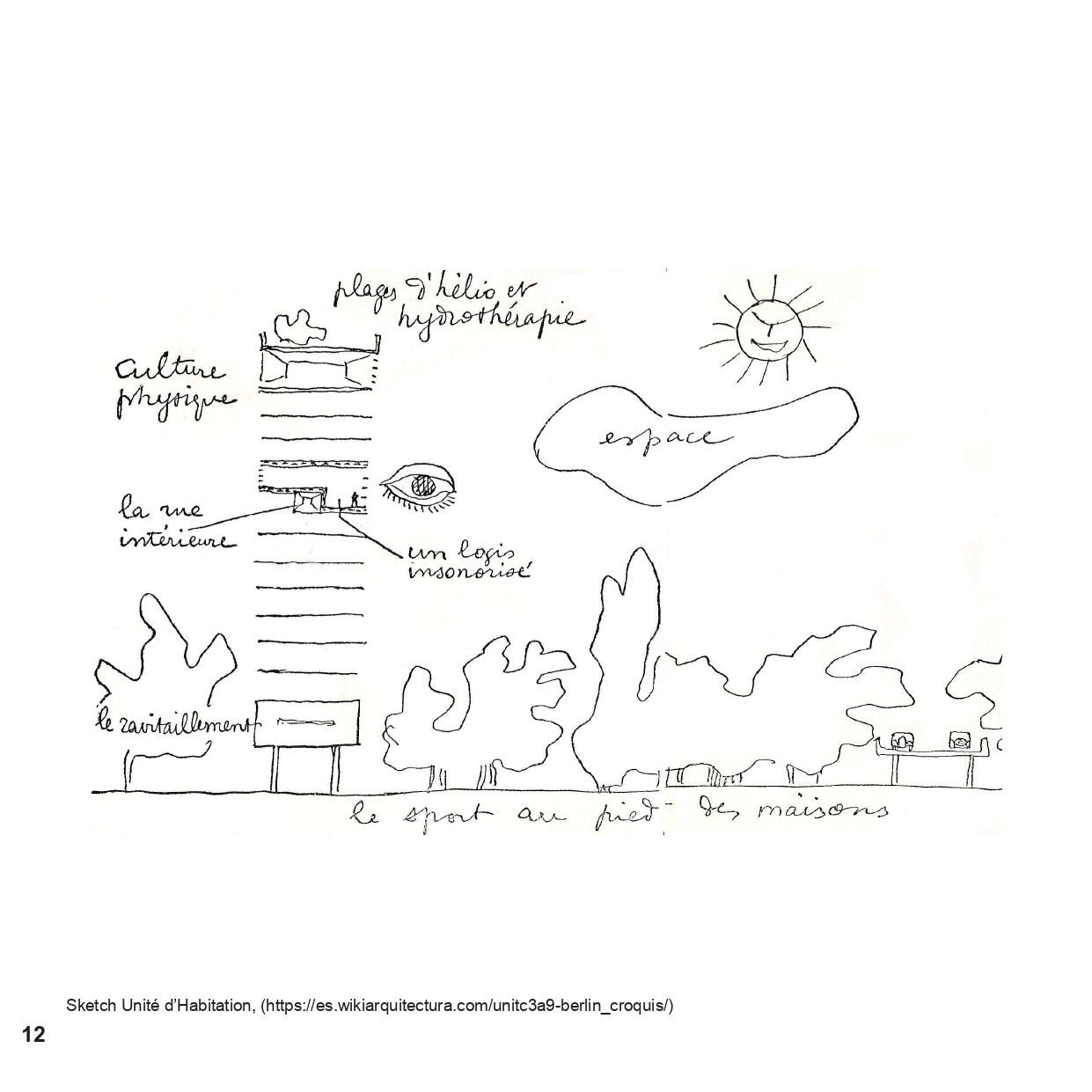
This thesis, titled "The Unité d'Habitation and the collective dimension: The key role of toit-terrasse", examines Le Corbusier's revolutionary architectural proposal that redefined the concept of modern urban living. It explores the "vertical city" envisioned as a "machine for living", a self-sufficient microcosm integrating housing, commercial facilities and community services within a single structure.
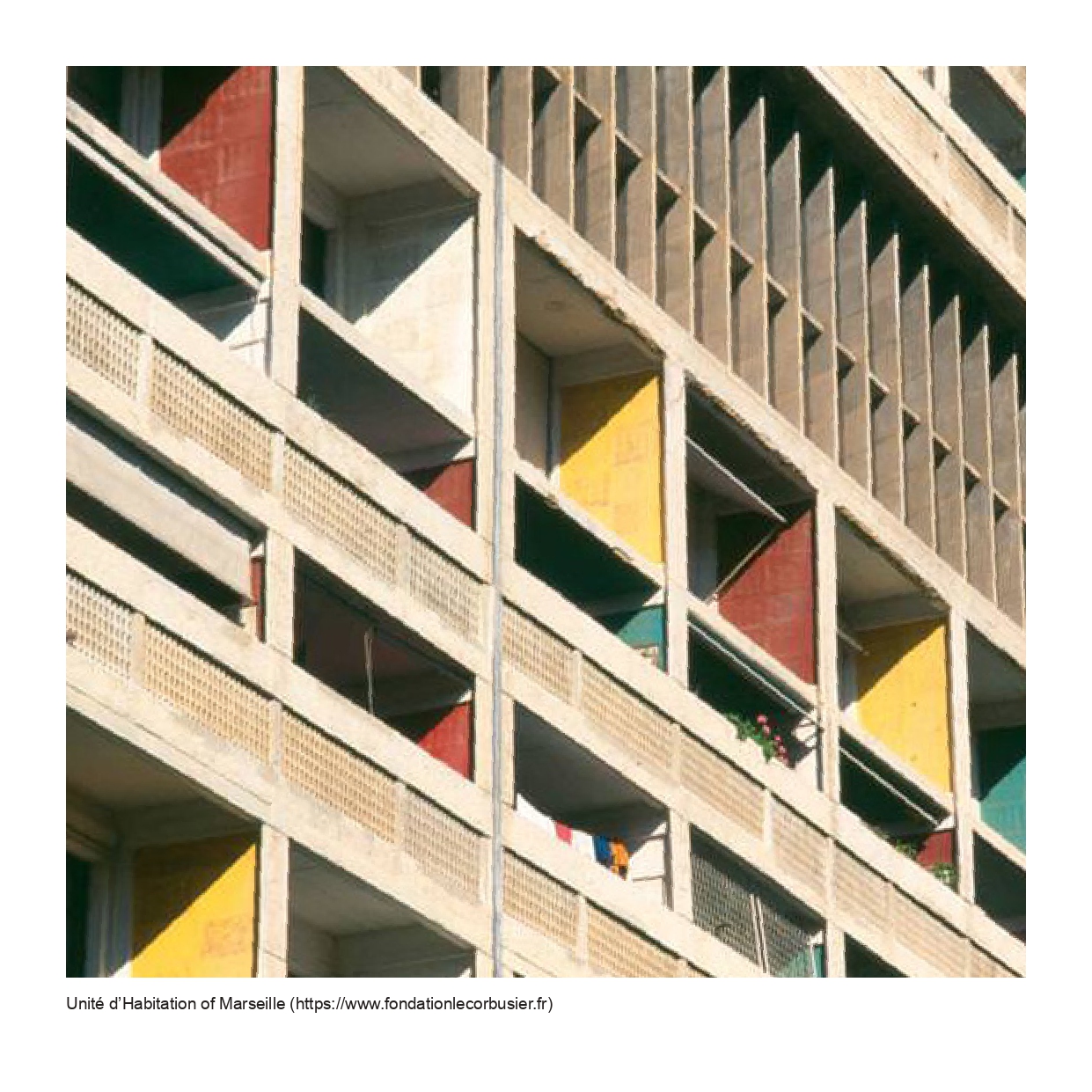
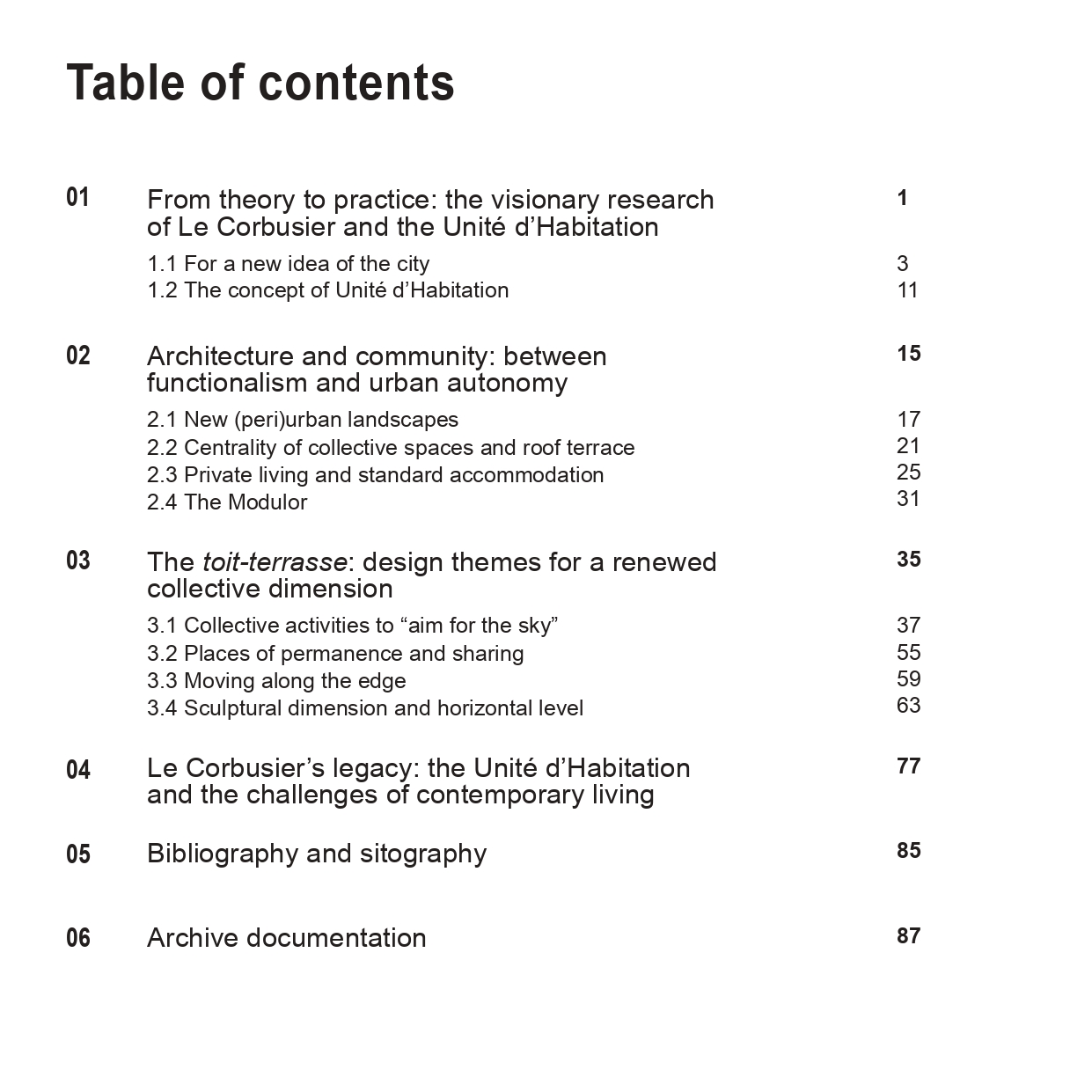
Central to this study is the innovative role of the toit-terrasse (roof terrace), conceived not merely as a technical element but as a suspended public square, an urban oasis in the sky, designed to foster social interaction and physical well-being. The analysis delves into key architectural principles including the use of pilotis to liberate the ground level, the duplex configuration of apartments to optimize space and the application of the Modulor proportional system based on human measurements. By examining the five realized Unités d'Habitation in Marseille, Nantes-Rezé, Berlin, Briey-en-Forêt and Firminy-Vert, the thesis evaluates how these "concrete sculptures" balanced rational order with the complexities of collective life.
A significant contribution of this research is the inclusion and study of original drawings and archival documentation obtained directly from the Fondation Le Corbusier, which provided a unique and rigorous basis for analyzing the sculptural and functional dimensions of the project.



Want to read more?
↓ Download full Thesis (PDF)Housing and Neighbourhood Studio
Group project, Politecnico di Milano, 2025 - 2026
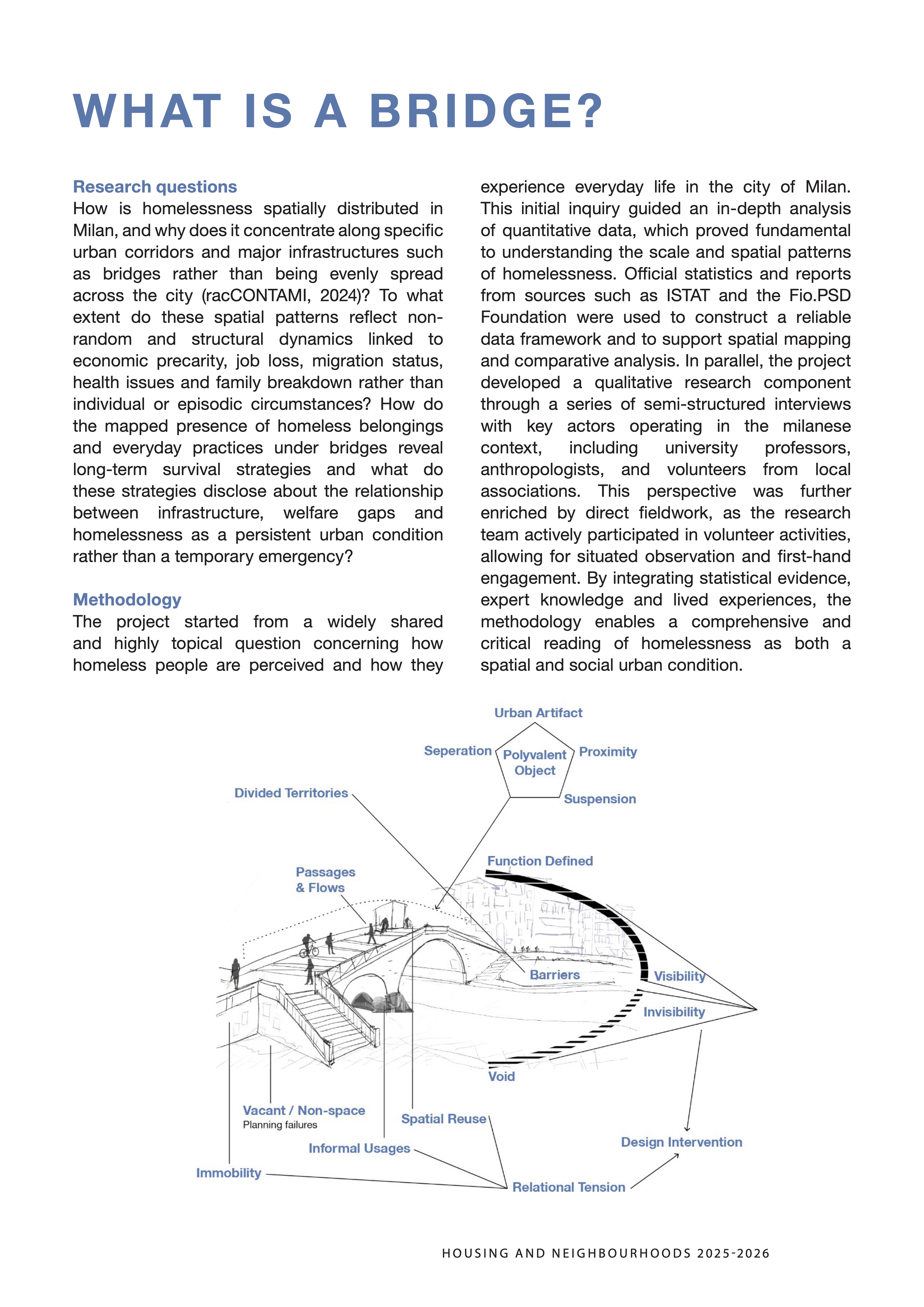
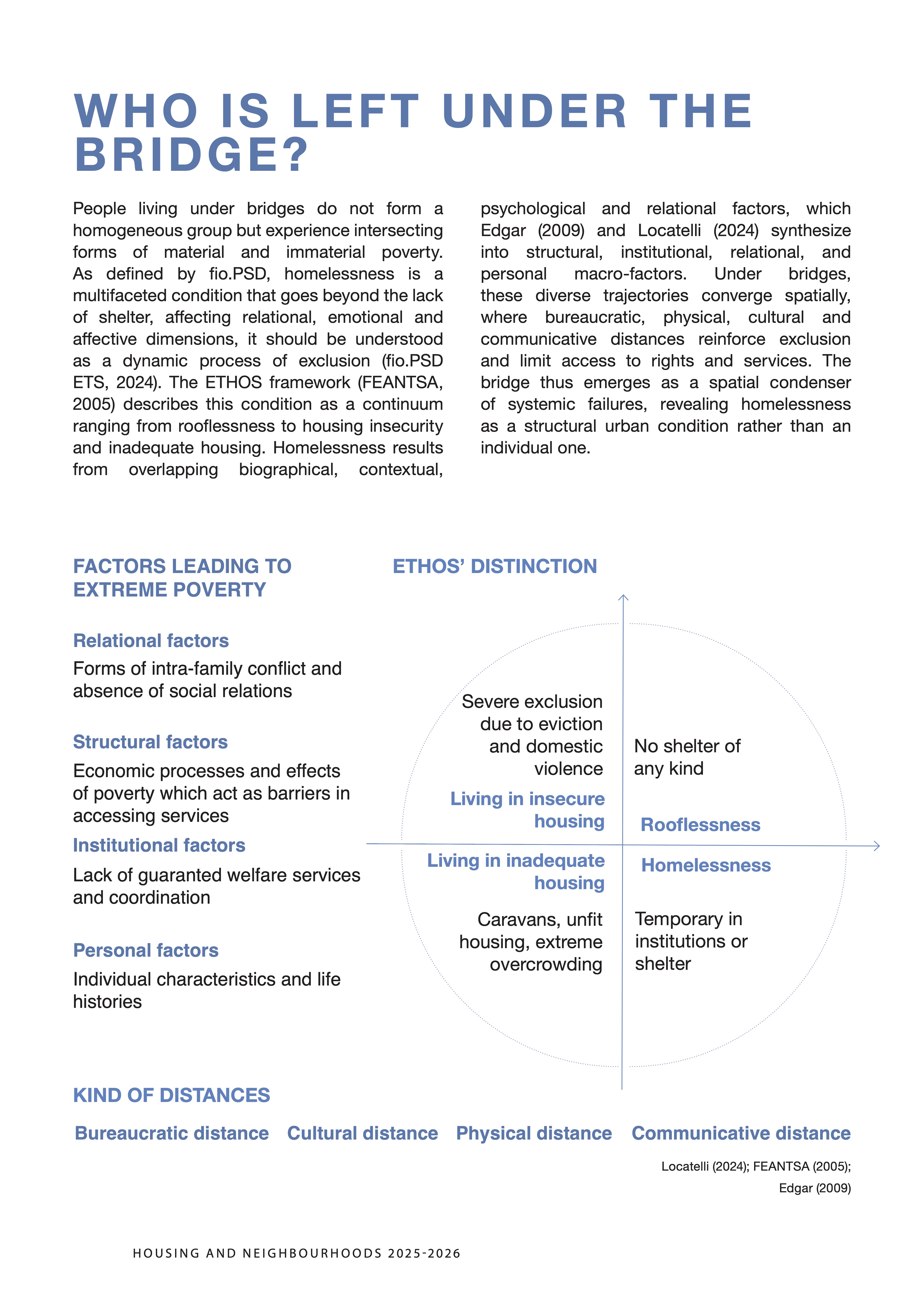
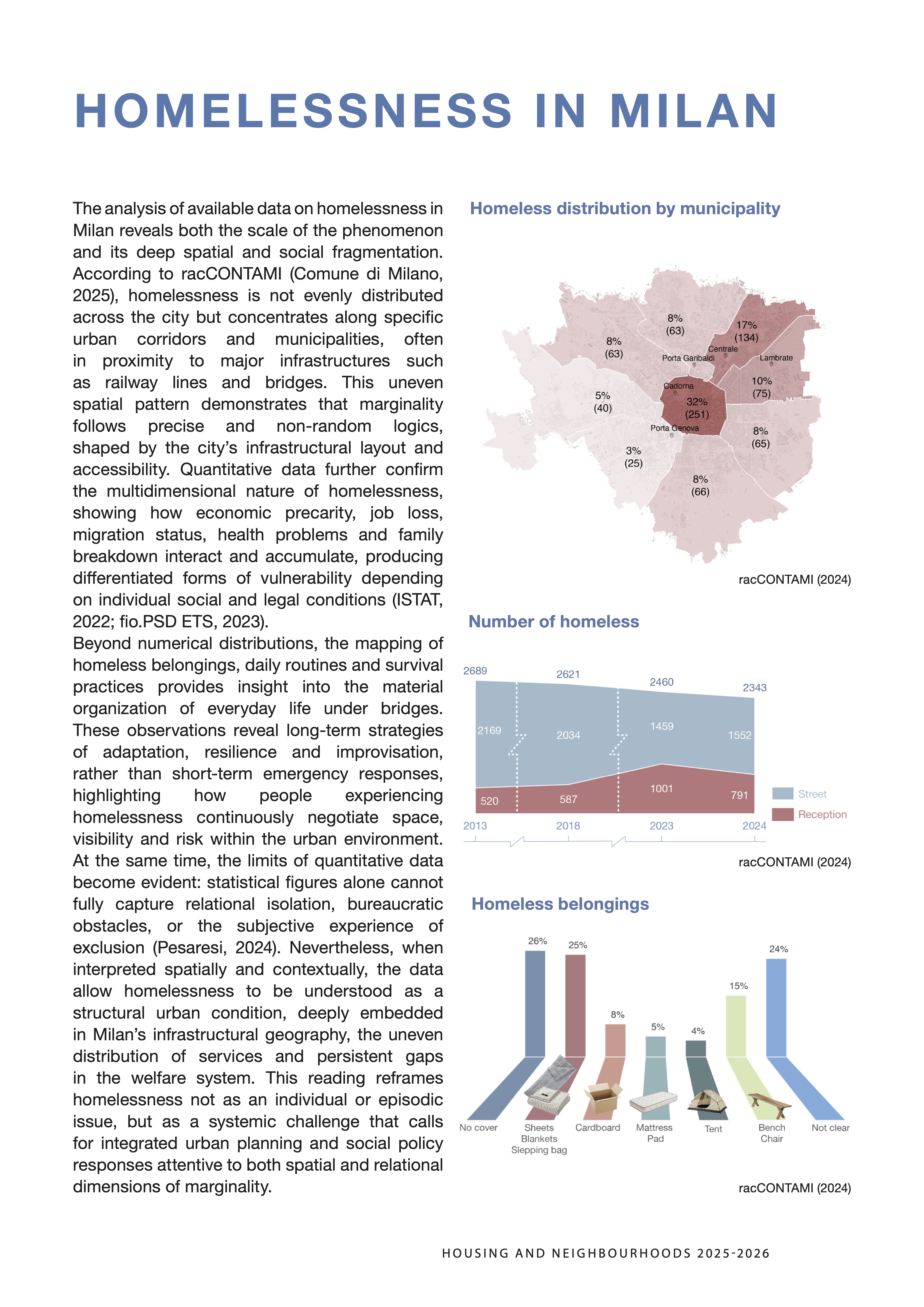
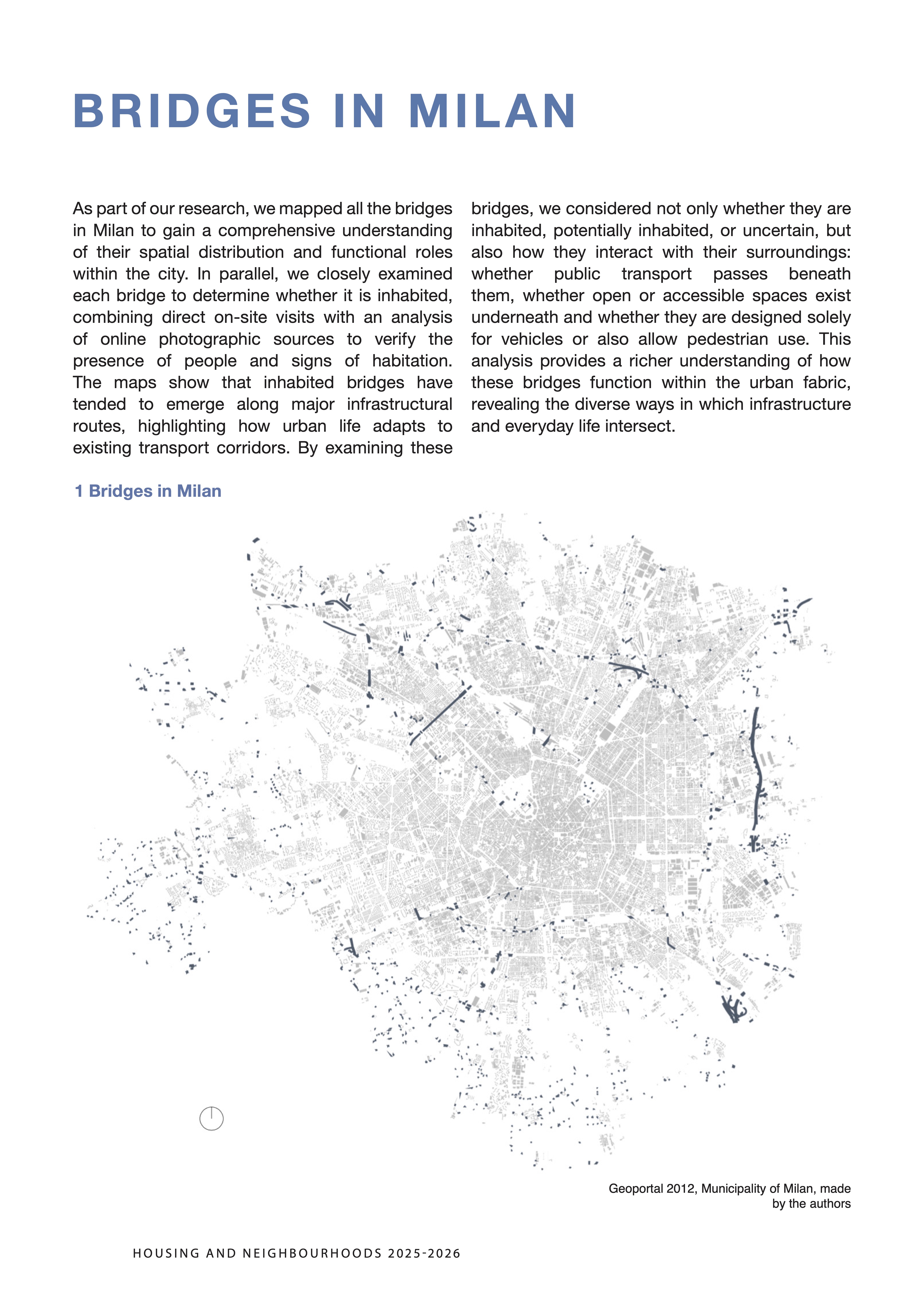
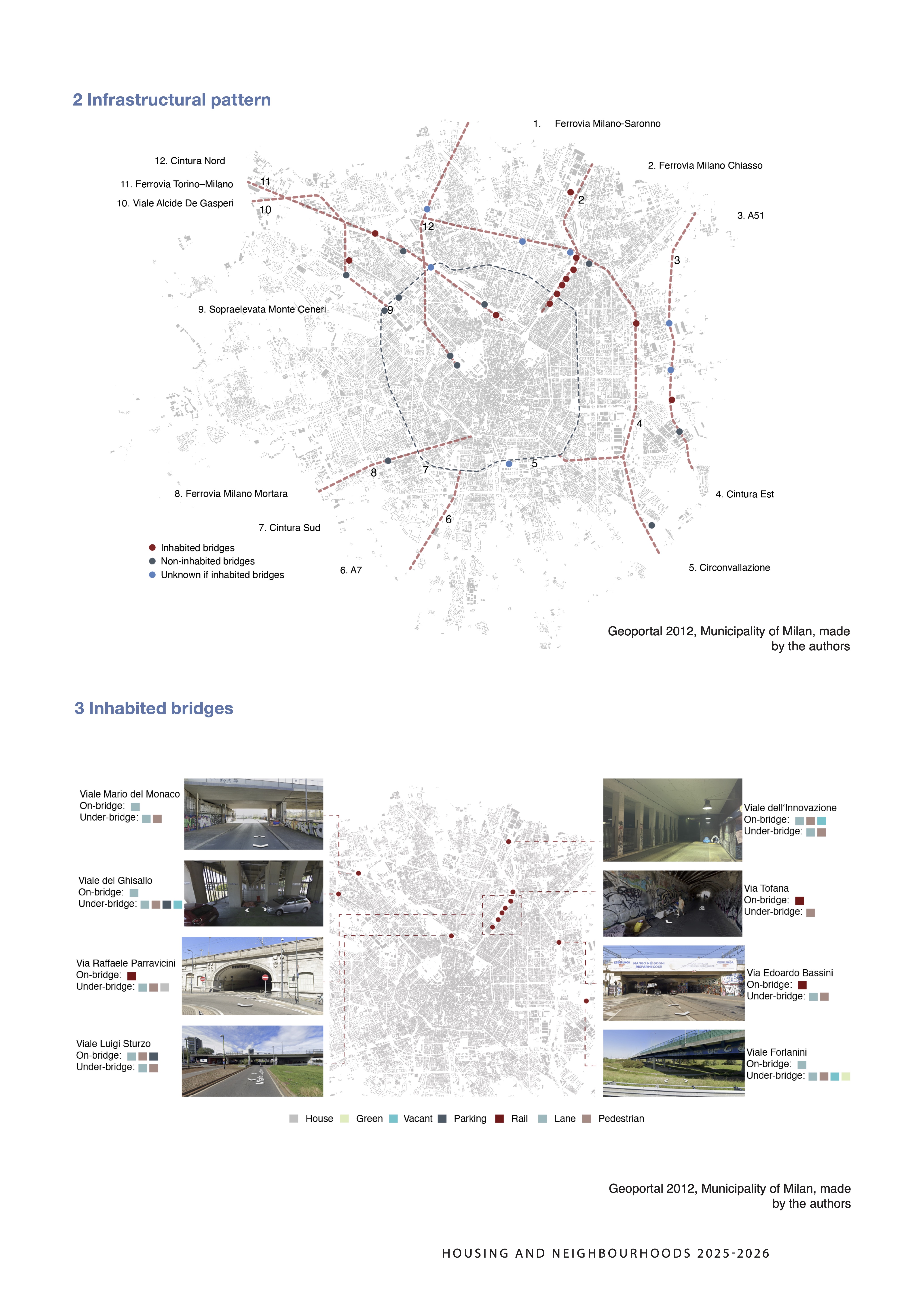
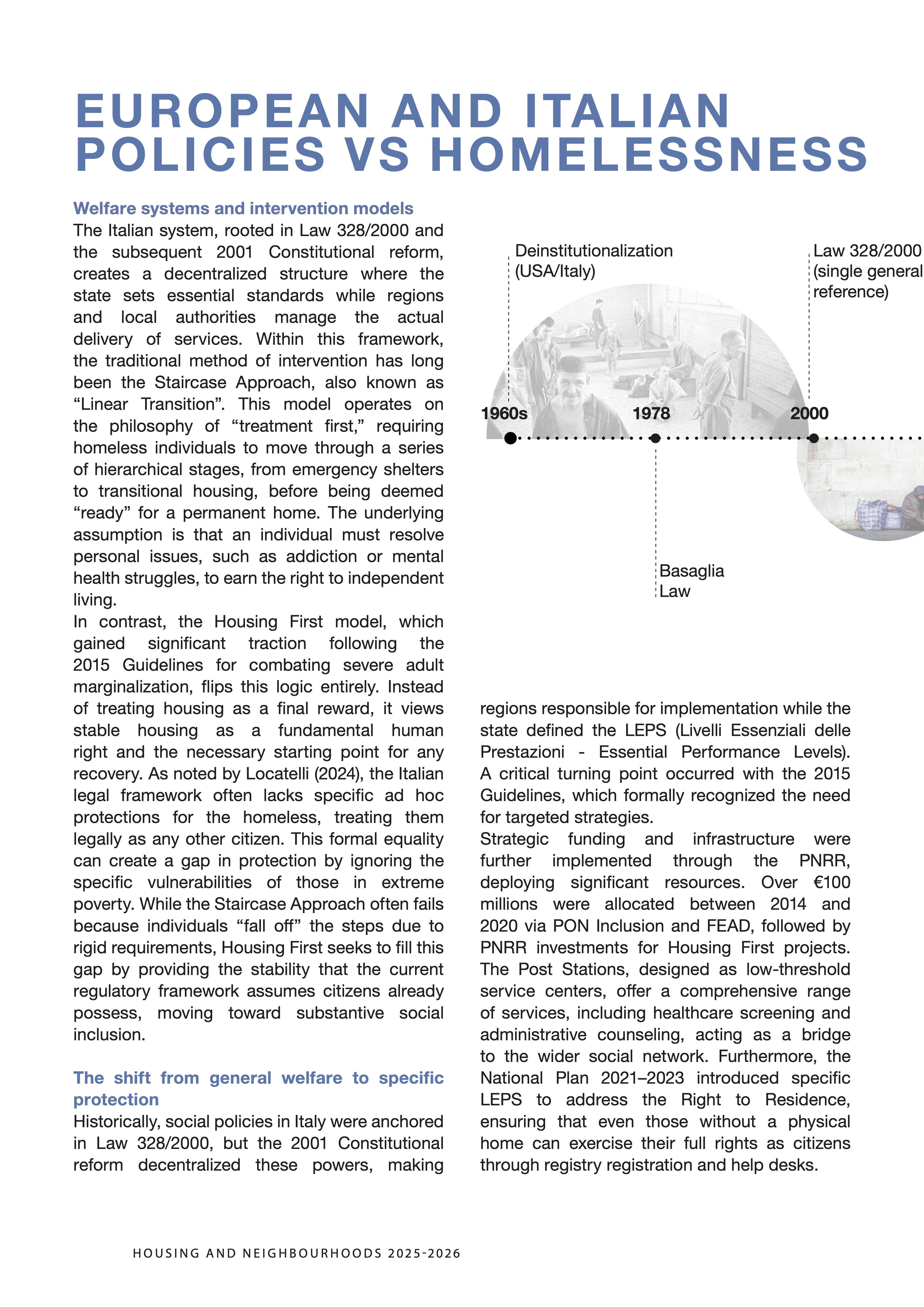
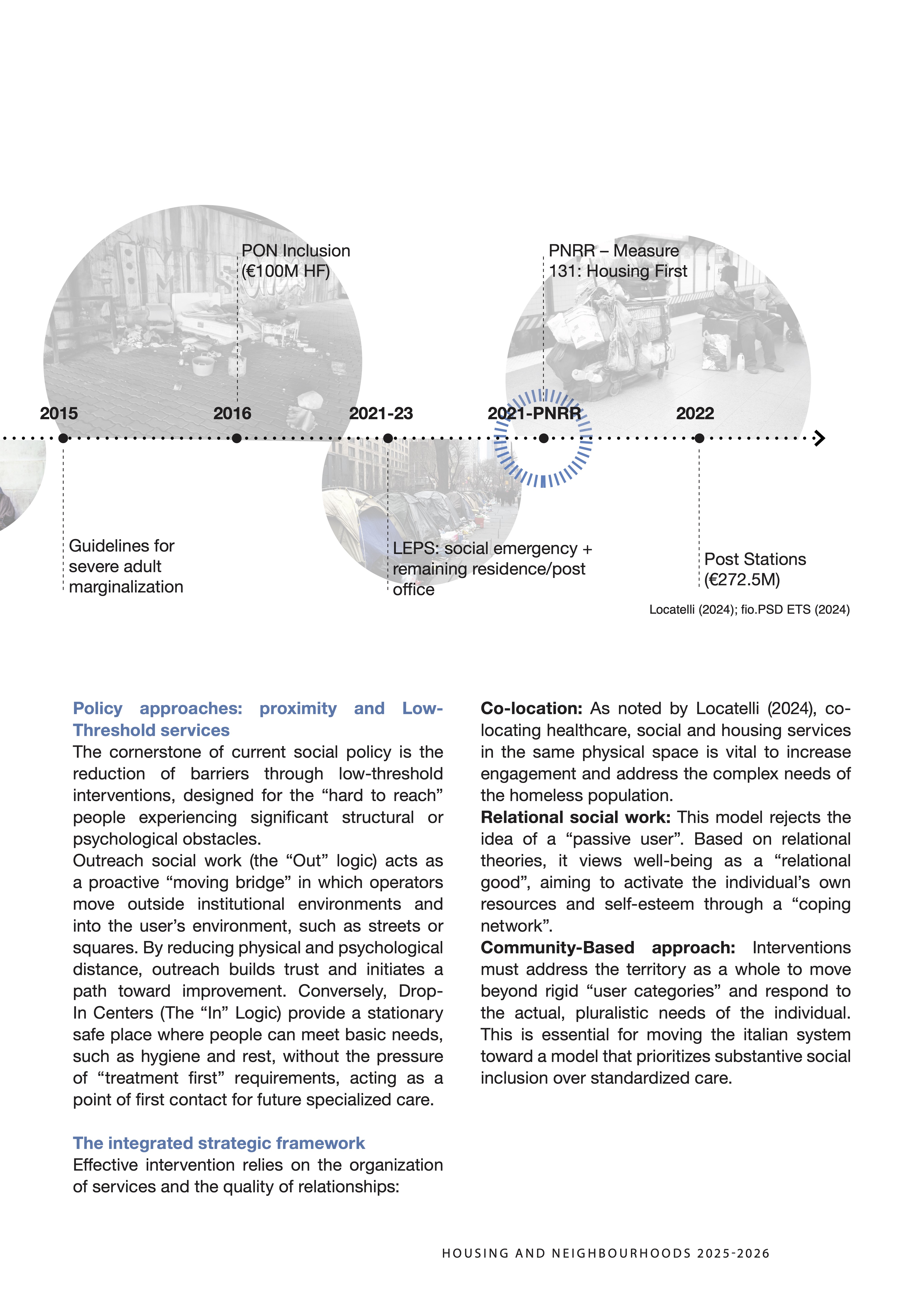
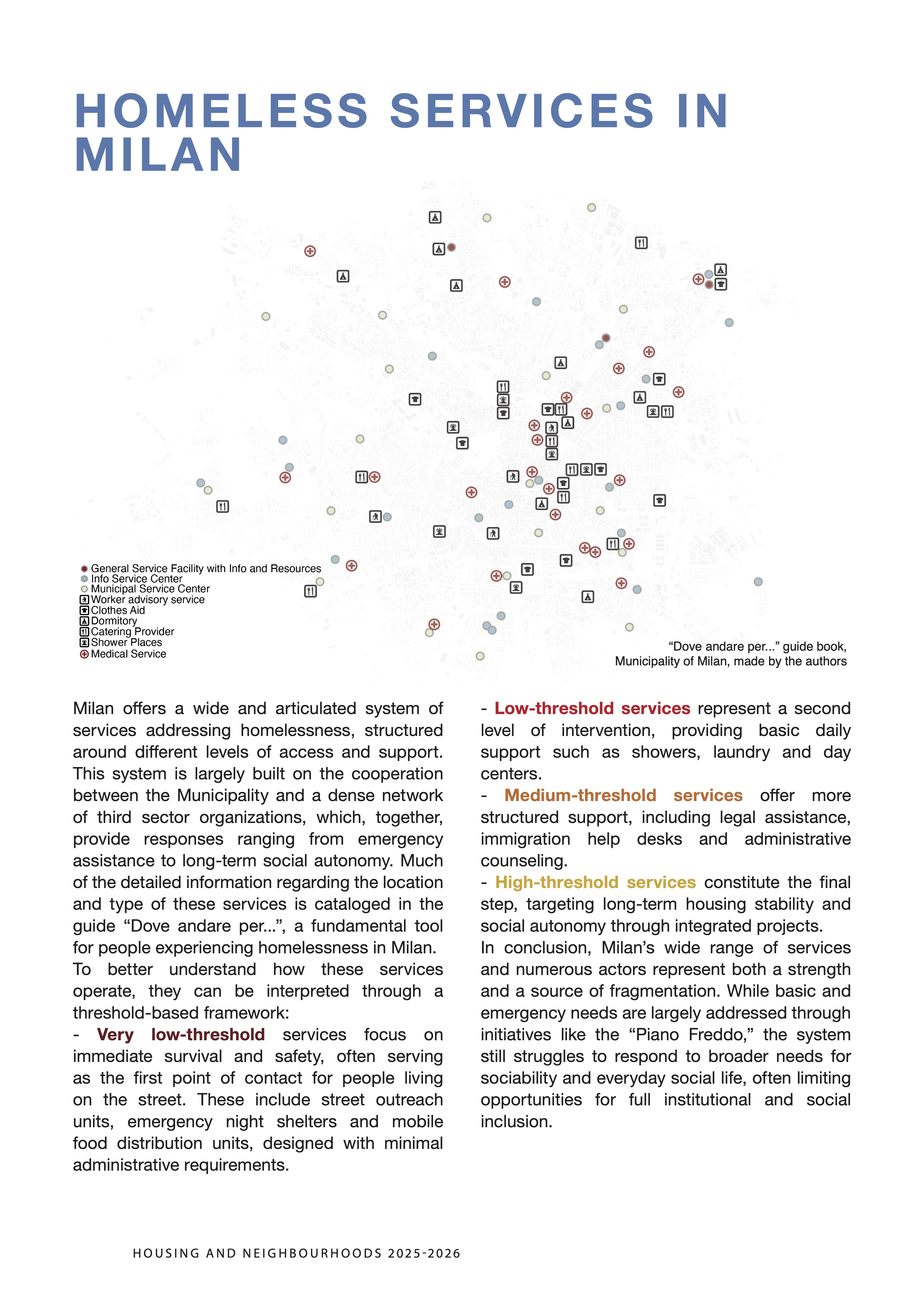
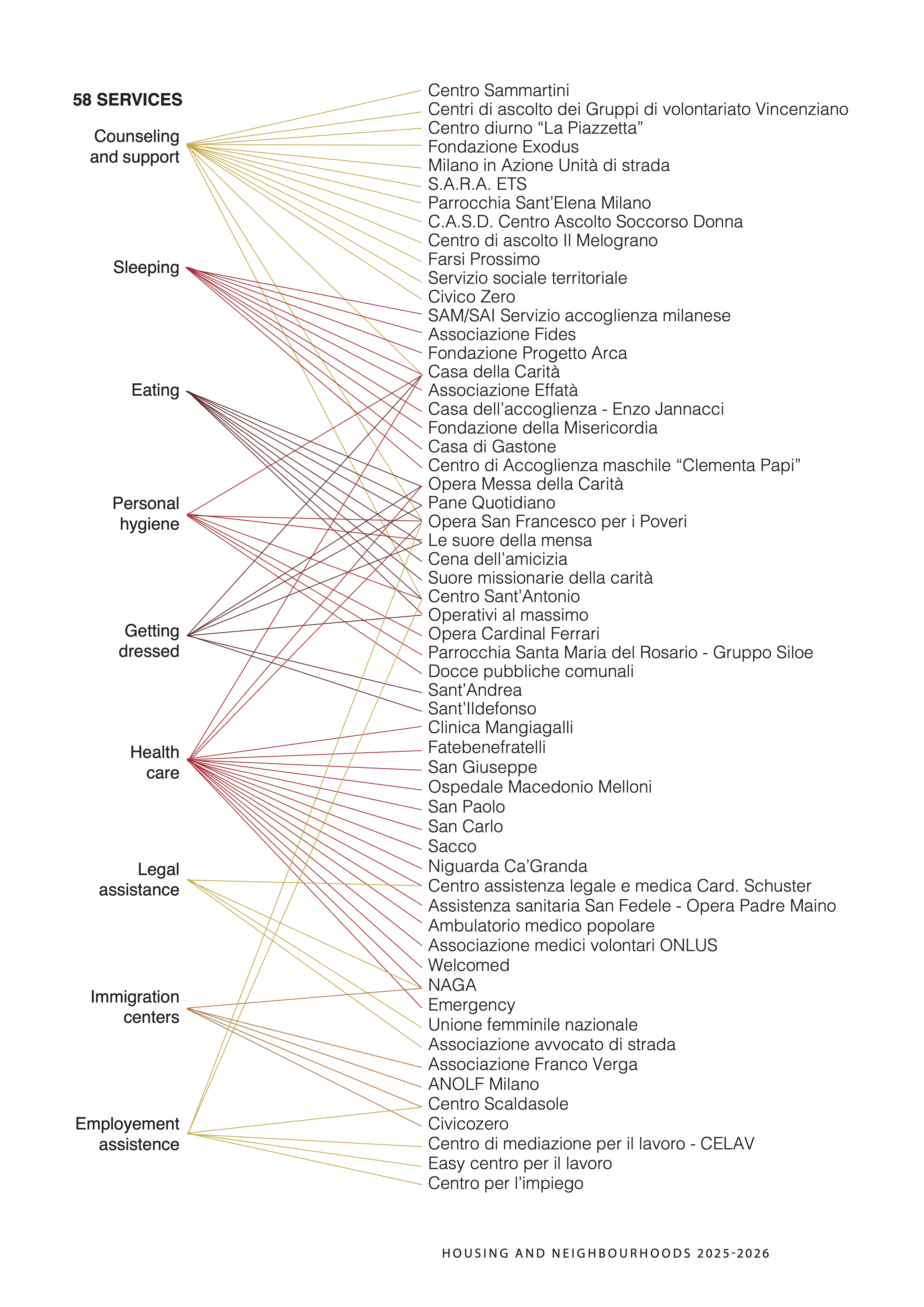
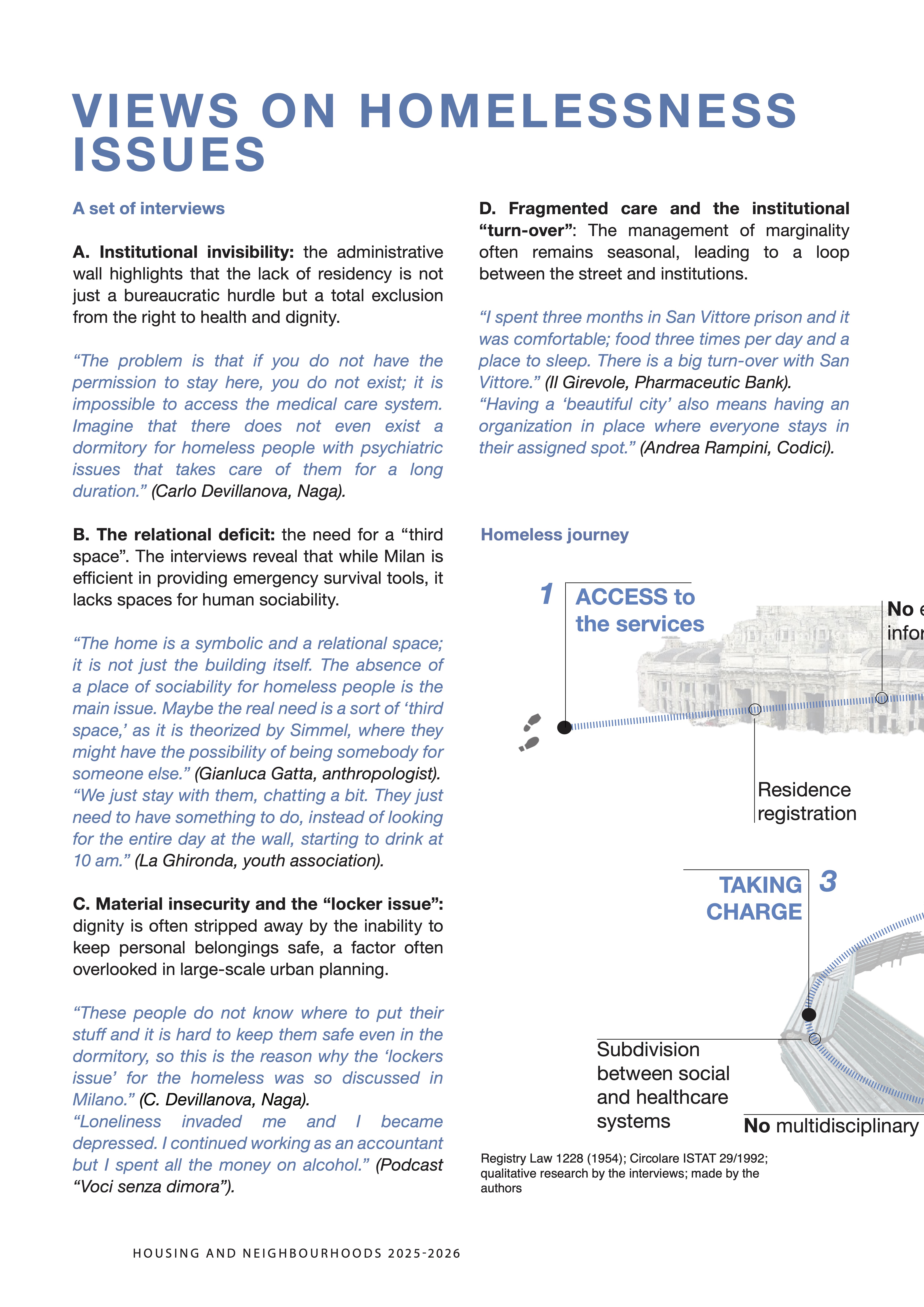
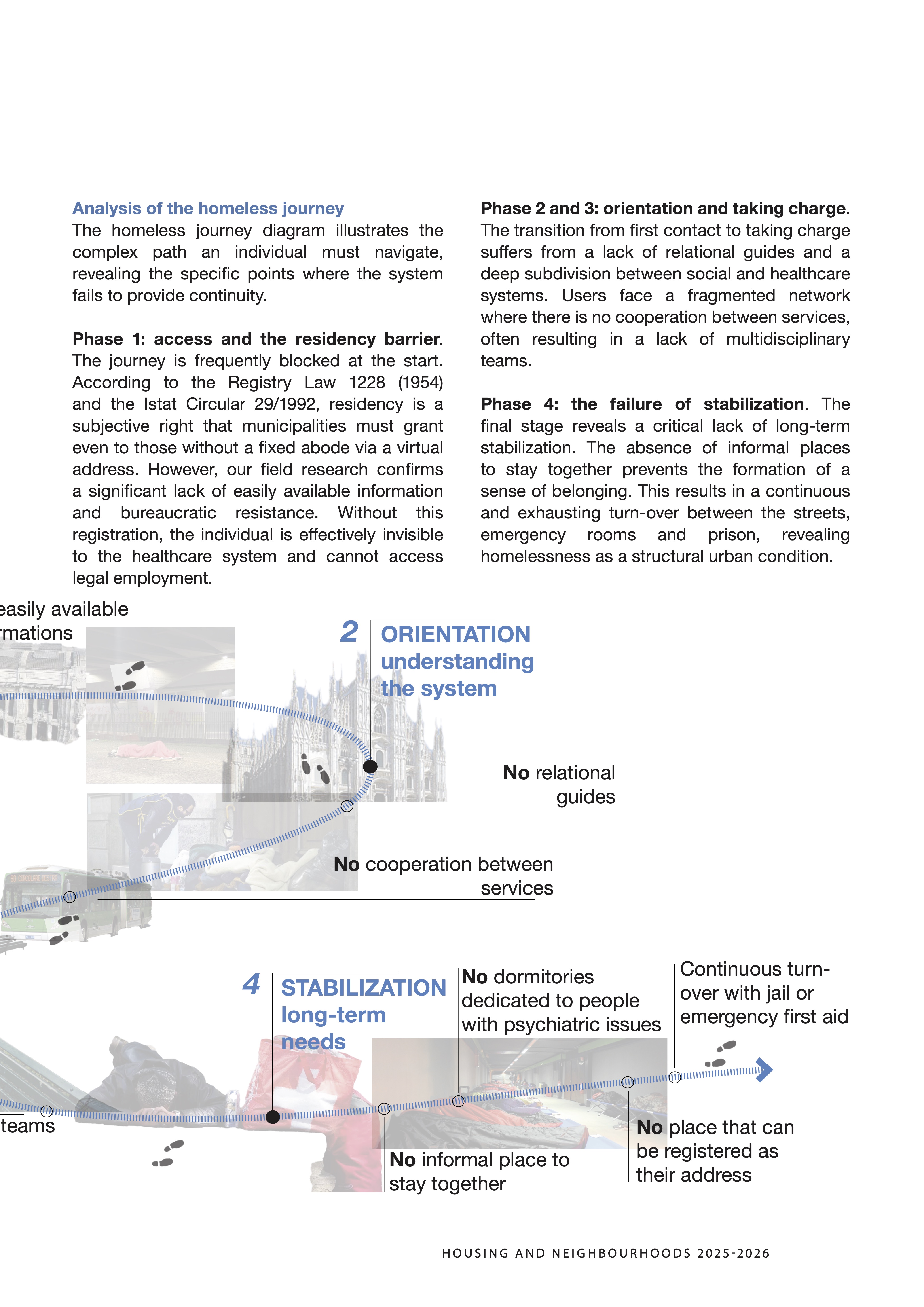
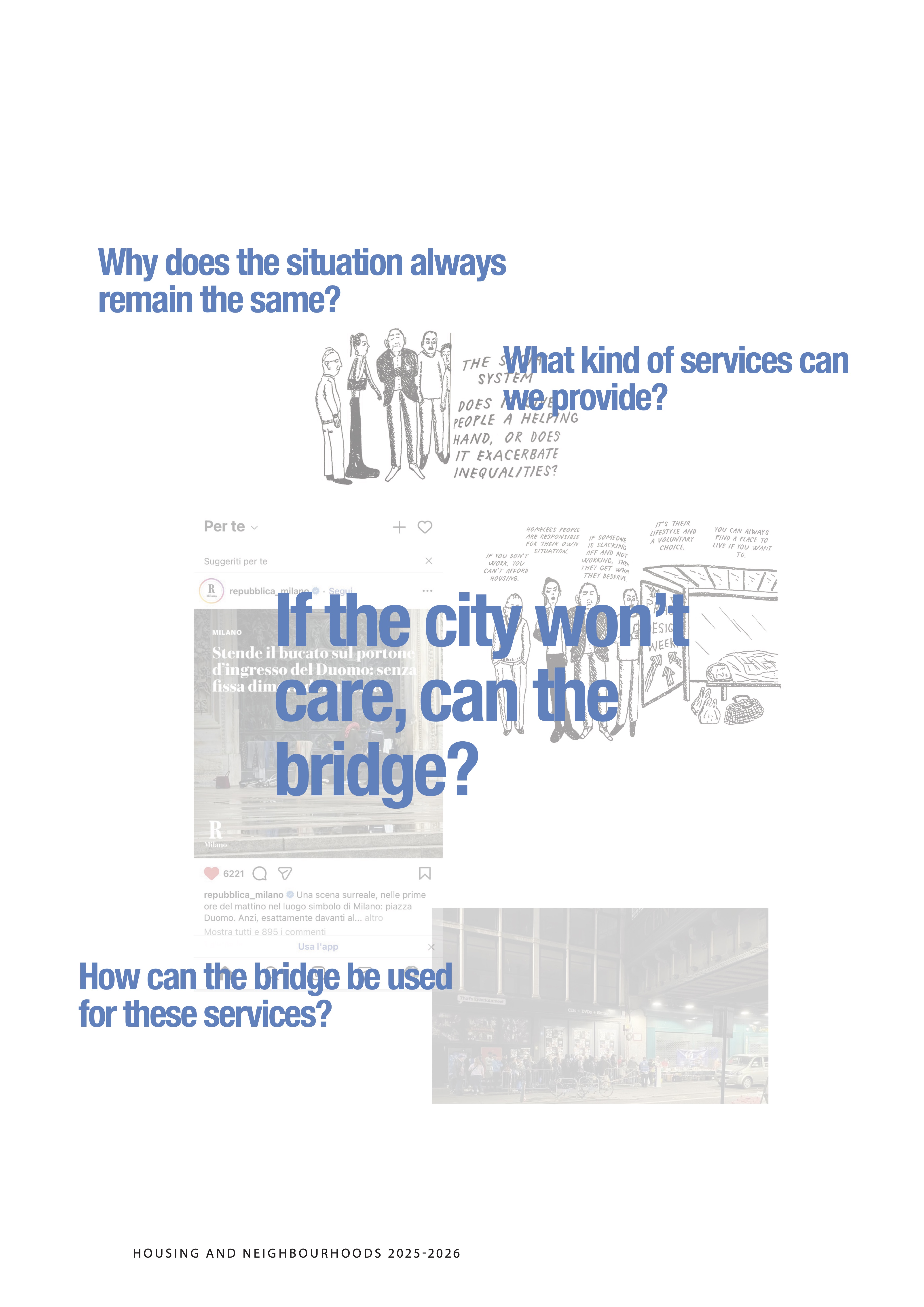
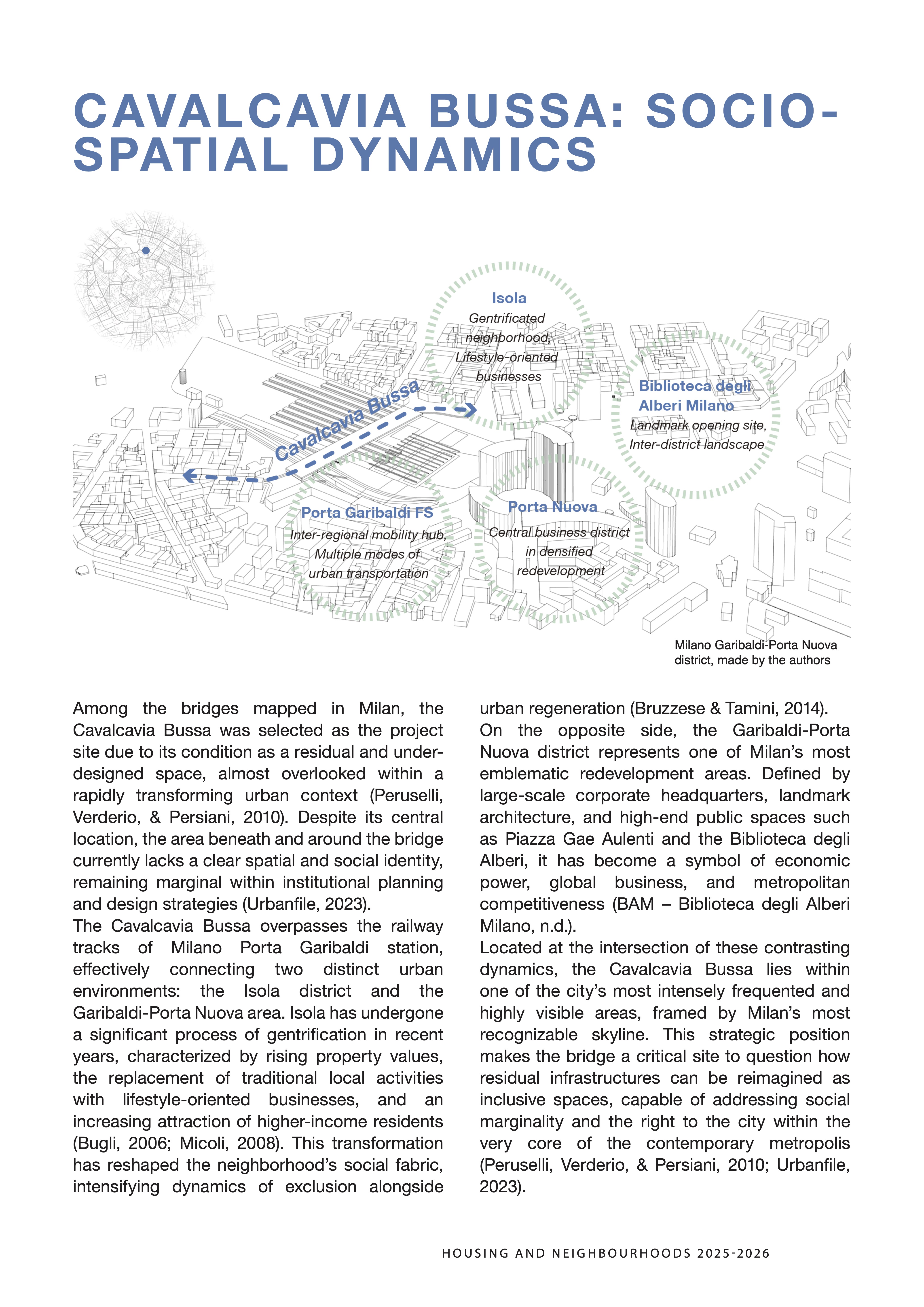
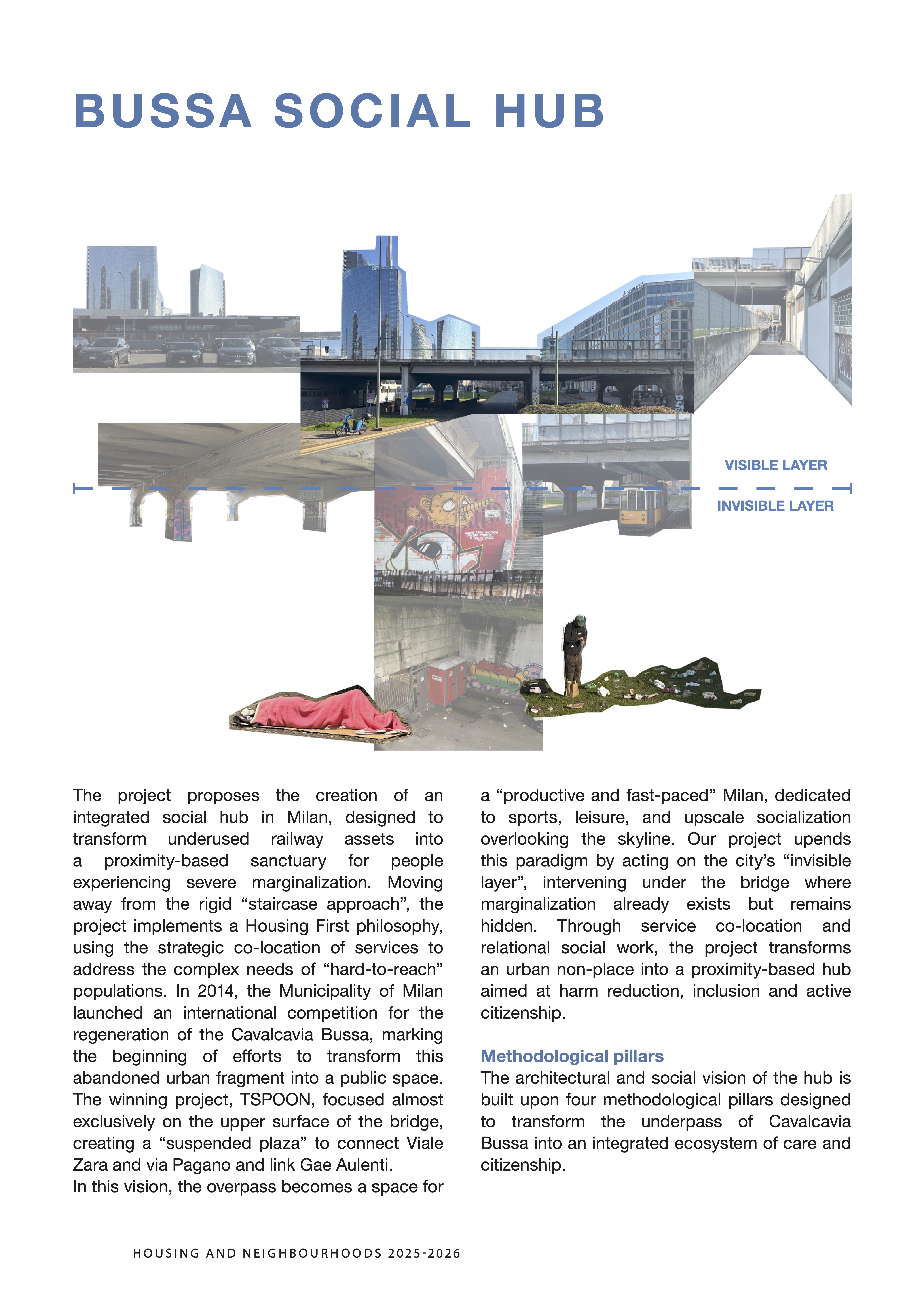
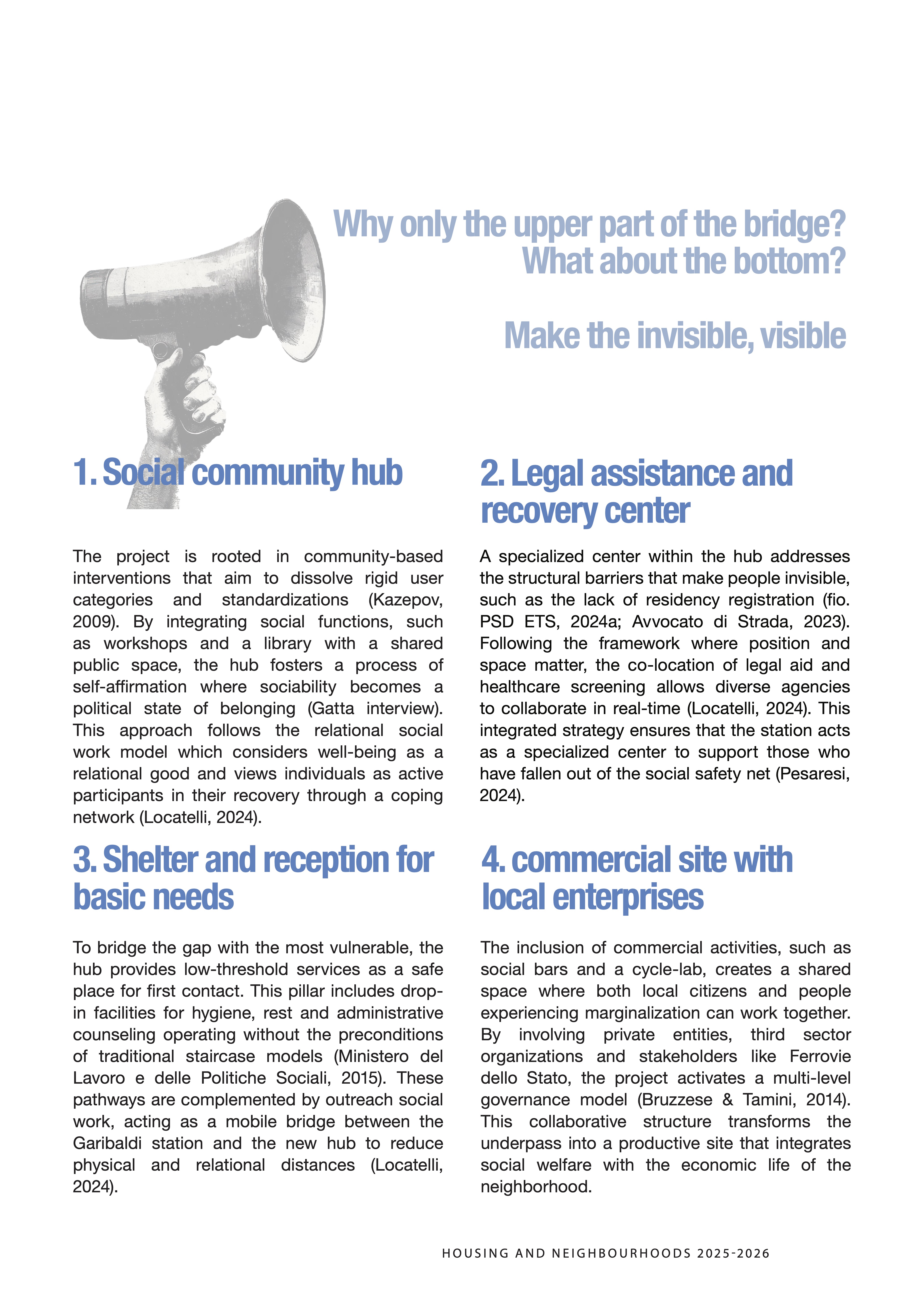
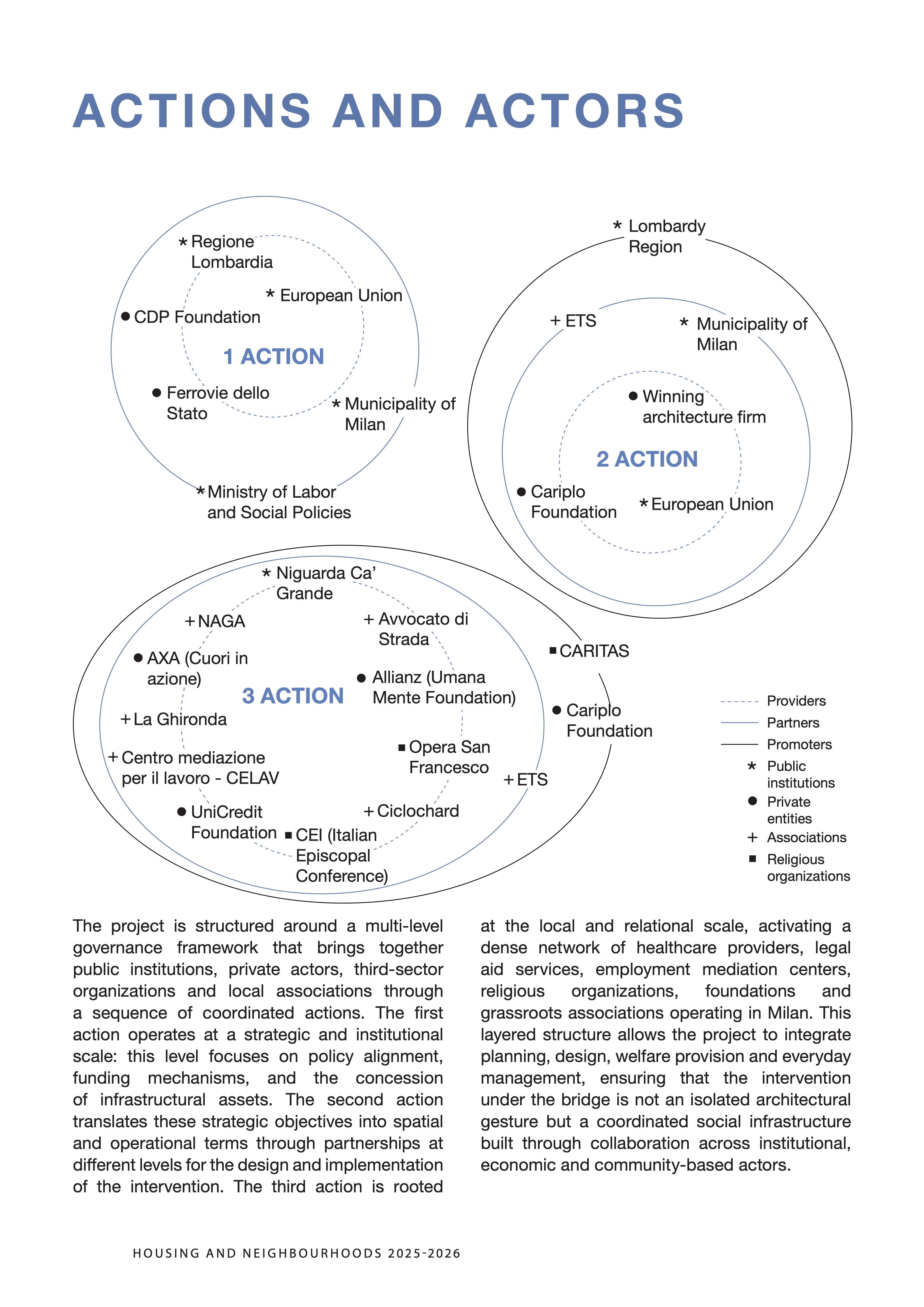
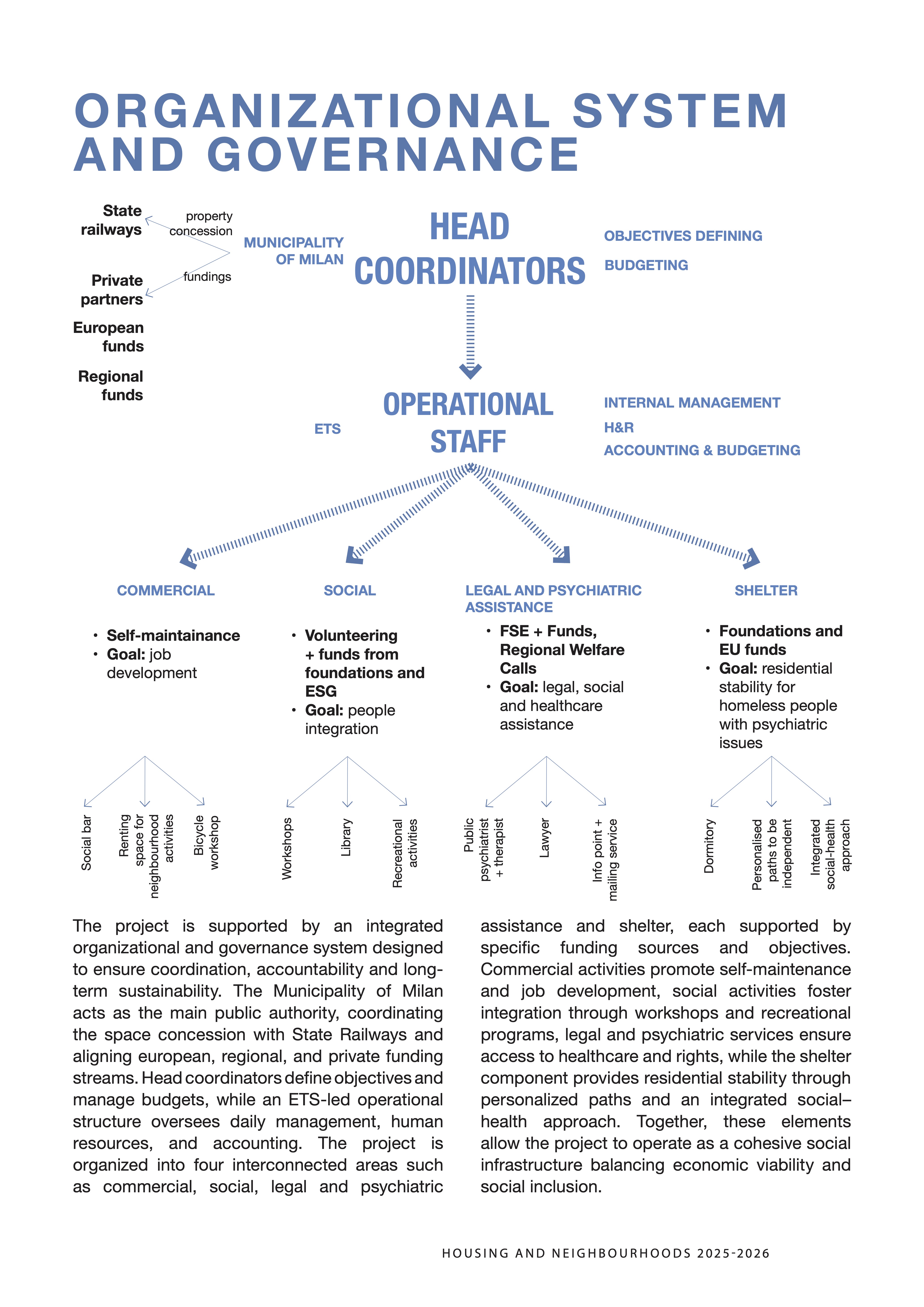
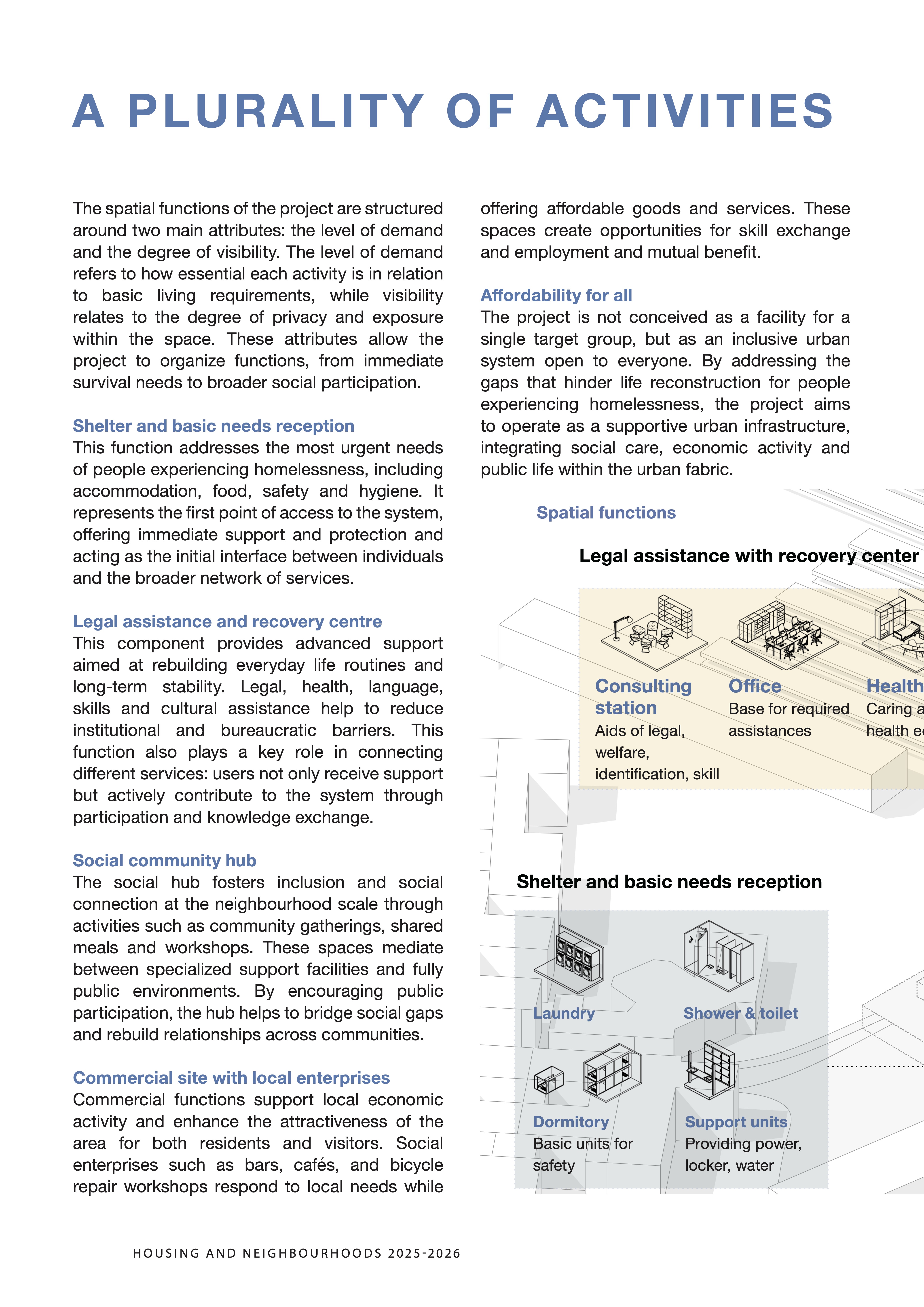
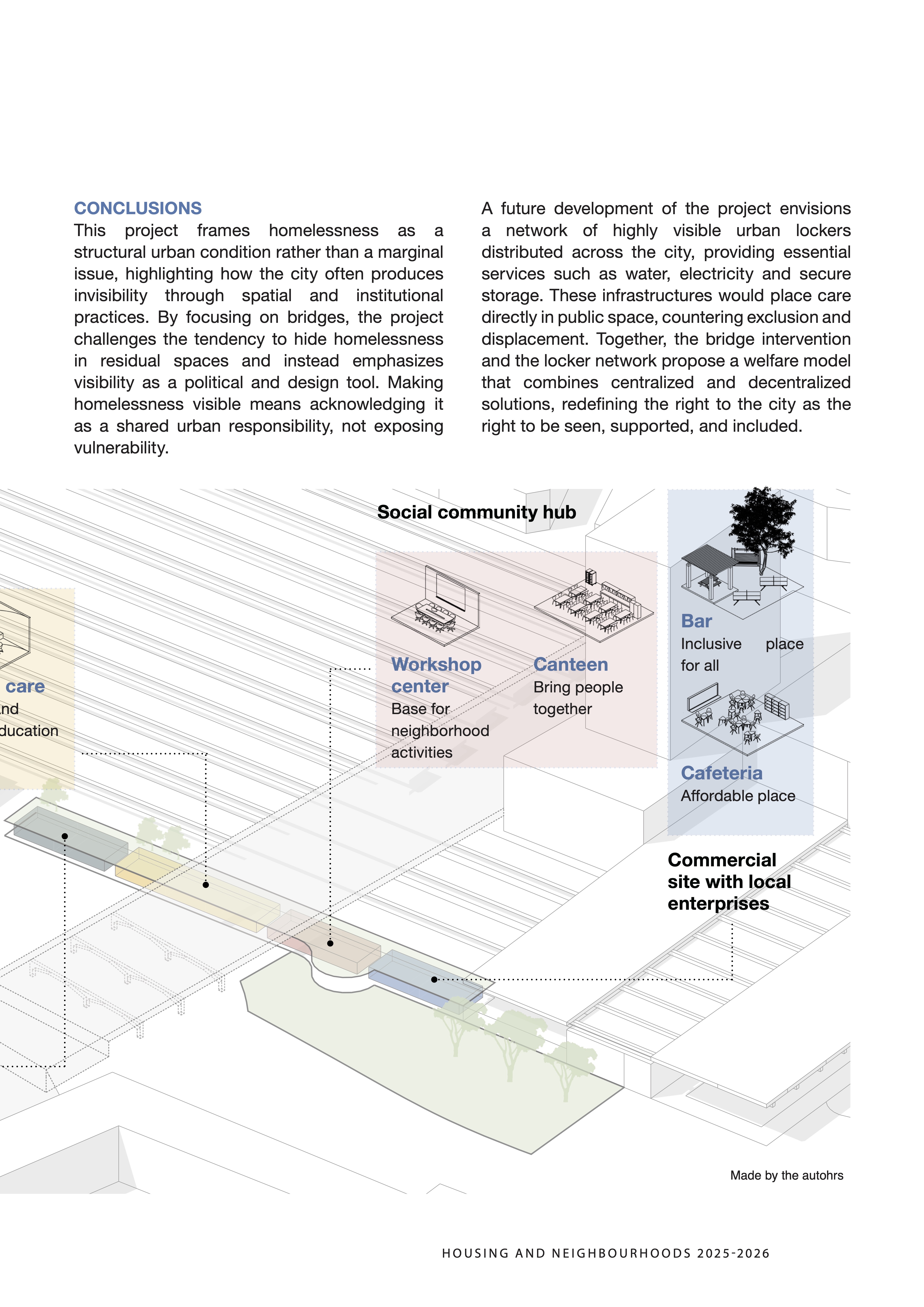
Developed within the context of the Housing and Neighbourhood Studio, this project tackles the critical issue of homelessness in the city of Milan. As a provocative and conceptual starting point, the research began with a comprehensive mapping of all the bridges across the urban fabric, recognizing them as both physical and symbolic shelters for the unhoused.
This spatial investigation was strictly tied to an in-depth analysis of current Italian and European housing policies. Building upon these urban, political and social insights, the final architectural proposal draws inspiration from successful international case studies, aiming to provide a critical and tangible response to the contemporary housing crisis.
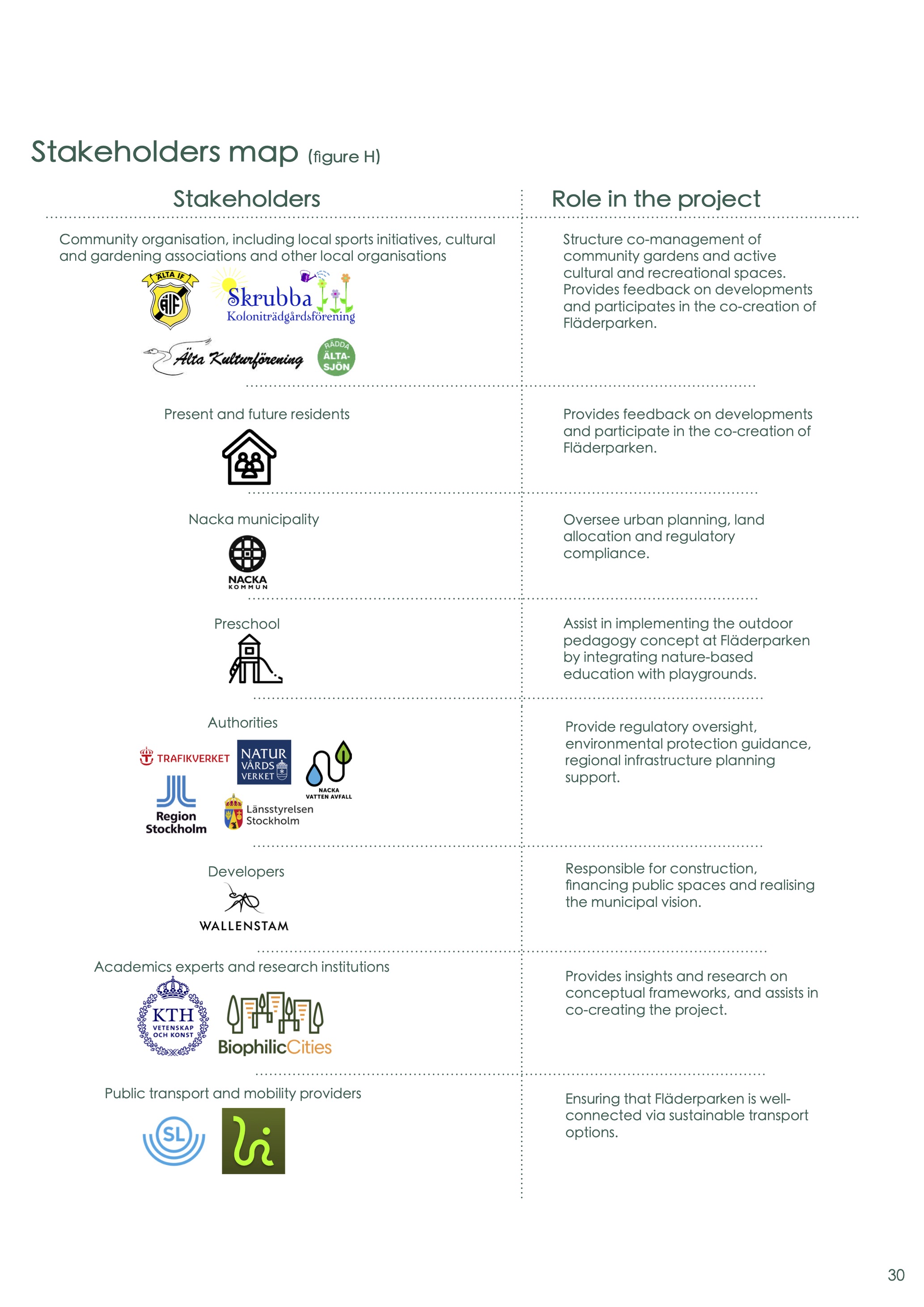
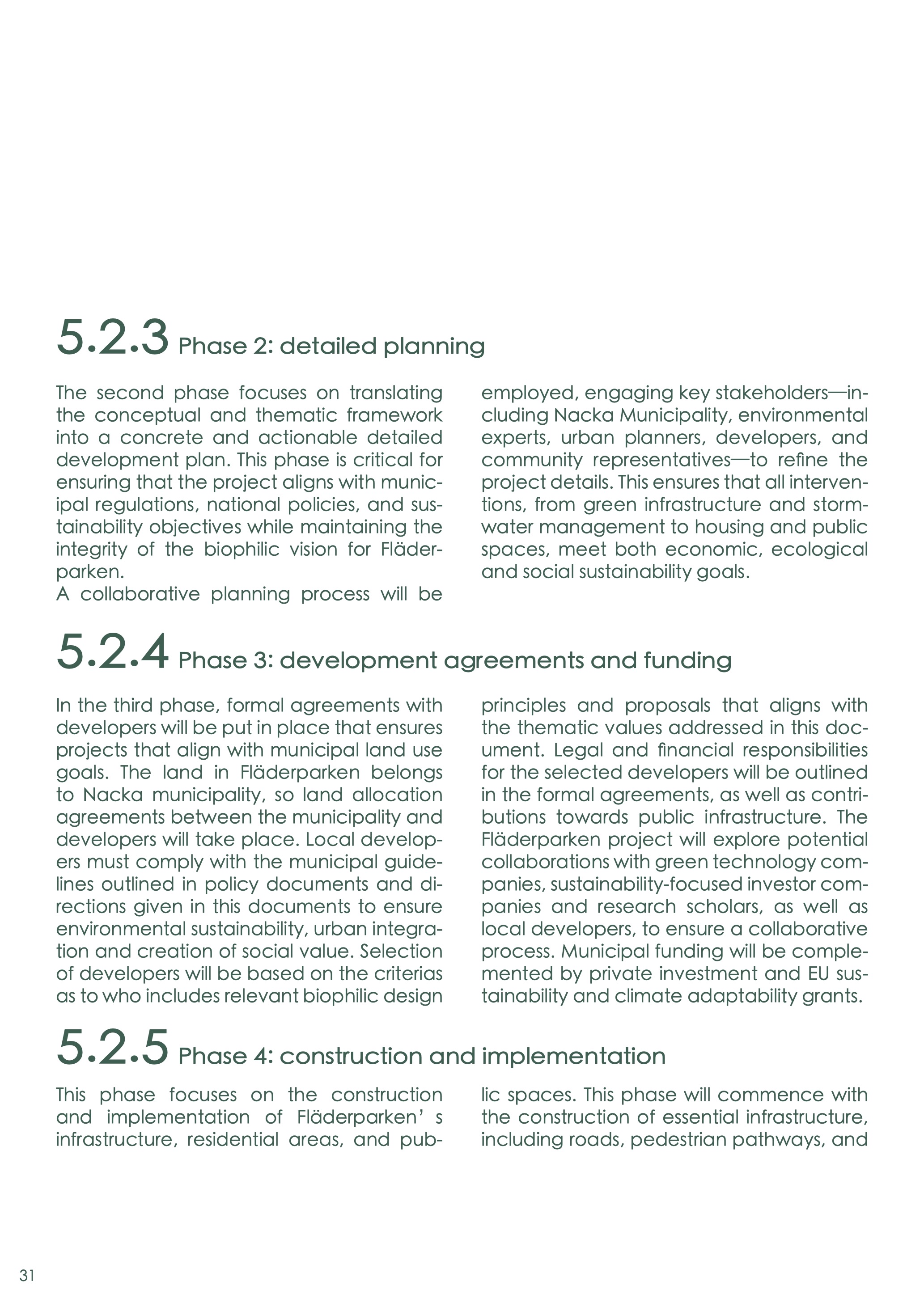
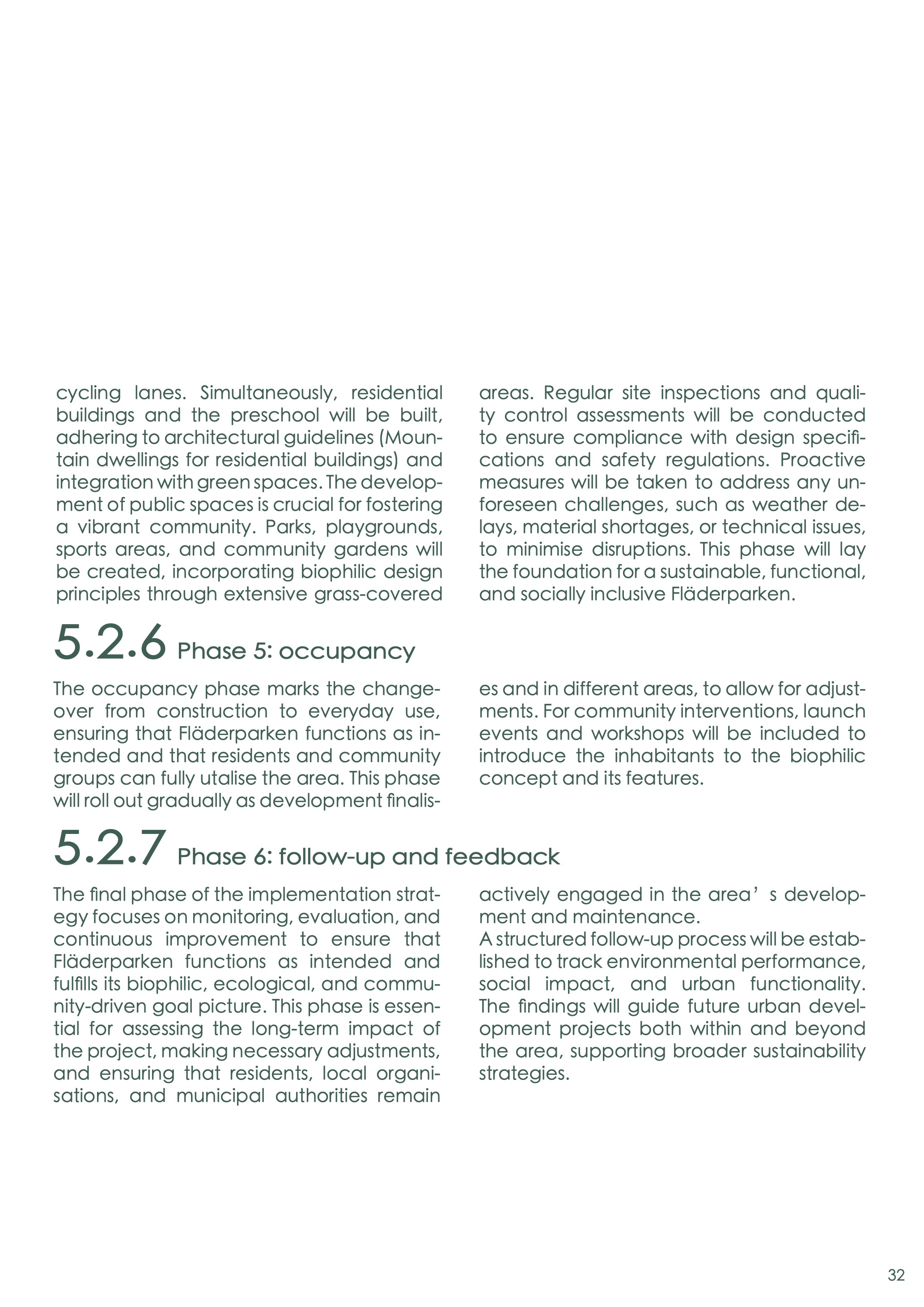
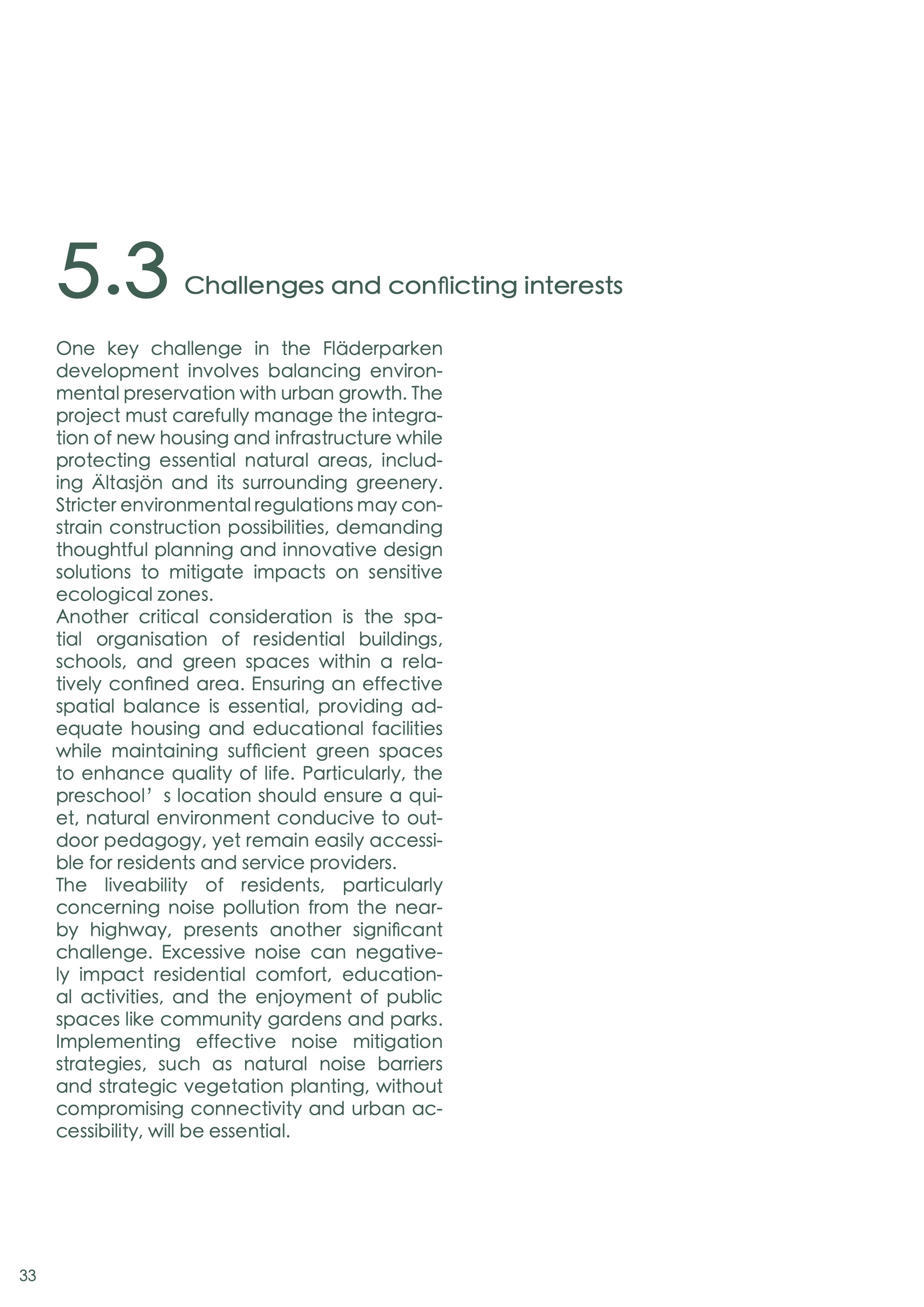
Biophilic Fläderparken
Group project, KTH, 2025
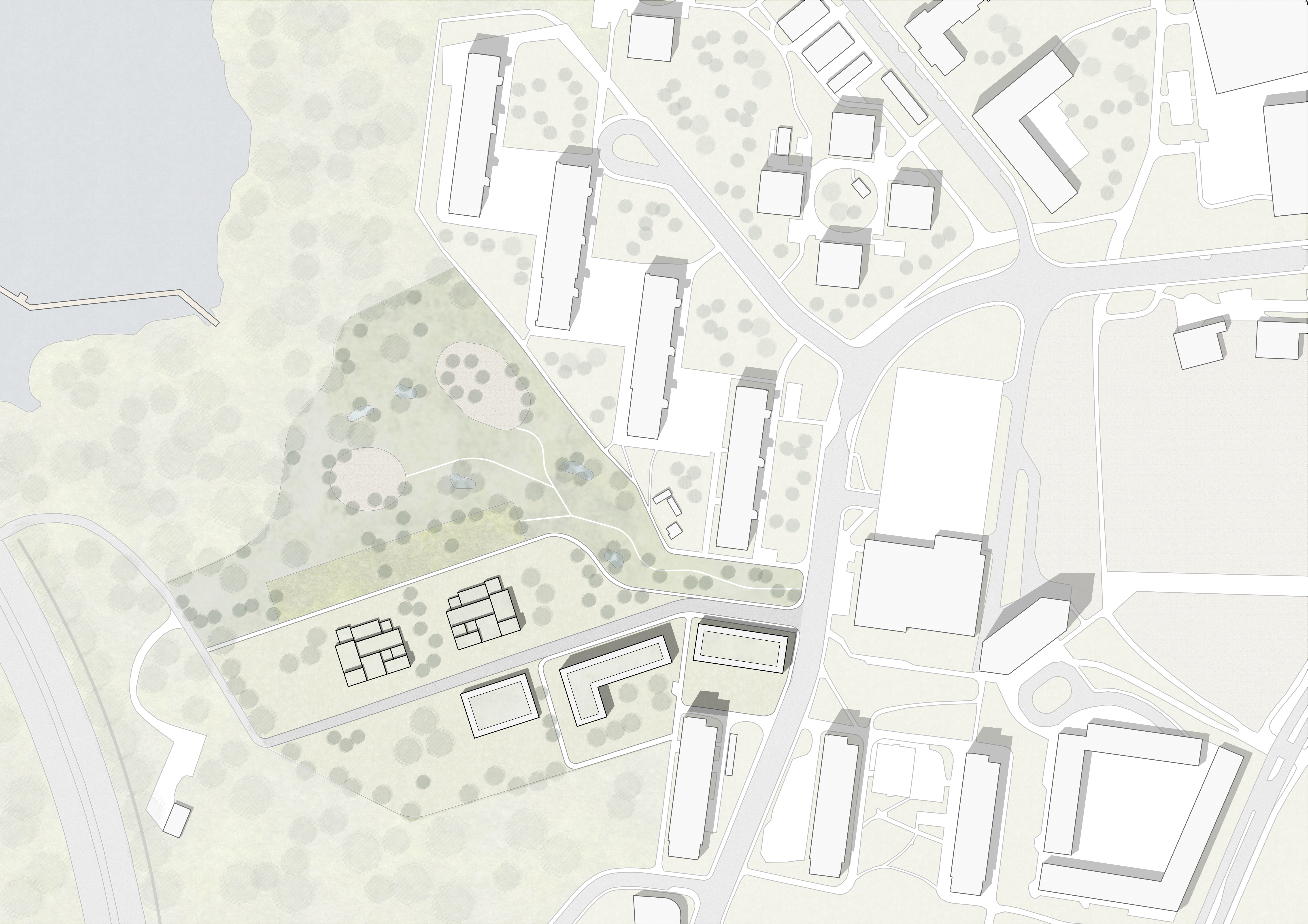
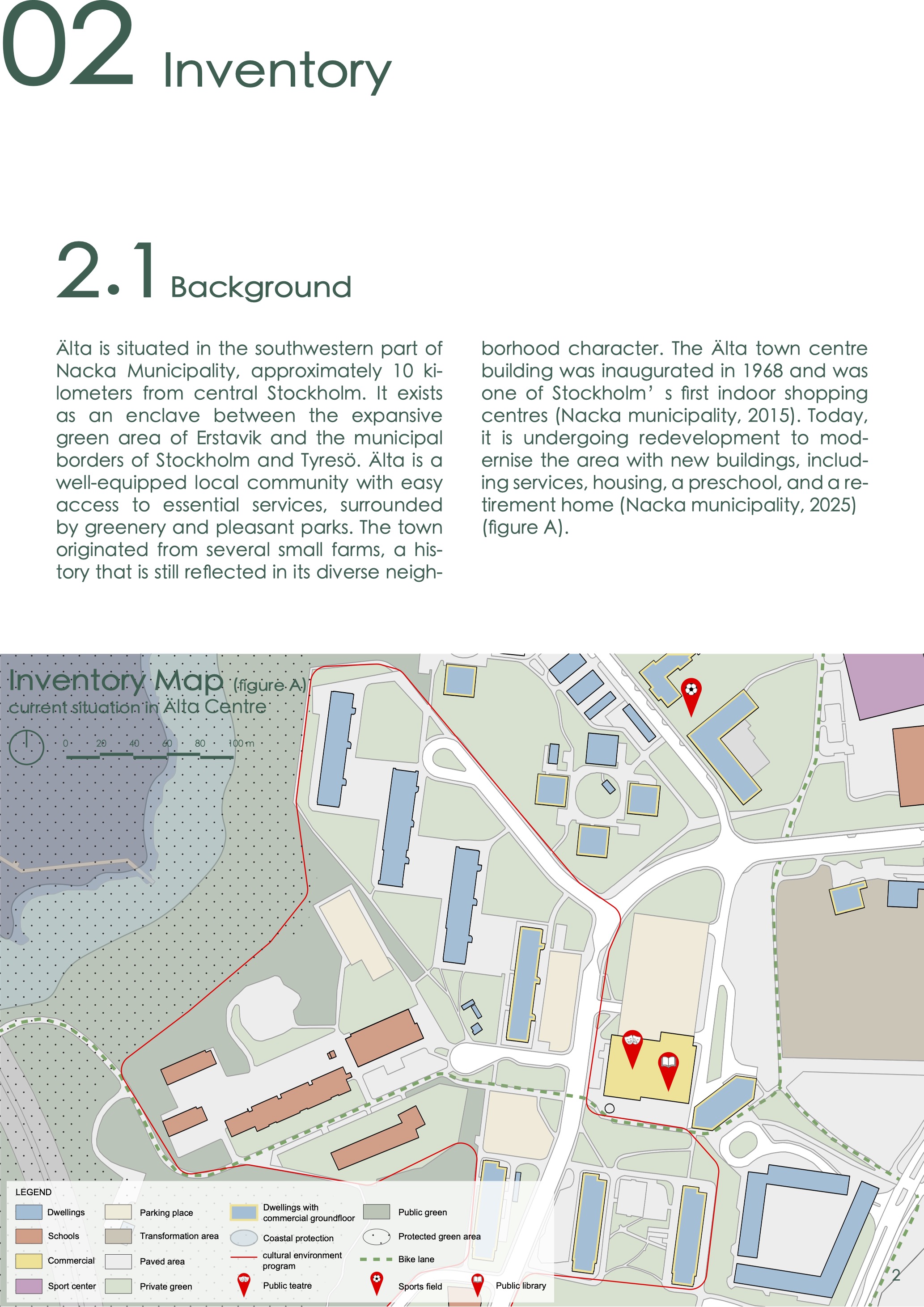
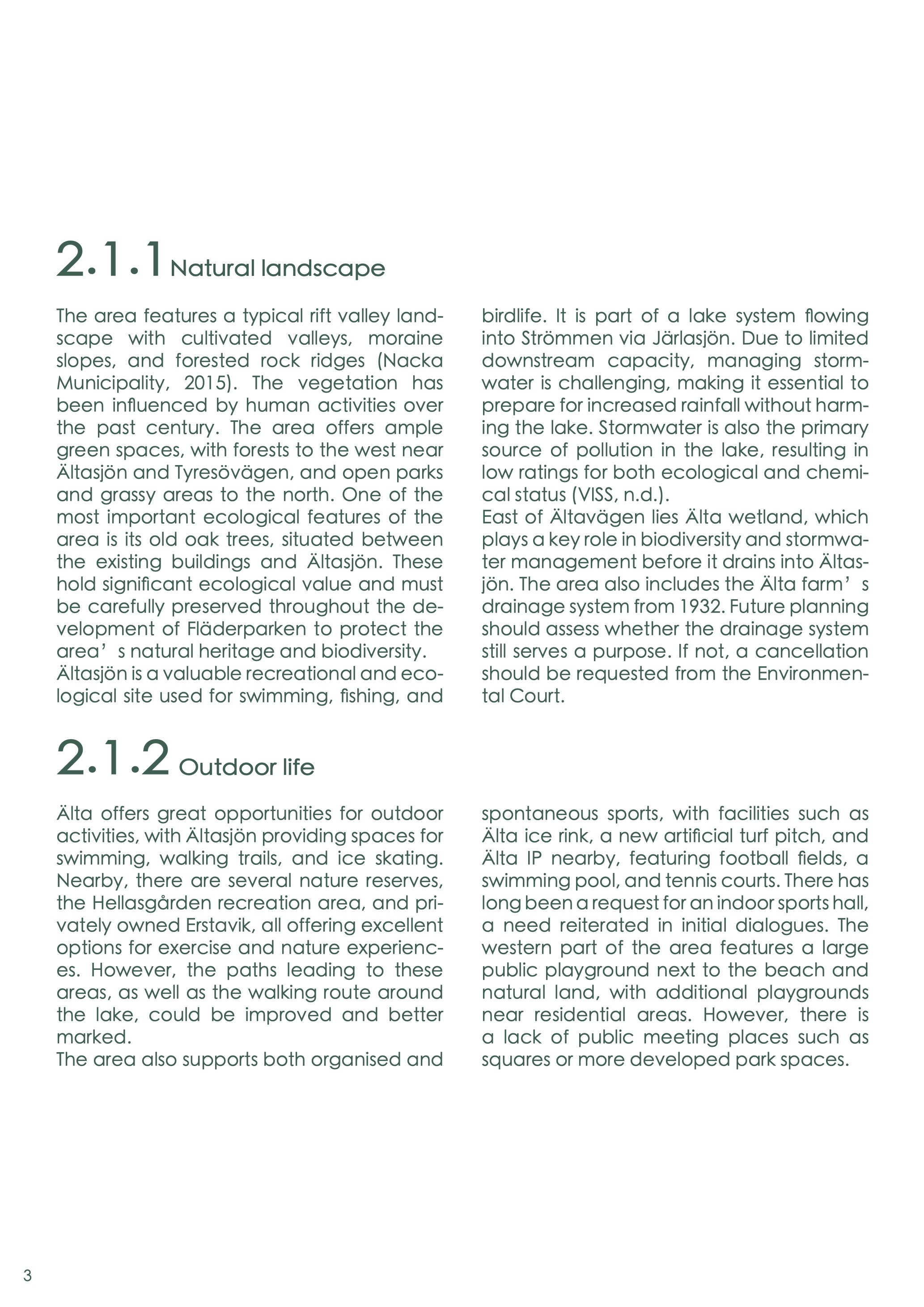
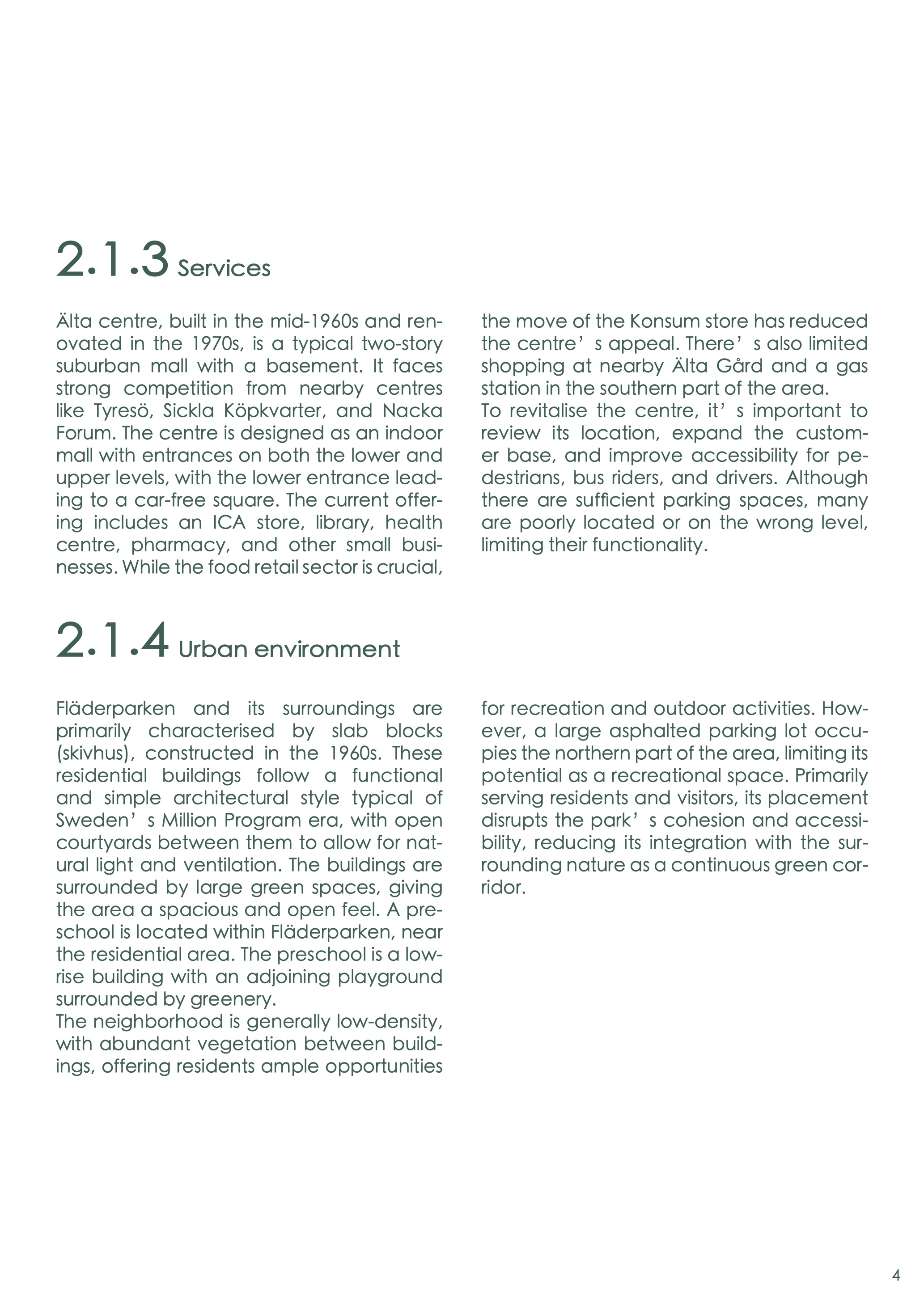
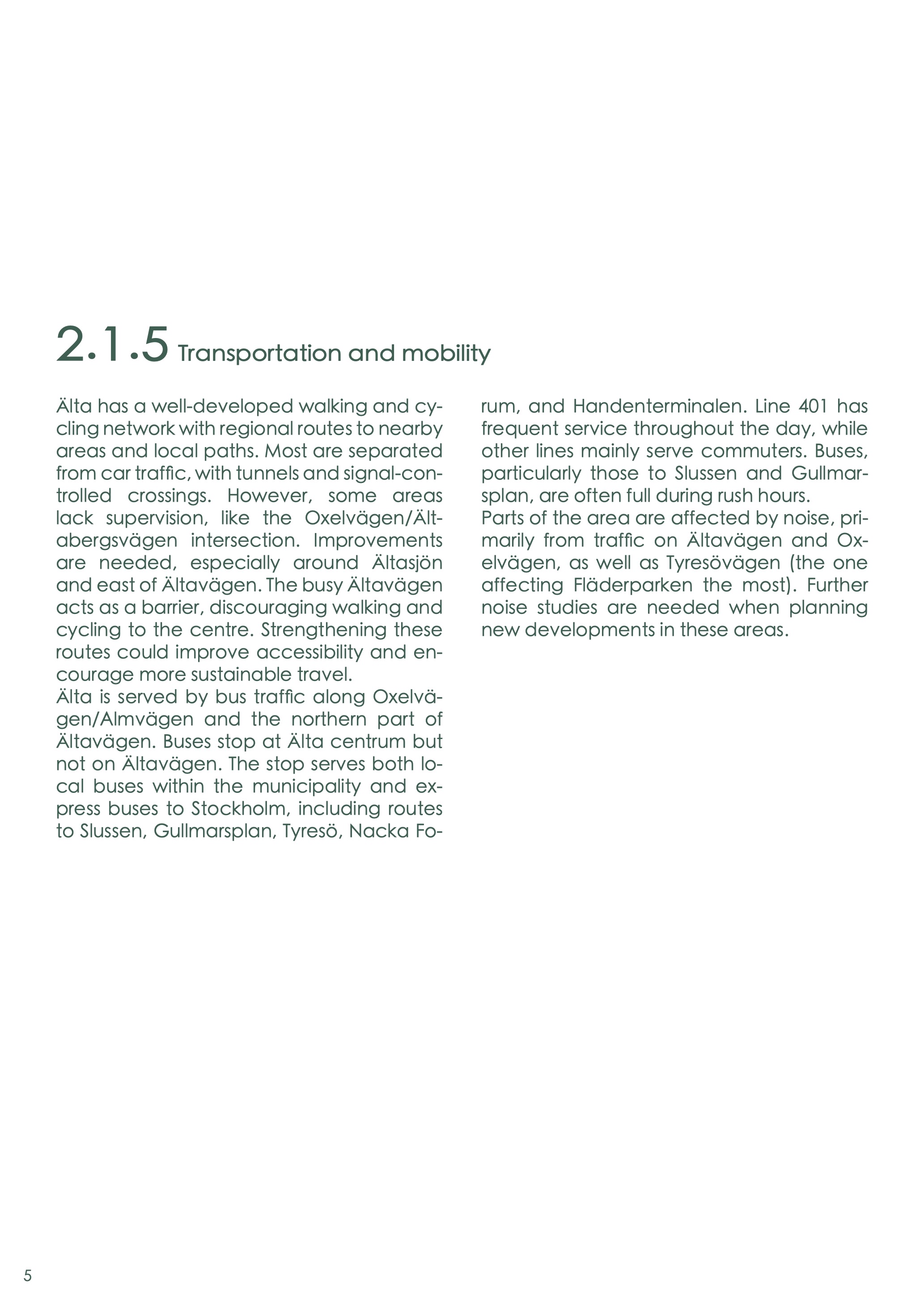
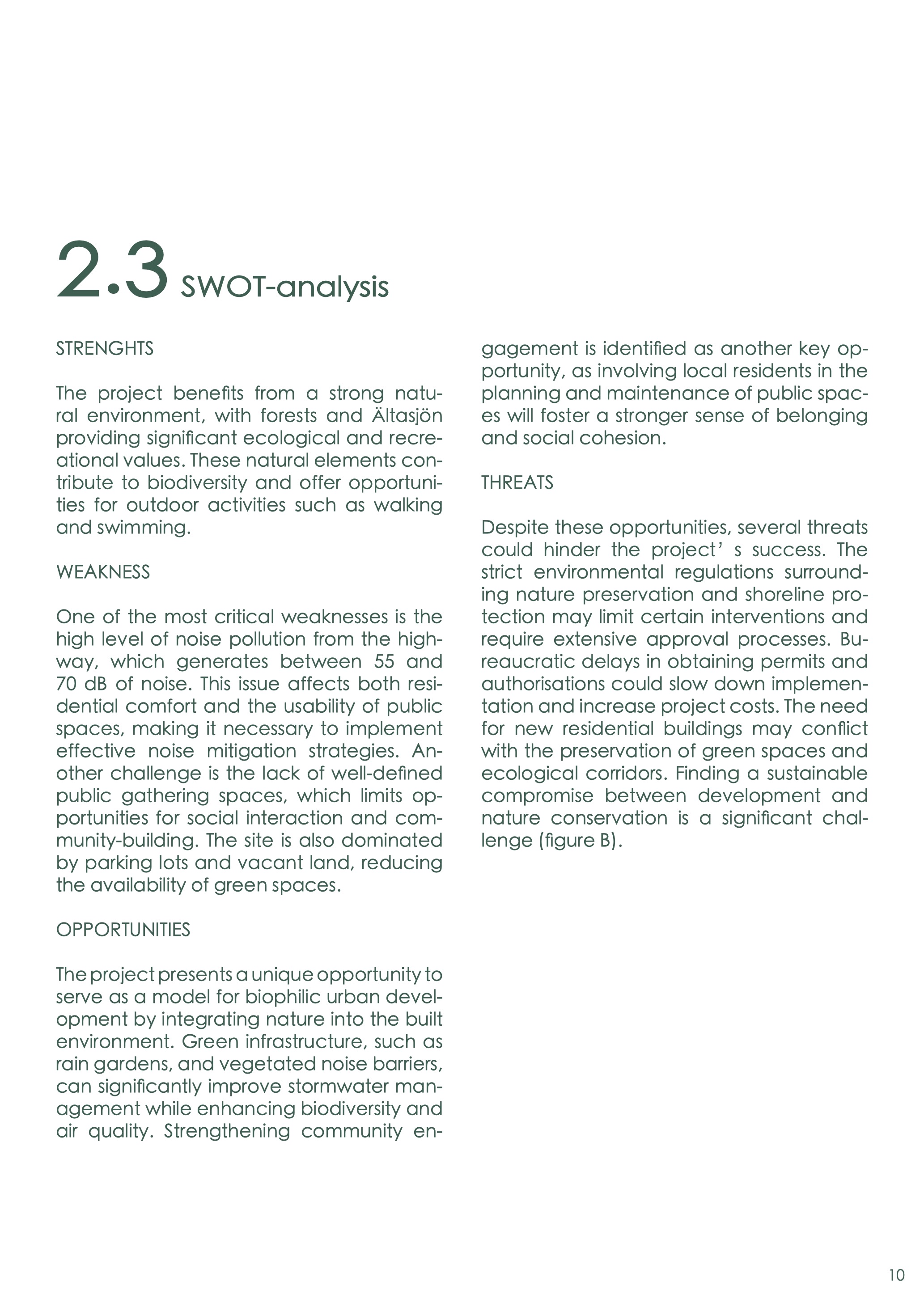
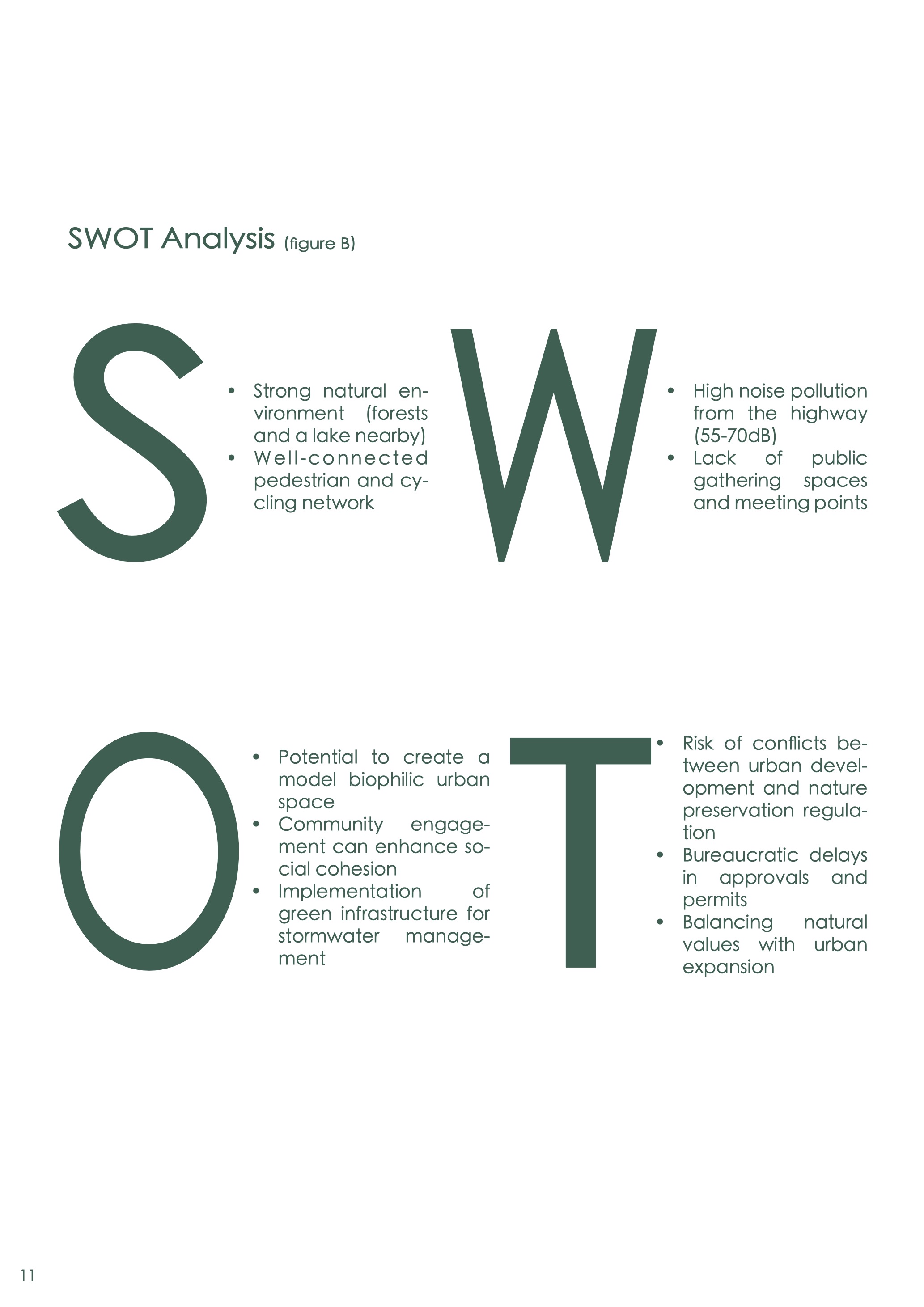
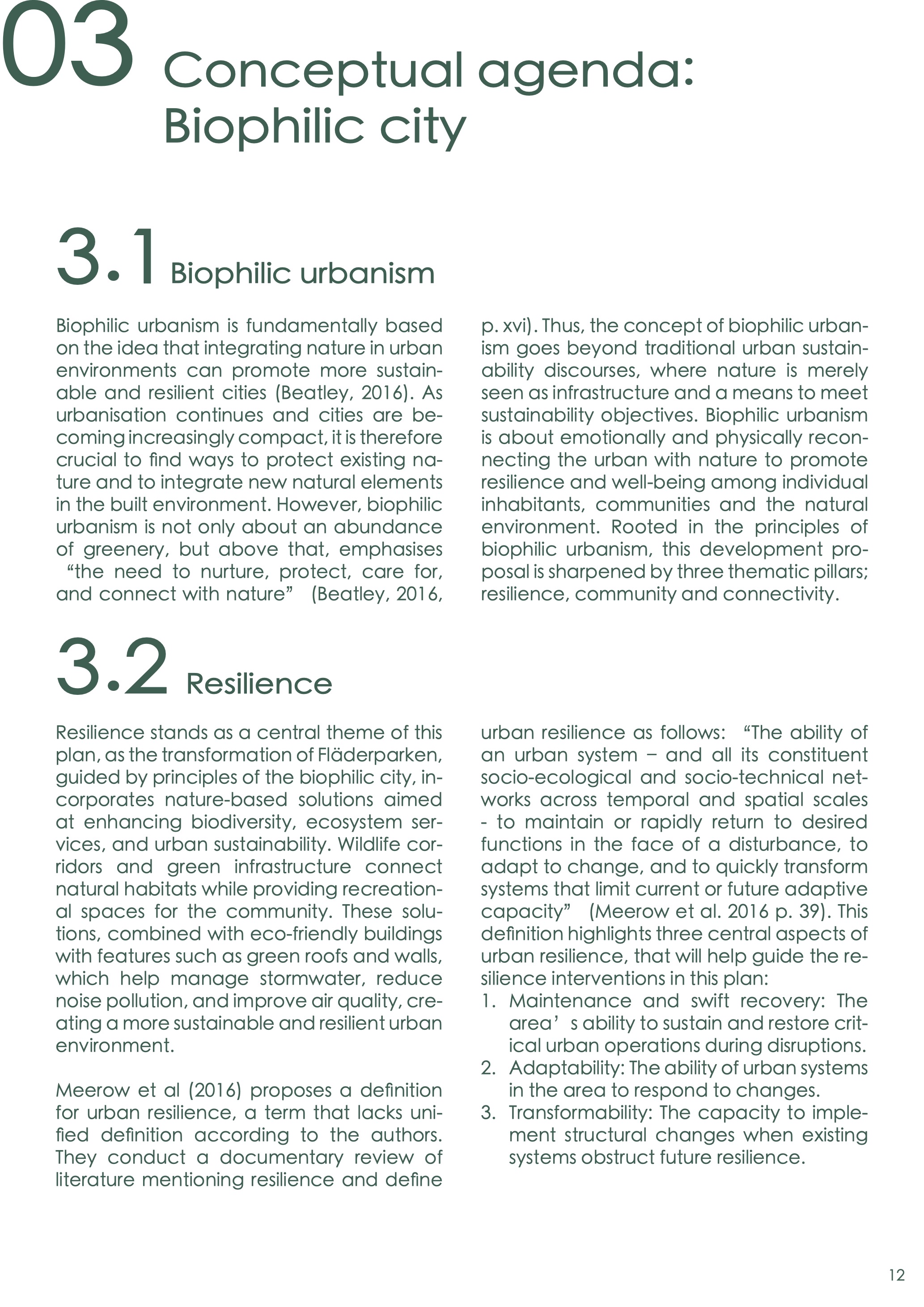
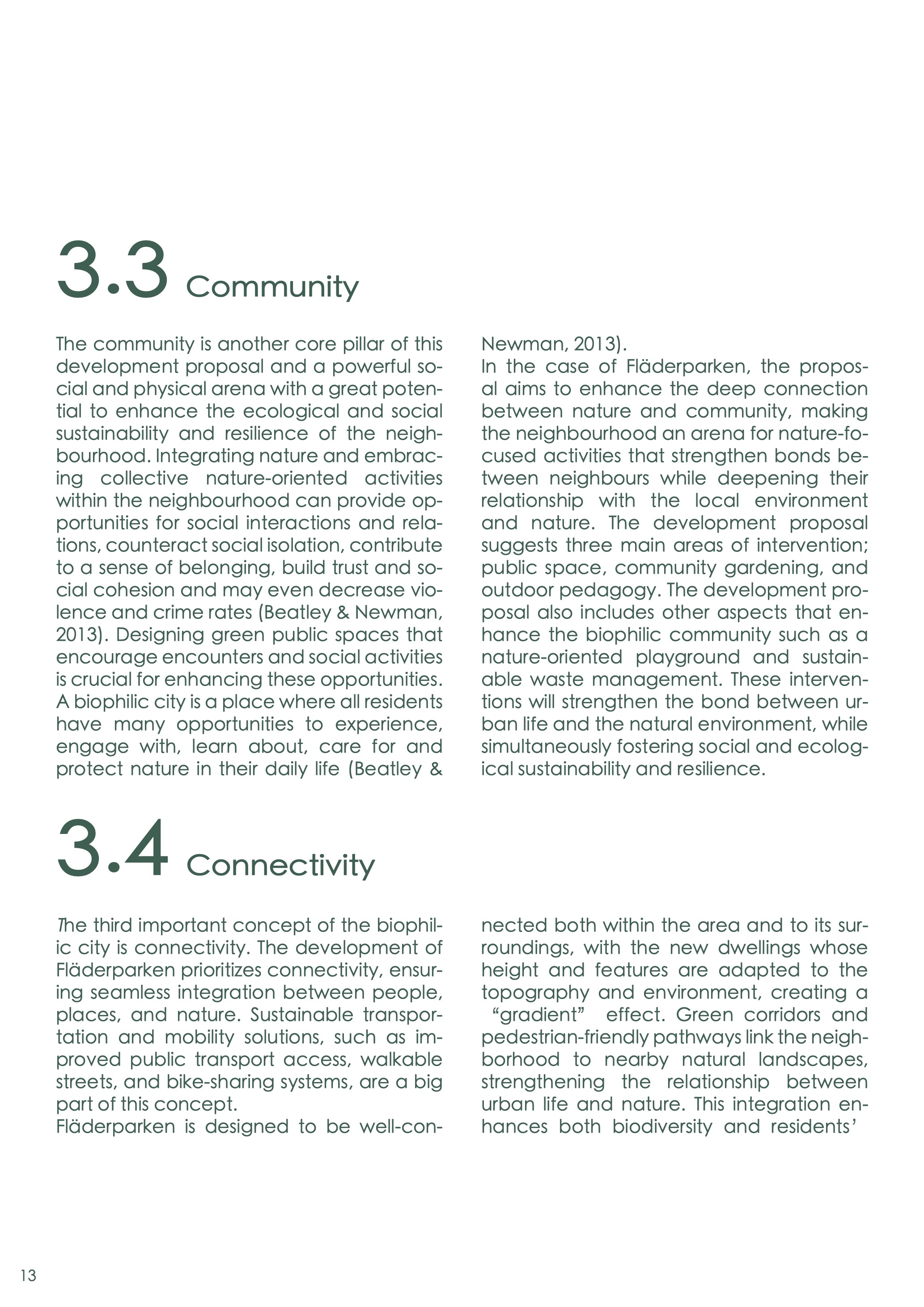
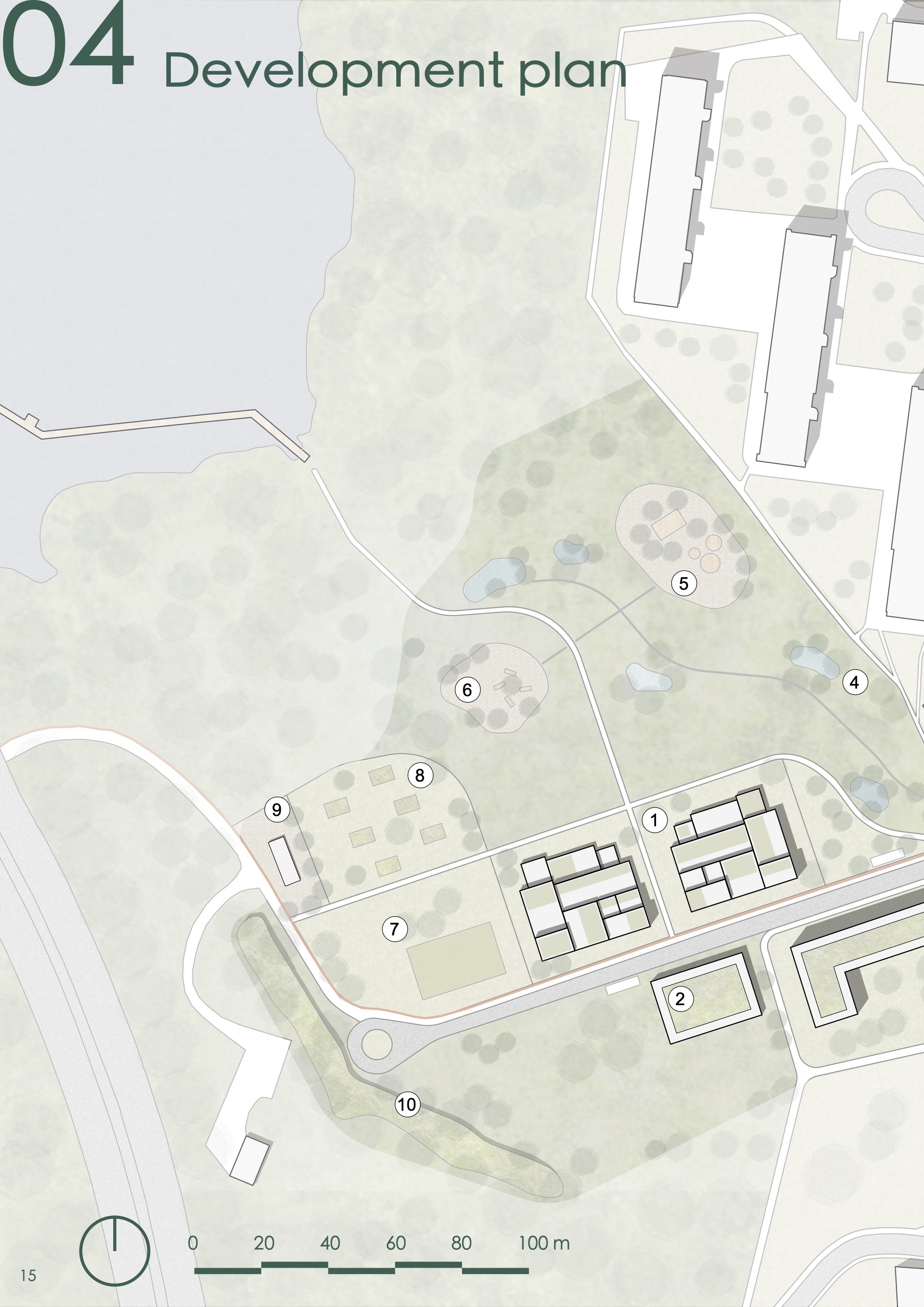
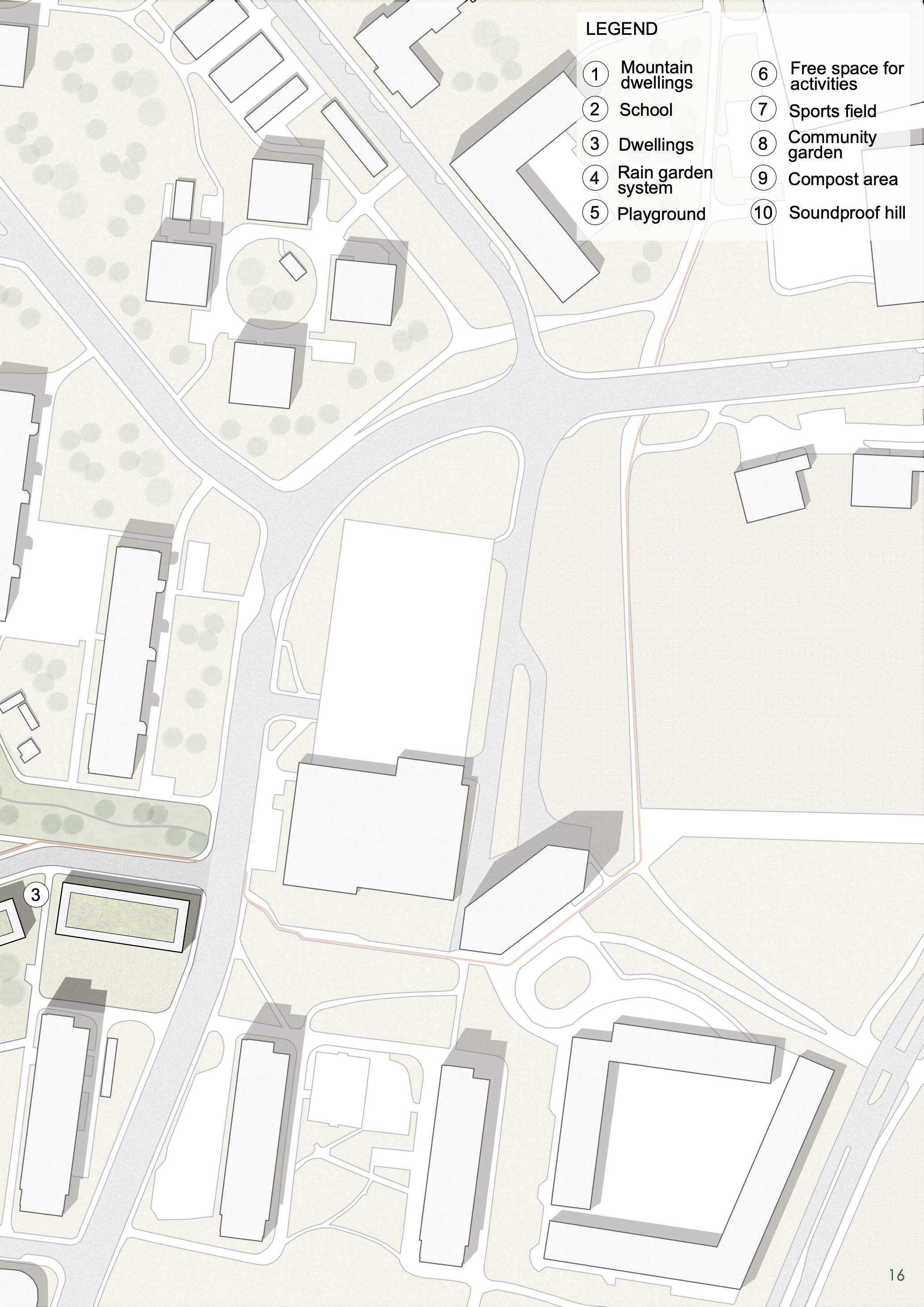
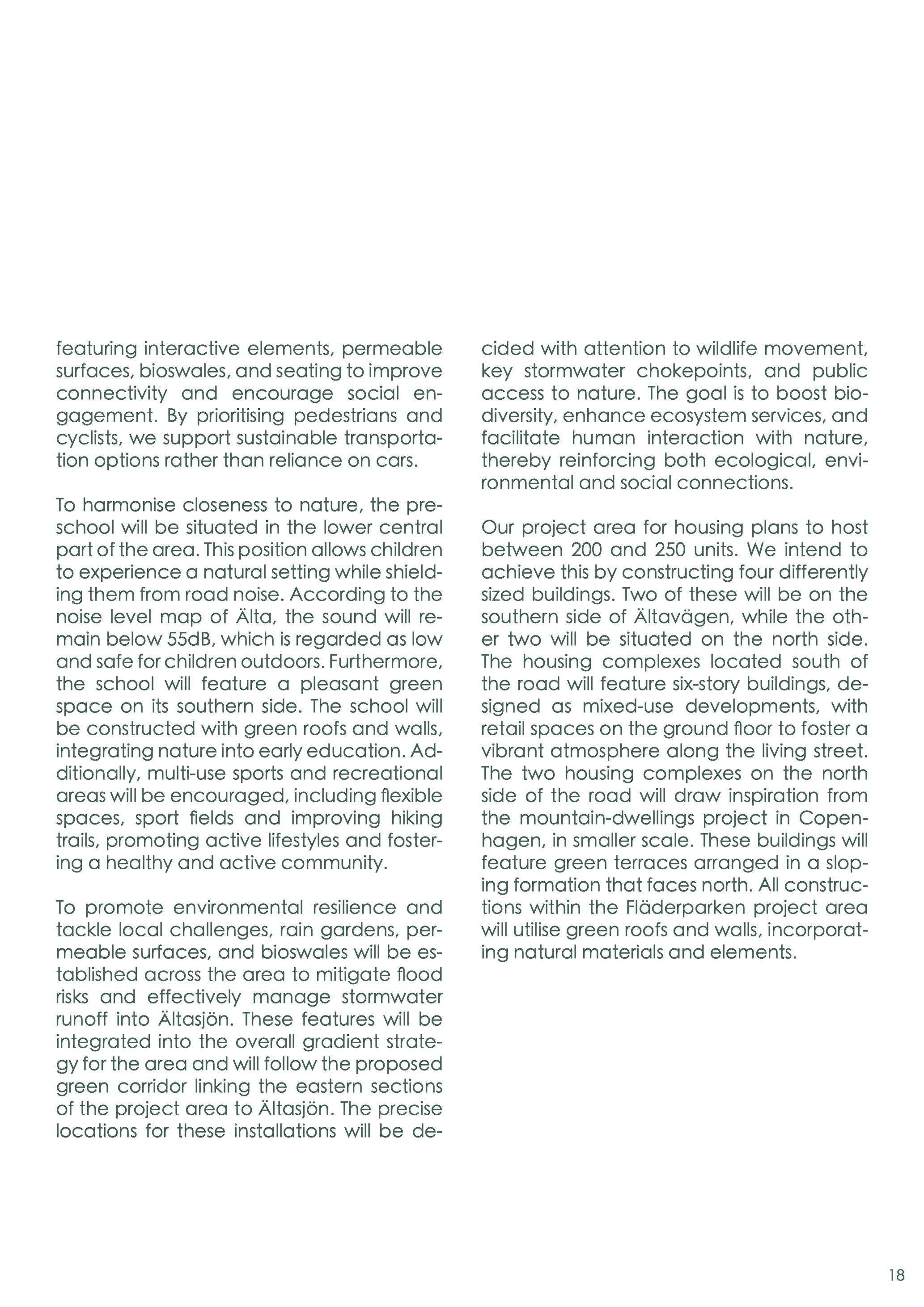
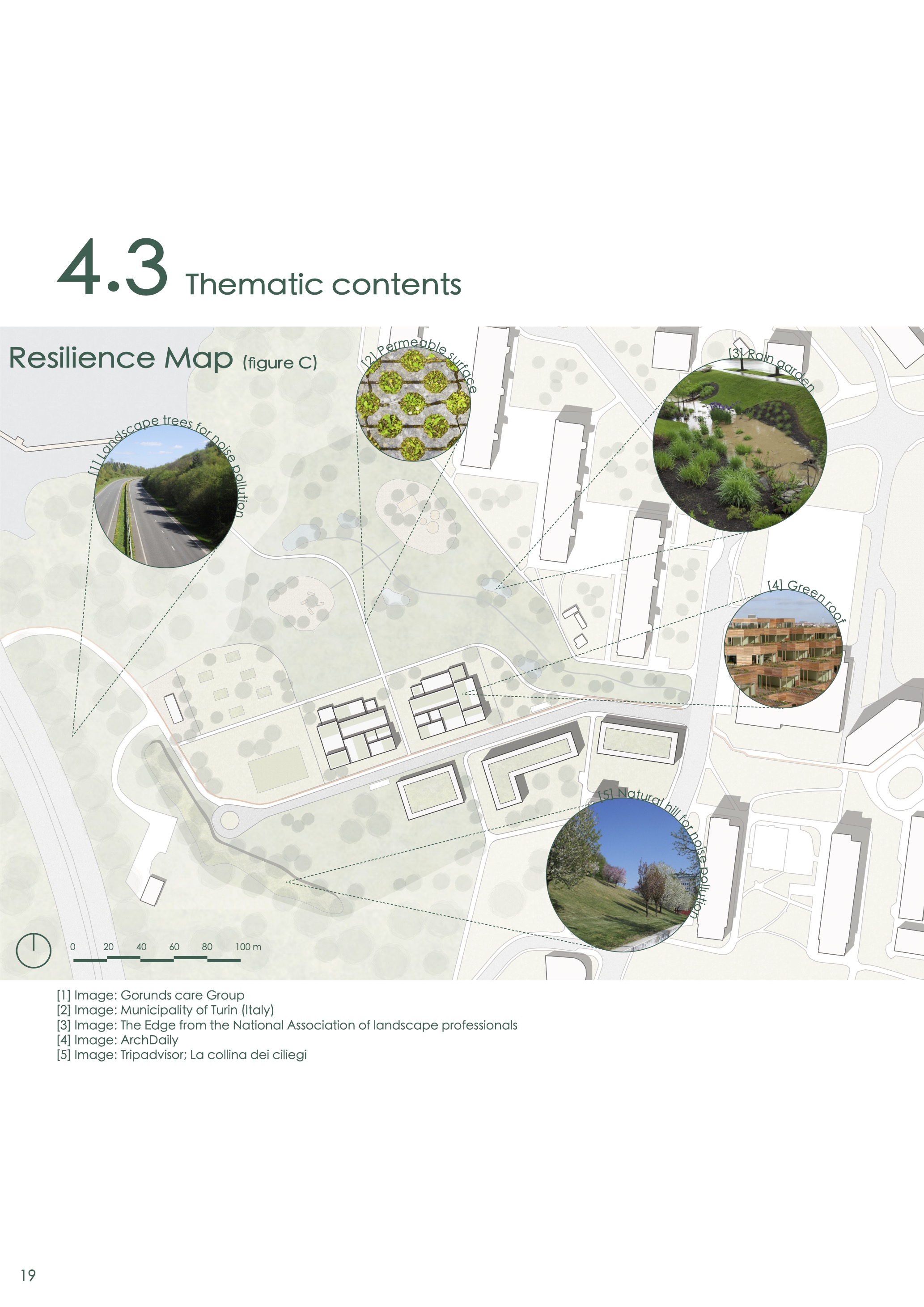
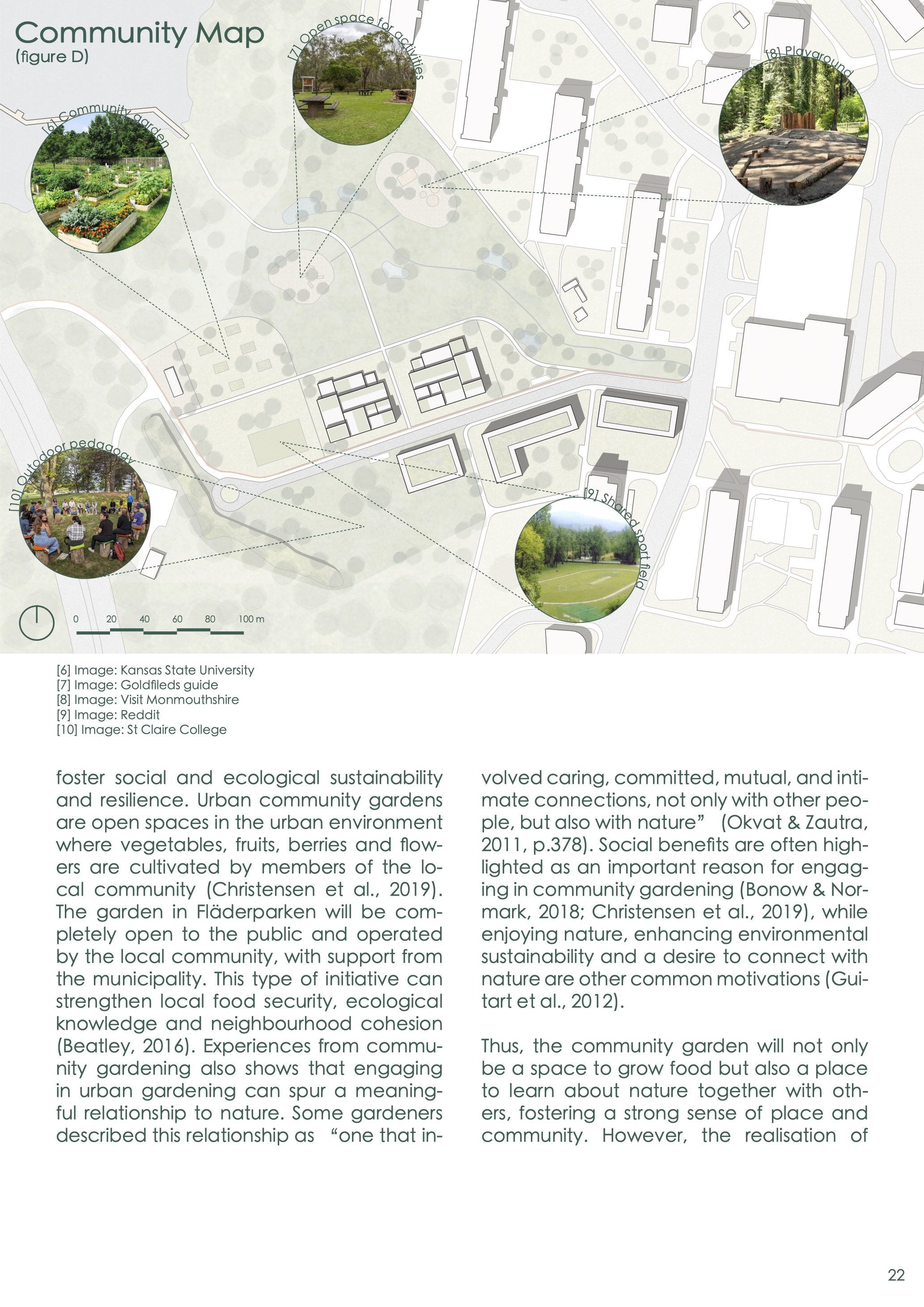
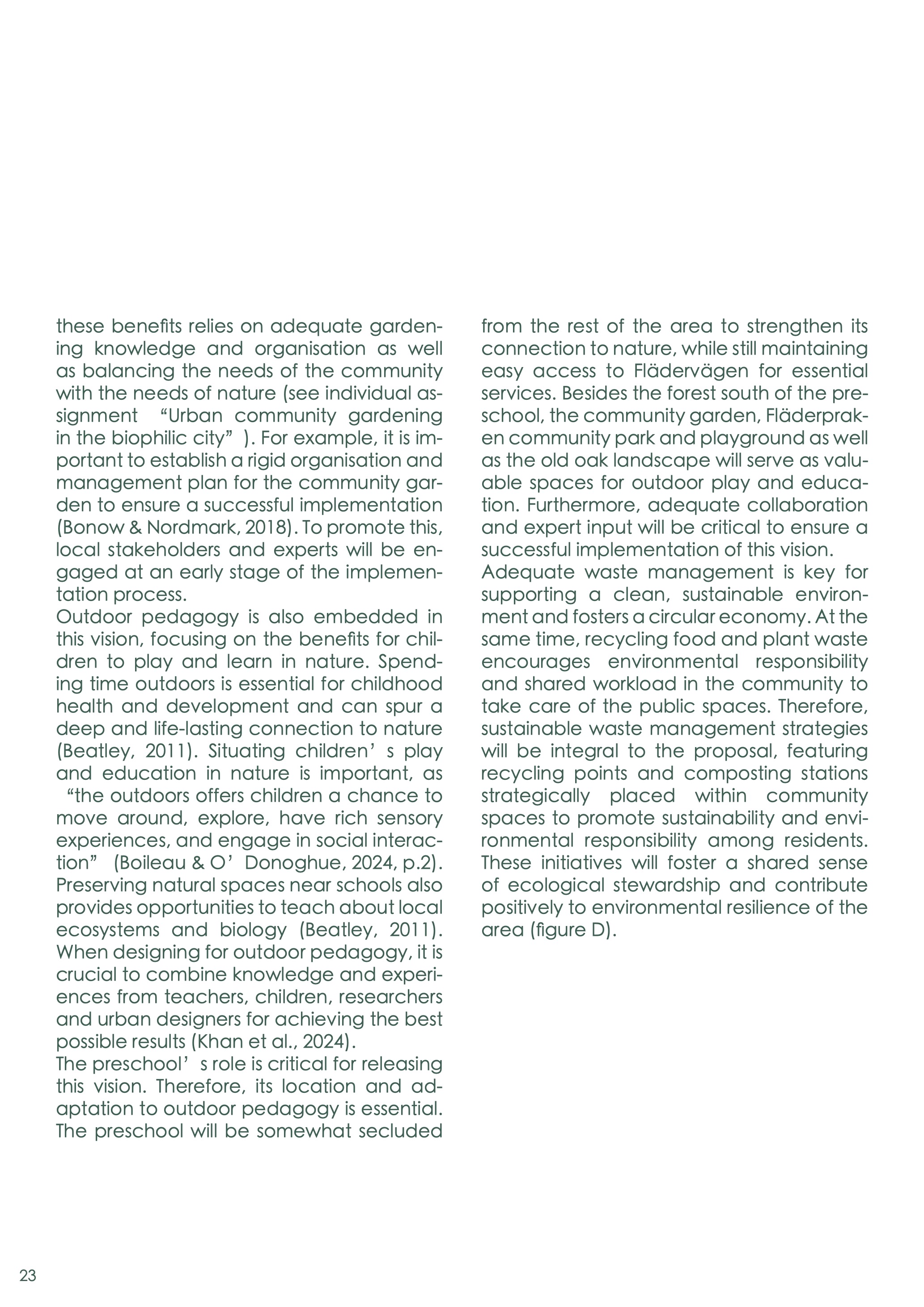
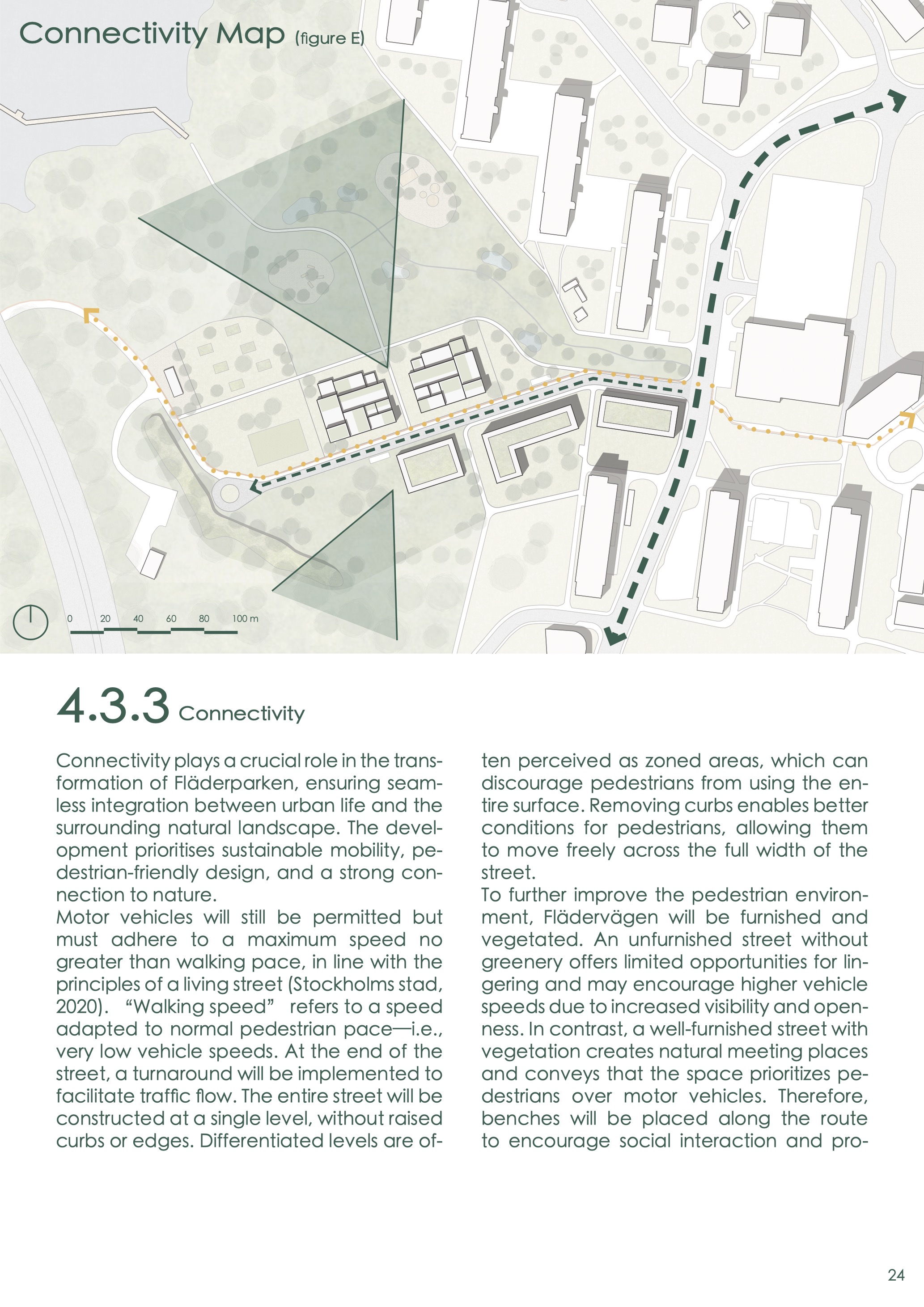
Developed within the context of the Urban Development and City Planning course, this project originated from a strategic territorial analysis of Nacka Municipality, specifically focusing on the suburban area of Älta, situated approximately 10 kilometers from central Stockholm. This project proposes a biophilic transformation of Fläderparken in Älta, acting as a green gradient between the urban center and the natural landscapes of Ältasjön.
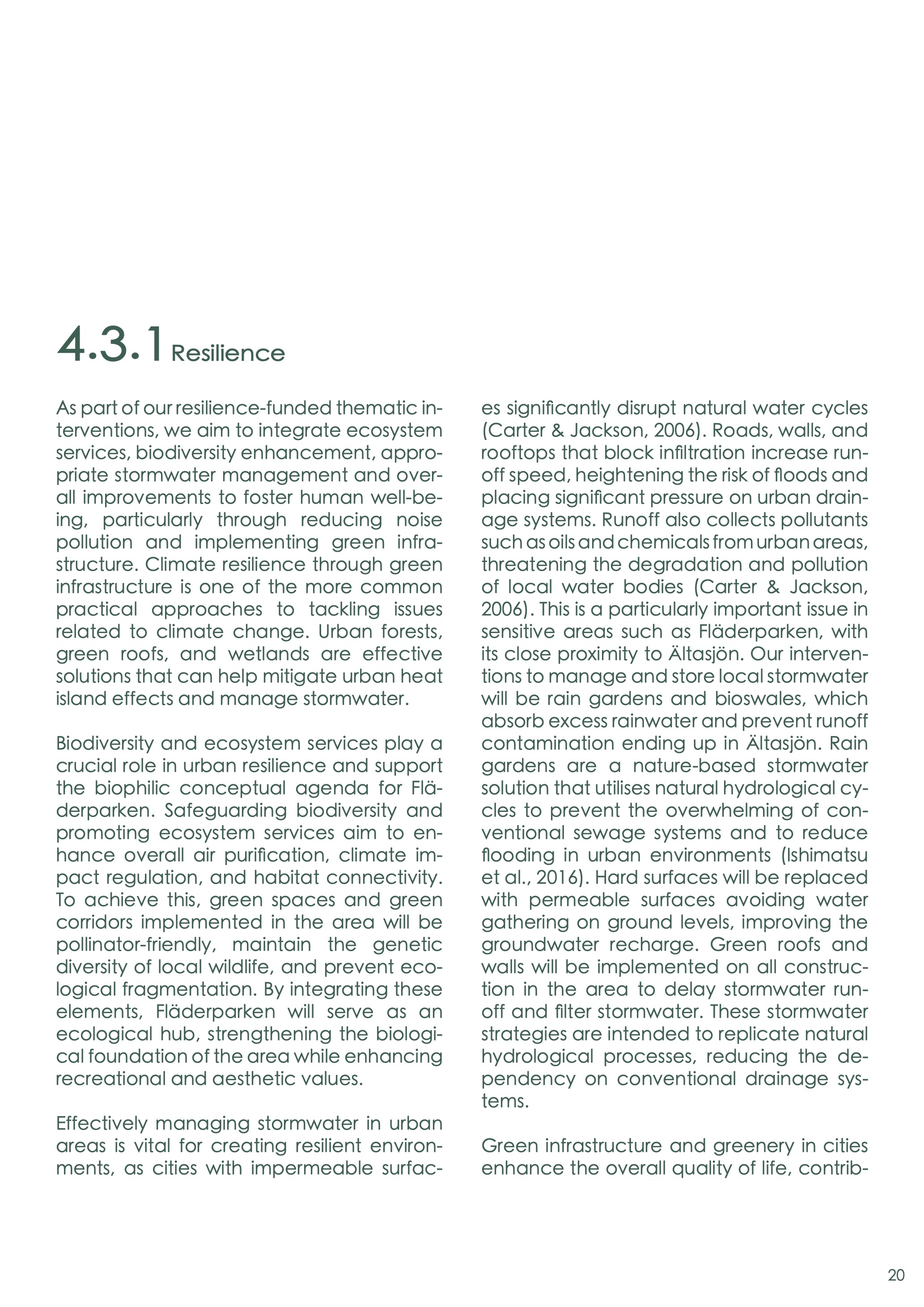
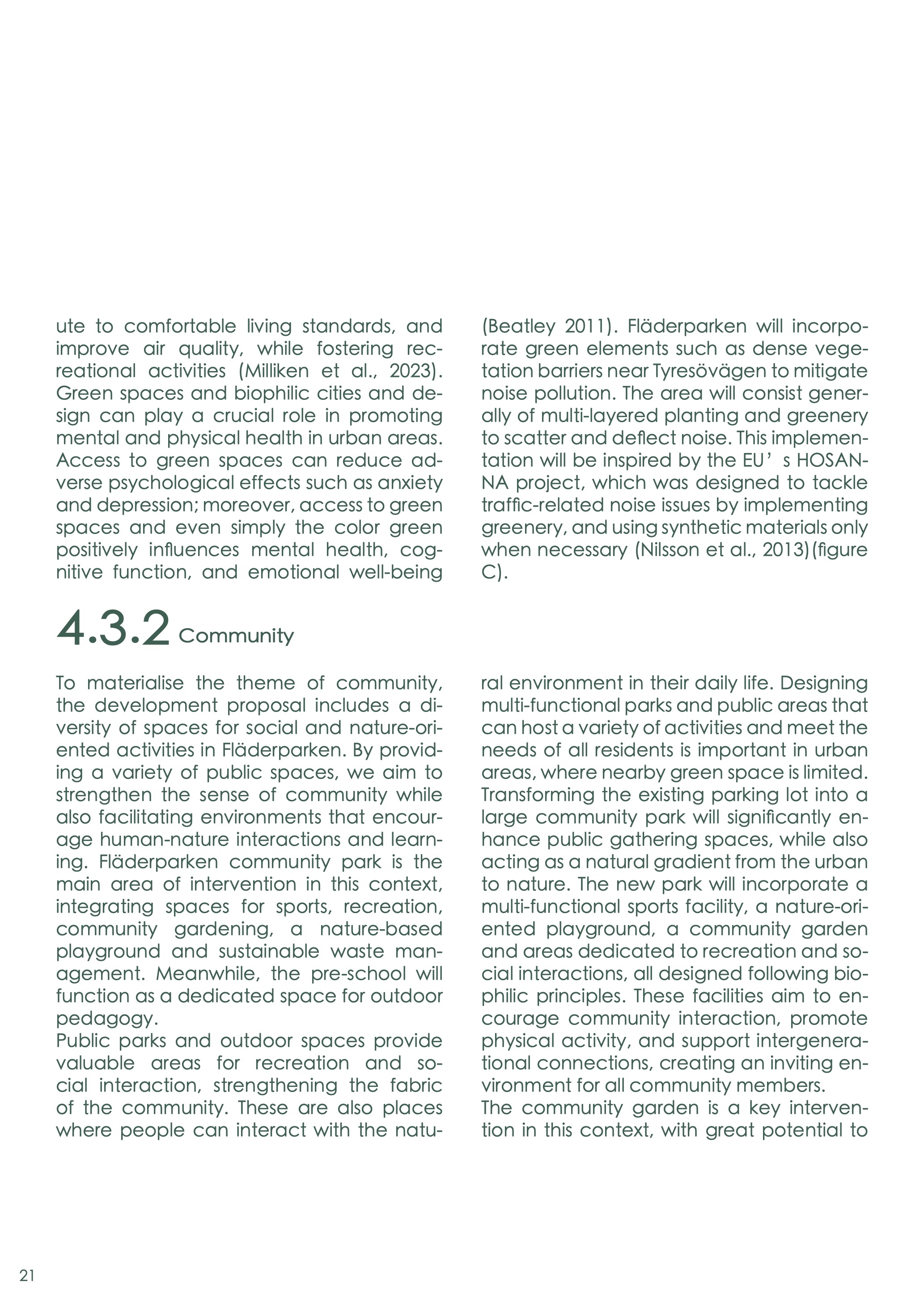
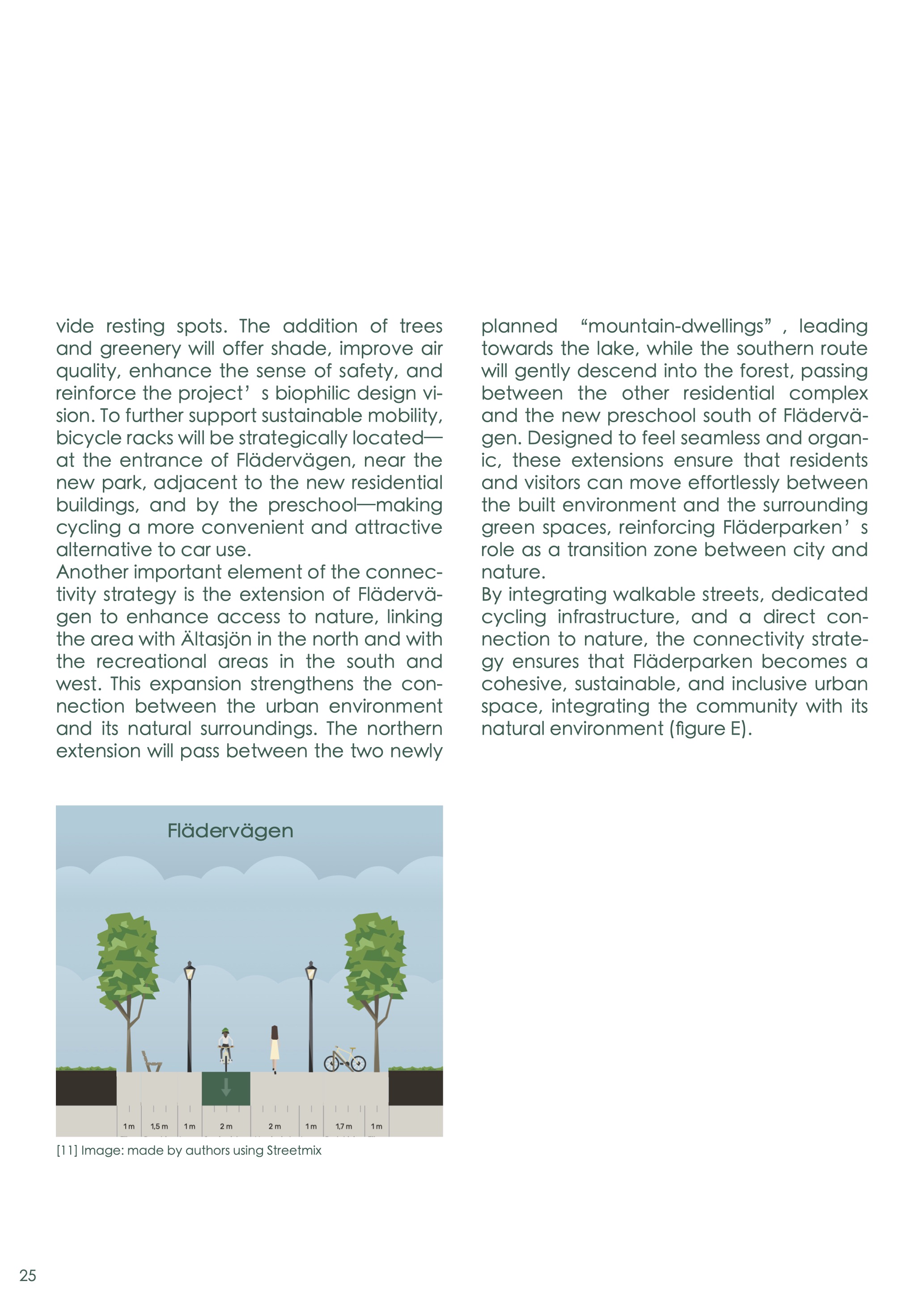
Grounded in the pillars of resilience, community and connectivity, the plan utilizes "Sponge City" strategies, such as rain gardens and bioswales, to manage stormwater and protect local biodiversity. To enhance liveability, the design introduces natural soundproof hills and vegetation barriers to mitigate noise from the nearby highway. The social fabric is revitalized through community gardens and a preschool dedicated to outdoor pedagogy, ensuring that nature is woven into daily education and interaction. Furthermore, the project redefines local mobility by turning Flädervägen into a curbless "living street" that prioritizes pedestrians and cyclists over cars. Finally, the plan integrates 200 to 250 new housing units featuring green roofs and "mountain-dwelling" terraces to ensure sustainable growth without sacrificing the area's essential green character.



Spatial Planning and Infrastructure Design Studio
Group project, Politecnico di Milano, 2024 - 2025
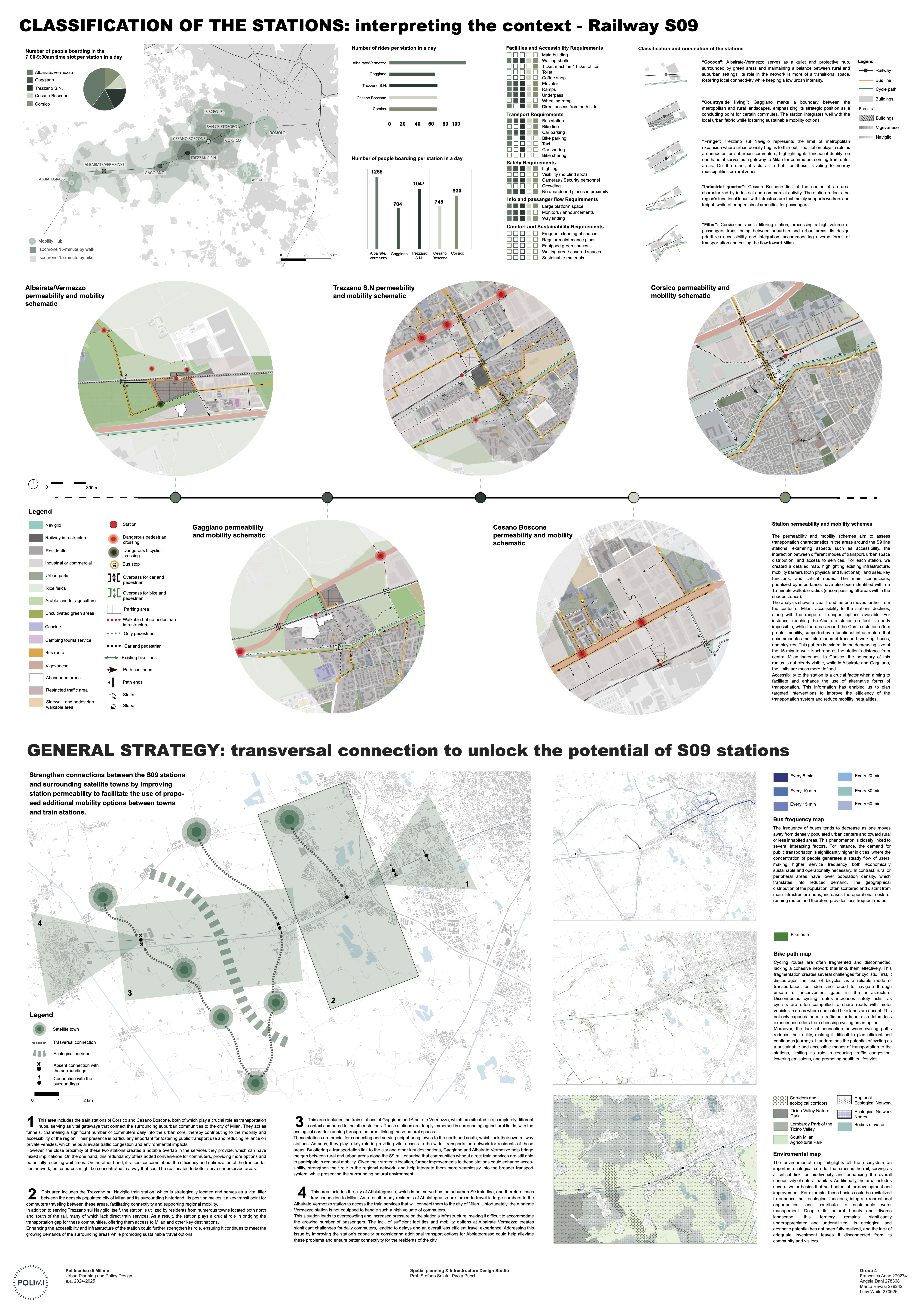
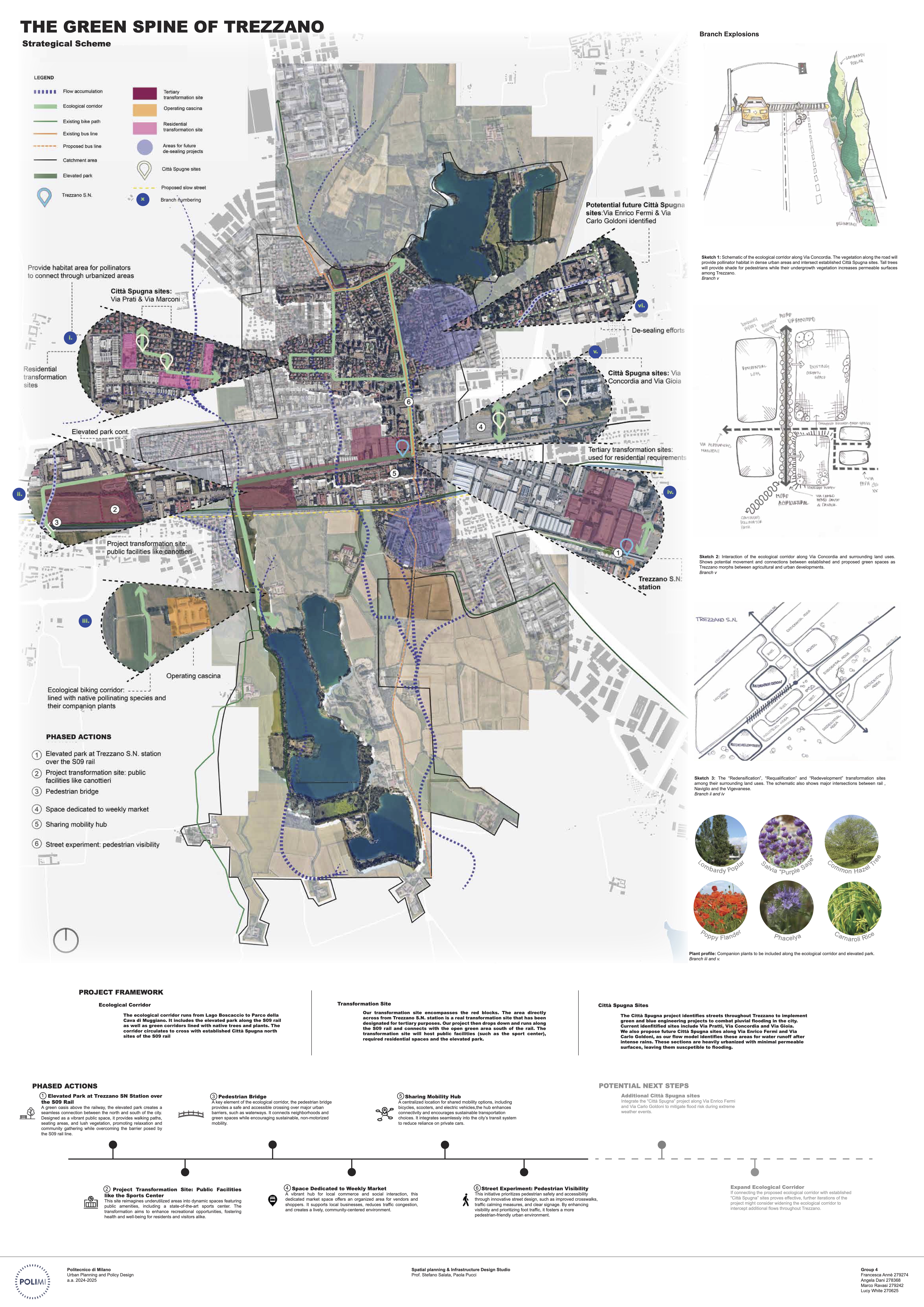
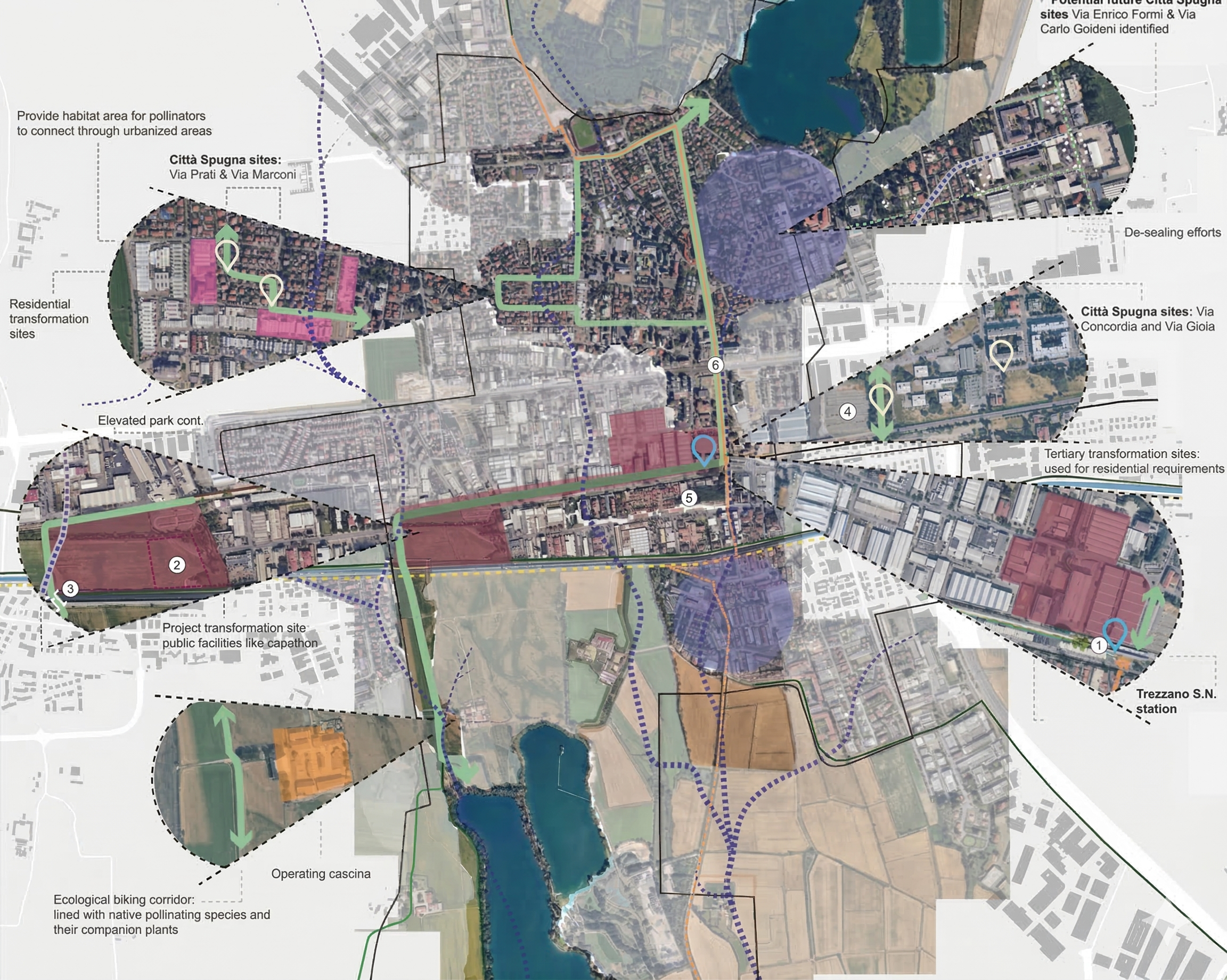
The genesis of this project lies in a comprehensive territorial analysis of the Milanese suburban rail network, specifically focusing on the final five stations of the S9 line. Following this macro-scale evaluation, the research shifted its focus to a singular, strategic site: the station of Trezzano sul Naviglio. This location was selected as a primary case study to demonstrate how a localized architectural intervention can mend a fragmented urban fabric.
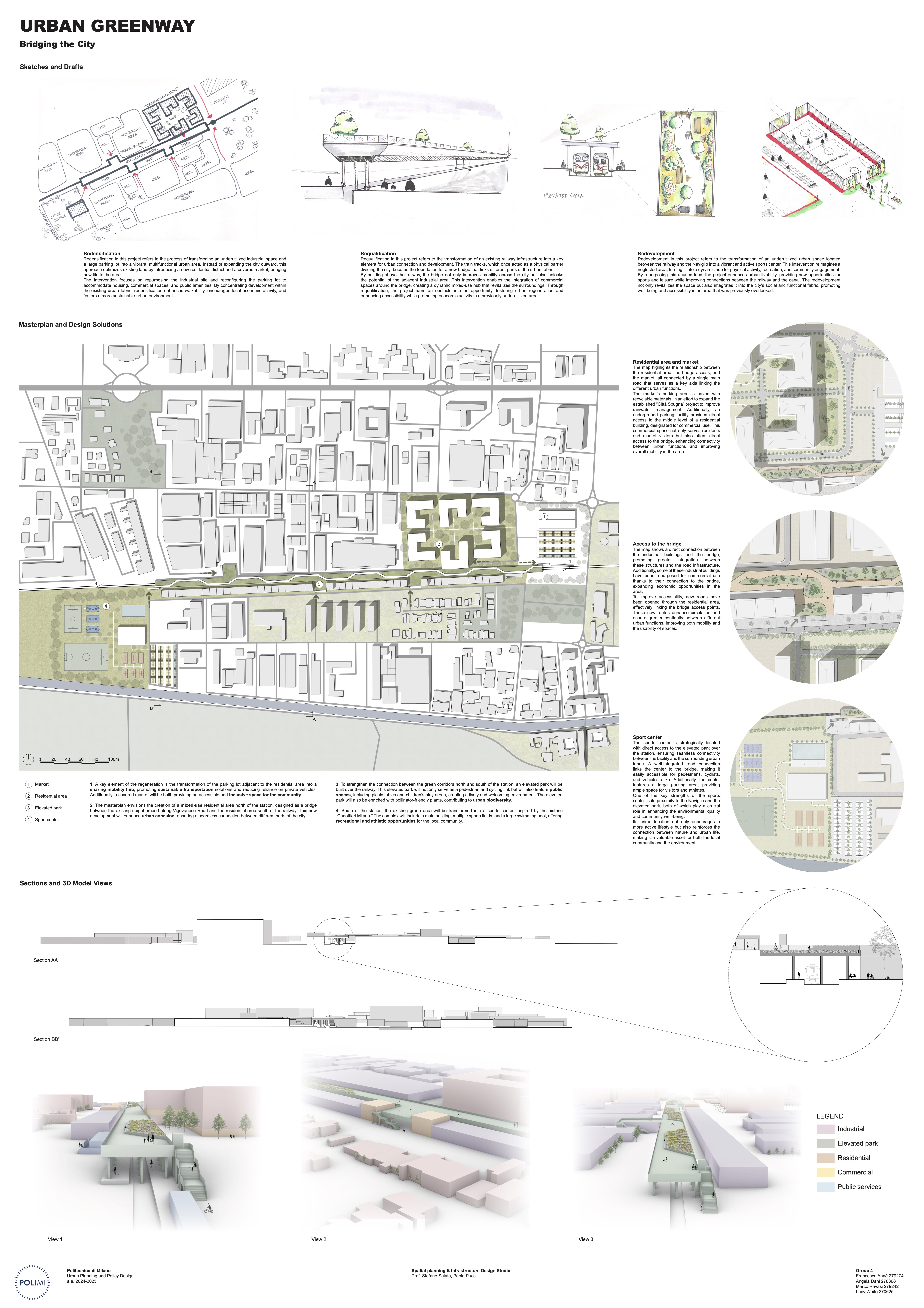
For decades, the train tracks acted as a physical barrier, effectively bisecting the city and isolating its neighborhoods. In this project, these same tracks become the structural foundation for a new inhabited bridge that links the disparate parts of the urban environment.
By building directly above the railway, the project unlocks the potential for a vertical green connection. Utilizing the principles of the Sponge City, the design incorporates permeable surfaces and innovative water management systems, transforming the transit corridor into an ecological filter that mitigates the heat island effect and manages rainwater. This intervention enables the seamless integration of commercial spaces and public services around the bridge, creating a dynamic mixed-use hub.